

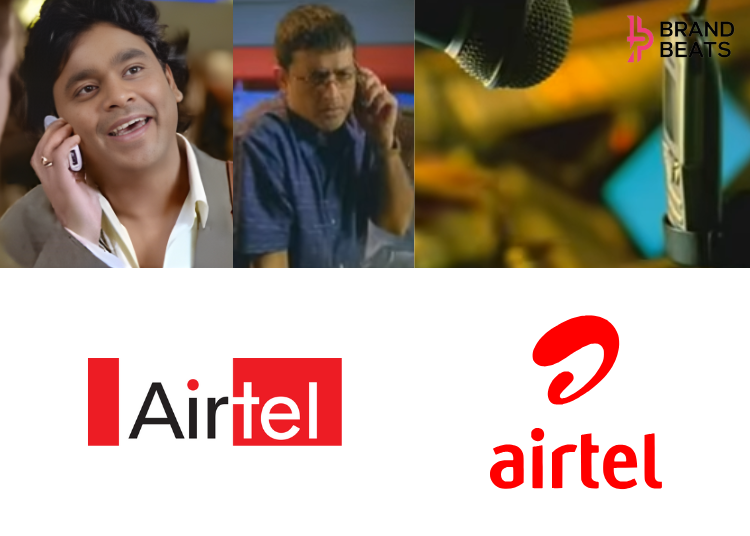
What is the sound?
If you were around in the glorious age of Nokia 1100s, prepaid recharge cards then that duh-duh-da-da-da tune was your constant background music.
You didn’t just hear it, you lived it. On hold with customer care? It played. Setting your first ringtone? It played. That melody wasn’t just sound. It was a generation’s ringtone of choice.
Where is it used?
Everywhere, honestly. It was your caller tune, your hold music, and the default ringtone of every person who just got their first mobile.
From TV commercials to public service campaigns, from signal-less hills in Manali to metro stations in Delhi, if there was an Airtel moment, this tune was there first.
It wasn’t just used. It was embedded in Indian mobile culture.
Who created it?
It was a power collab by A.R. Rahman on the music Rajiv Menon on visuals Rediffusion and Y&R for brand vision.
This wasn’t just branding, it was Bollywood-level audio storytelling in five notes. And no, they didn’t need AI. They had IRL genius.
What was the intention behind it?
In a world where telecom ads were basically just shouting match coupons, Airtel decided to whisper. The goal? To humanize the brand, make it feel elegant, emotional, and relatable.
They weren’t saying, Recharge now! They were saying, Live Every Moment. And through that tune, you kind of did.
What psychological principle does it use?
How is it that a tune with zero lyrics somehow carved its own corner in your memory palace? Because this wasn’t just a jingle.
Repetition – That Doesn’t Annoy Five notes. One pattern. Over and over. But instead of making you roll your eyes (looking at you, 2000s TV ad jingles), it made you feel something. You didn’t memorise it. Your brain just did it for you like muscle memory, but for your ears.
Emotional Safety – Triggers The tone wasn’t aggressive. It was calm, warm, almost human.
Psychologically, it signalled comfort like a familiar voice on the other end of a late-night call. It made Airtel feel less like a big telecom brand, and more like someone you trusted.
Association Magic – You heard it during your first mobile phone. Your first ringtone. Your first breakup-call-at-2am moment. Over time, your brain went: “Oh, this sound, a memory, something personal.” And just like that, the brand wasn’t just in your phone it was in your feelings.
How does it fit the brand’s personality?
Airtel has always been that mature, dependable friend, not too loud, not too flashy, but quietly confident with serious main-character energy. The tune? A perfect match. Calm, smooth, and emotional without being dramatic. It didn’t scream, look at me! it whispered you’re home.
It gave Airtel a premium, almost poetic presence in a space full of shouty offers and dancing mascots. Basically, if Airtel were a person, this tune would be the perfectly curated playlist they hum while sipping chai on a balcony effortlessly, elegant, and totally unforgettable.
How does it connect culturally?
It didn’t have a tabla drop or a bansuri flourish, but somehow it just felt Indian. Maybe it was the emotion. Maybe it was Rahman magic. Maybe it was the way the tune quietly echoed across metros from Delhi drawing rooms to small-town recharge shops.
Airtel’s sonic logo wasn’t tied to one language or region, it was pan-India in vibe, a rare tune that didn’t need translation. It was our shared ringtone, our shared emotion. A cultural connection not built on clichés but on feeling.
Has it evolved over time?
Yep, the OG tune got a bit of a glow-up in 2010. Still the same 5-note melody, but sleeker, sharper. Think of it like the Airtel tune upgrading from a Nokia 3310 to an iPhone same soul, just in smarter packaging. It evolved with the times, but never lost its emotional ringtone-royalty status. A remix, not a rebrand.
How do users react to it?
They basically adopted this tune like they can’t get it out of their heads, but they love it. It’s catchy without being annoying, familiar without feeling boring. Whether you’re waiting on a call or just scrolling, that little melody sneaks in and makes you pause because it’s not just a sound, it’s a vibe.
Did it influence other brands or start a trend?
Airtel may not have started the jingle party, but it definitely turned up the volume on sonic sophistication. After Rahman’s tune dropped, every brand suddenly wanted a “signature sound.” Vodafone followed with its iconic ZooZoo whistles, ICICI introduced a calming sonic logo, and even Cred jumped on the quirky-sound bandwagon. It wasn’t just about music anymore — it was about identity. Airtel made brands realise: if your logo can be seen, your sound should be heard. Loud (but classy) and clear.
What does it say about the future of brand sound?
The Airtel tune proves one thing: sonic branding isn’t just background noise it’s future-proof memory fuel. As brands rush to jump on AI voices and TikTok-friendly beats, Airtel reminds us that emotion beats algorithms.
In a world where attention spans are shorter than your last WhatsApp voice note, a well-crafted, consistent sound can still cut through. The future? It’s not just visual. It’s vibey, audible, and deeply hum-worthy.
Brand Beats’ Take On This
Airtel’s sonic identity didn’t shout and sing. In a market full of overproduced noise, it proved that simplicity + emotion = staying power. It wasn’t just a ringtone it became muscle memory for a whole generation. That’s the real flex of great sonic branding: when a few notes say more than a full-blown campaign.