

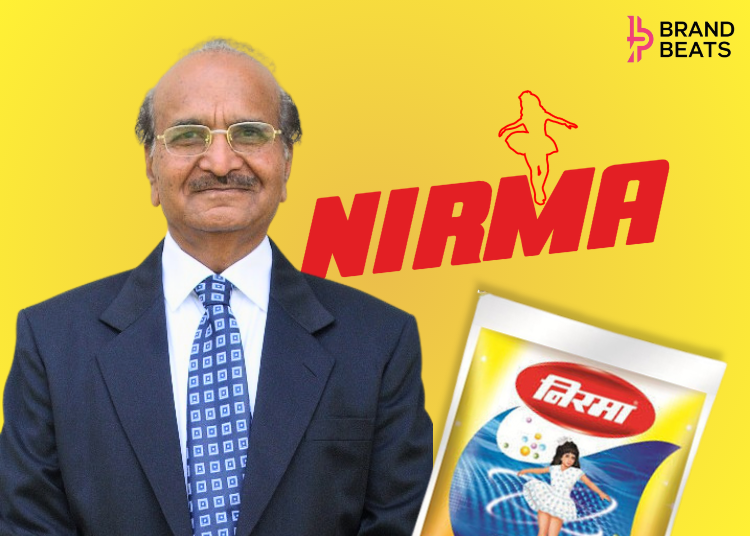
“Washing powder Nirma… Washing powder Nirma… Doodh si safedi Nirma se aaye…”
And let’s be honest you didn’t just read that. You sang it. In your head. In Kavita Krishnamurthy’s voice. That jingle, composed by Deepak Joglekar, didn’t just sell detergent. It became part of India’s cultural muscle memory.
But behind that catchy tune and that twirling girl in a spotless white frock was a story that didn’t start in a corporate boardroom; it began in a backyard in Gujarat.
The year: 1969.
The place: Ahmedabad.
The protagonist: Karsanbhai Patel, a chemist with a day job and a dream.
In a market ruled by multinational giants and pricey detergents like Surf, Patel was quietly cooking up his own formula literally. He mixed and packed detergent by hand at home, then sold it door-to-door on his bicycle for just Rs. 3 per kilo. Compare that to Surf’s Rs. 13, and you’ll see why Nirma didn’t just clean clothes, it cleaned out the competition.
But this wasn’t just a price-point breakthrough. It was heartbreak turned into purpose.
The name ‘Nirma’ came from Nirupama, Patel’s young daughter who tragically passed away in an accident. That smiling girl on the packet? She wasn’t a marketing gimmick. She was a tribute. A symbol. A memory made immortal in every Indian home.
Soon, Hema, Rekha, Jaya, and Sushma weren’t just film stars, they were everyday women getting things done, with Nirma in hand. The message was clear: Indian housewives didn’t need foreign brands to get clothes dazzling white.
But Nirma didn’t stop there. Fast forward to the 2000s: a muscle-bound man in white jeans, taking on laundry like a boss. The tagline? “Naye zamane ke ziddi daagon ke liye.”
The message? Washing clothes isn’t just a woman’s job anymore.
It was bold. It sparked debates. It flipped gender roles. It made people laugh, talk, even raise eyebrows. And in doing so, it proved one thing Nirma still knew how to stir a nation’s attention.
From backyard batches to bold ads, from a grieving father’s tribute to a cultural icon Nirma wasn’t just washing powder. It was a revolution wrapped in foam.