

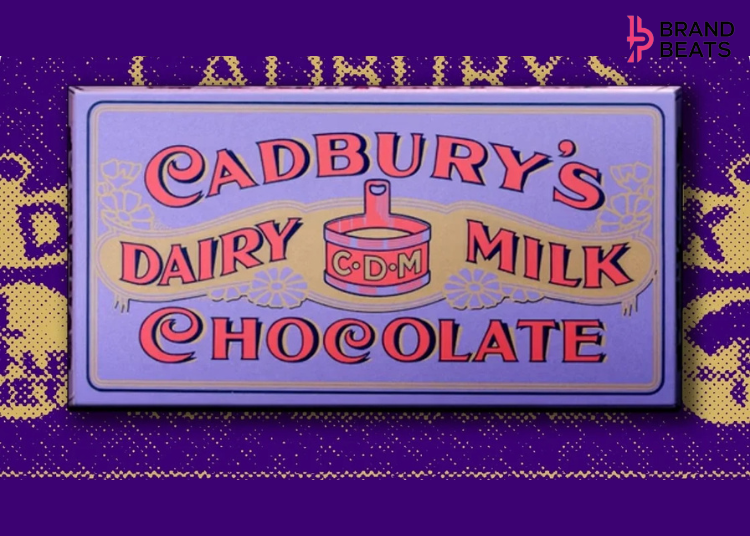
Where It All Started
Picture this: it’s midnight, your brain’s tired, your heart’s a little dramatic, and your sweet tooth is staging a full-blown protest. You open the fridge, and there it is – that iconic purple wrapper with two glasses of milk doing their forever pour. Boom. Cadbury.
Not just a chocolate bar, but an emotion wrapped in foil – for birthdays, breakups, promotions, Diwali gifts, or those “I deserve this” moments. In many Indian homes, it’s not even chocolate anymore – it’s just “Cadbury.”
But before it became our universal mood fixer, let’s rewind to where it all began.
The year: 1824. The place: foggy Birmingham, England. The protagonist: John Cadbury, a young grocer with big dreams and a bigger obsession – chocolate. Between jars of tea and coffee, he’d be found hunched over a mortar and pestle, grinding cocoa beans to create drinking chocolate – not the sweet treat we know today, but a bitter, rich, comforting elixir that quickly won over curious customers.

Soon, passion outgrew the counter. By 1831, John had moved operations to a small warehouse to make chocolate on a larger scale – a move that set the stage for something much bigger. His sons, George and Richard, later joined in, turning the small family trade into a full-blown enterprise.
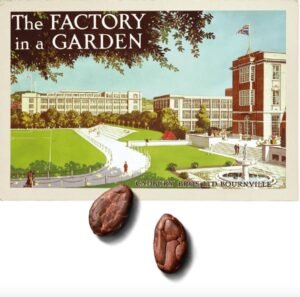
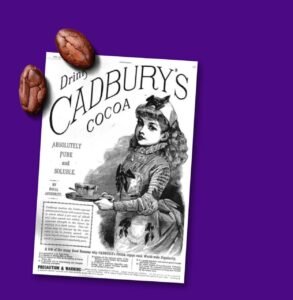
Then came 1866 – the year Cadbury went from chocolate makers to game changers. By investing in a Dutch cocoa press, they were able to produce pure cocoa, unlike rivals who were adding starch and all kinds of questionable fillers. The result? Cadbury Cocoa Essence, marketed boldly as “Absolutely Pure, Therefore Best.”
Fast forward to today – that soul lives on under Mondelez International, the global snacking powerhouse that now owns Cadbury. It’s the reason a 19th-century English creation feels perfectly at home in Indian festivals, ads, and emotions. Mondelez didn’t just buy a chocolate company; it inherited a century-old feeling – one that still melts hearts (and occasionally diets) worldwide.
When Chocolate Met India: A Cultural Sweet Story
For a long time, in Indian households, chocolate simply didn’t exist. Sweets meant mithais like – barfis, laddoos, pedas handmade with ghee and sugar. These weren’t just desserts, they were part of rituals, celebrations, and childhood memories. So when a foreign confection made from cocoa entered the scene, it wasn’t just a new taste it was an entirely new idea.
That idea took root in 1948, just one year after India’s independence. Cadbury quietly stepped onto Indian soil, importing chocolate bars and slowly building its presence from an office in then Bombay. At the time, chocolate was still a novelty, unfamiliar and almost elite. But Cadbury didn’t come with a pushy marketing pitch. Instead, it began adapting to Indian preferences, emotions, and values. So over time, Cadbury stopped being foreign and became Indian in every way that mattered.
The Birth of Dairy Milk and Who It Spoke To
At the start of the 20th century, George Cadbury Jr. had a clear vision: to create the most deliciously creamy milk chocolate the world had ever tasted creamier than any other chocolate available. The secret was in the recipe. Cadbury used a whole glass and a half of full cream milk in every bar, ensuring a smooth, rich flavour that set it apart from competitors.
As the chocolate took shape, the team considered names like Highland Milk and Dairy Maid, but it was a customer’s daughter who came up with the simple, evocative name that stuck: Dairy Milk in 1905. Initially, Dairy Milk was delivered in blocks to shops, where it was broken up and sold in penny bars, making it affordable and accessible to a wide audience.
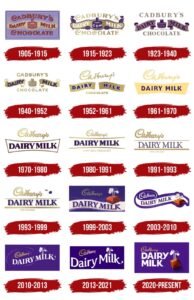
Cadbury’s products were primarily seen as a luxury or as a medicinal tonic for the upper classes. With Dairy Milk, Cadbury began addressing everyday families, children, and working adults who wanted a comforting, affordable indulgence that could be shared in homes across the country.
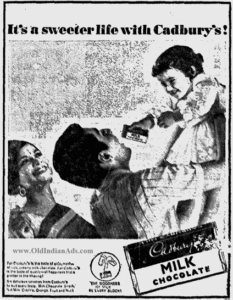
The Story Behind Its Marketing Mastery (4Ps Analysis)
Ever wondered how a chocolate bar became the emotion of a nation? Not just a treat after dinner or a snack for school breaks but a part of birthdays, breakups, first salaries, and every festival in between.
That’s Cadbury for India. But this love story wasn’t built overnight. It was carefully crafted layer by layer, just like its silken bars through a marketing recipe so effective, it’s studied in business schools today.
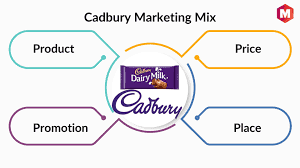
Let’s unwrap it, one square at a time, through the lens of the 4Ps: Product, Price, Place, and Promotion.
Product – At the core of Cadbury’s success is a commitment to quality and emotional connection. From Dairy Milk with its iconic glass and a half of milk to festive editions like Celebrations, Cadbury knew how to blend flavour with feeling. Products were constantly localised, think 5 Star, Perk, Gems, and even the health-forward Bournvita, which is now a household staple. Every product wasn’t just sweet, it was tied to an occasion, a mood, a moment and the innovation didn’t stop at taste. Cadbury introduced temperature-resistant formulations for tropical markets, ensuring that chocolates didn’t melt easily in Indian heat.
Price – Cadbury already did its homework and knew that the Indian market was quite diverse with consumers ranging from urban professionals to small-town schoolkids. So how do you price chocolate in a country where sweets are measured by grams and emotions? It was well aware that the Indian consumers were definitely price conscious so it made sure there was something for every wallet. Whether it was the classic Rs. 5 Dairy Milk bar or a Rs. 500 luxury celebration gift pack, the brand never excluded anyone. Seasonal pricing strategies, festive offers, and combo packs further boosted appeal across income groups.
Place – In 1948, Cadbury entered the Indian market, and today, whether you’re craving something sweet or want to send a thoughtful gift, a box of Cadbury chocolate is never far away. From urban malls to dusty roadside kiosks. Cadbury mastered the art of distribution early on, making sure its bars were never more than a short walk away.
Promotion – Here’s where Cadbury truly shined. They didn’t just sell chocolates. They sold emotions. Who could forget that iconic ad from the ’90s where a girl runs onto a cricket field, dancing with pure joy as over a six? That wasn’t just marketing, it was memory-making.
From ‘Kuch Meetha Ho Jaaye’ to ‘Shubh Aaramb’ Cadbury connected chocolate with celebration, rituals, and relationships. It wasn’t just about hunger. It was about moments – from exam results to wedding invites, to job promotions and apologies.
And today? Cadbury’s ads aren’t just on TV they’re on your phone, localised to your city, featuring your neighbourhood shopkeeper, thanks to campaigns like ‘Not Just a Cadbury Ad’.
From Classic Ads to Digital Dialogues
Back in the early ’90s, when Indian TV was still a family ritual, Cadbury aired an ad that changed everything. A girl runs onto a cricket field, dancing with pure joy, Dairy Milk in hand, celebrating a sixer that was a hit. It wasn’t just about chocolate. It was about emotion, freedom, and celebration. That moment turned Dairy Milk from a children’s treat into a feeling adults could relate to.
Then came a game-changing phrase: Kuch Meetha Ho Jaaye. It slipped into the Indian vocabulary so effortlessly, it felt like it had always been there. Suddenly, Dairy Milk wasn’t just sweet- ‘It was sweet.’ Weddings, promotions, exams, even arguments at home any moment were now a reason for a square of chocolate.
In 2005, the brand celebrated the small wins too. ‘The Pappu Pass Ho Gaya’campaign cheered on the underdog, proving that even the smallest victories deserved big joy. Then came Shubh Aarambh tapping into the Indian belief of beginning anything new with something sweet. It wasn’t about the chocolate anymore, it was about rituals, relationships, and relevance.
But Cadbury didn’t stop at emotion; it evolved with technology. When the pandemic hit in 2020, the world paused but Cadbury didn’t. It launched ‘Not Just a Cadbury Ad’, a Diwali campaign that used AI to promote local stores. It featured Shah Rukh Khan and allowed viewers to create custom ads spotlighting their own neighbourhood kirana shops.
Meanwhile, 5 Star took the funny route, speaking to Gen Z with ‘Eat 5 Star, Do Nothing.’ It celebrated laziness in a world obsessed with productivity and Silk, with its smooth texture and heartfelt packaging, became the chocolate of young love, subtle and sweet. Cadbury had become a multi-layered personality: fun, romantic, thoughtful, and always present.
And then came 2025, a proof that Cadbury still knows how to stay relevant, without losing its soul. The year kicked off with the ‘Made to Share’ campaign. Bars were divided into playful sections like ‘who drove,’ ‘who cooked,’ and ‘who made the plan,’ turning a Dairy Milk into a delicious way to say thanks. It was more than packaging, it was storytelling in your palm.
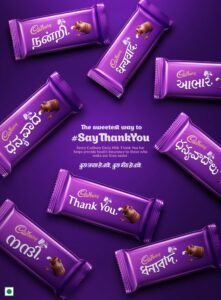
Soon after came the ‘Learners’ Pack’ Cadbury added simple words from Indian languages Tamil, Hindi, Bengali, Gujarati, and more right onto its wrappers. It wasn’t just about language it was about creating shared understanding in a country built on diversity. And when one ad showed neighbors switching to simple English to make a Tamil-speaking newcomer feel at home, people across India smiled. It wasn’t dramatic. It was familiar. Quiet and Real.
Challenges Along the Way
When Cadbury first stepped onto Indian soil, it knew the journey wouldn’t be as smooth as its chocolate. For decades, Indian sweets meant ladoos, gulab jamun, and kaju katli, treats deeply woven into culture and celebrations. Chocolate, on the other hand, was foreign, unfamiliar, and often seen as an inferior luxury.
The biggest challenge? Changing perceptions. Cadbury had to convince Indians that chocolate could stand proudly alongside traditional mithai during festivals and special occasions. It wasn’t an overnight win; it took time, patience, and powerful campaigns like ‘Kuch Meetha Ho Jaaye’ to weave chocolate into the fabric of Indian celebrations.
Then came the scorching Indian summer temperatures soaring past 40°C turning Dairy Milk bars into quick-melting messes before they even reached customers. Many small-town shops didn’t have refrigerators, so Cadbury had to act fast. They introduced coolers, revamped packaging, and redesigned their distribution network, a complex logistical puzzle that they managed to solve, ensuring chocolate survived the heat.
Just as Cadbury was becoming a household name, the brand faced its toughest test in 2003 with the infamous worm controversy. Trust was shaken, and consumers hesitated. But instead of hiding, Cadbury took responsibility. They revamped their packaging, personally visited thousands of retailers, and brought in Amitabh Bachchan to help restore faith. Gradually, confidence returned, and so did the love for the brand.
Through every twist and turn, Cadbury has shown resilience adapting, responding, and staying deeply connected to the Indian heart. The journey wasn’t easy, but that’s exactly what makes the sweetness all the more meaningful.
When Great Ads Turn Into Growth: Cadbury’s Current Position
You know, Cadbury’s story isn’t just about making chocolate that melts in your mouth, it’s about the people and values behind every bar. It all started with George and Richard Cadbury, who dreamed of building not just a business but a community where people could thrive. That spirit lives on today through the Cadbury Foundation, supporting local health, education, and wellbeing initiatives, and encouraging their own people to give back.

But Cadbury’s care doesn’t stop there. With Cocoa Life, they’ve been working closely with farmers and their families to create a more sustainable cocoa supply. It’s about improving lives, protecting kids from labour, and making sure the land stays healthy for generations to come. And it’s a journey that’s only just getting started, with big plans to keep making a positive impact.

Sustainability is woven into everything, from rethinking packaging to using recycled plastics for millions of chocolate bars each year. They’re not just making treats, they’re making sure those treats are kinder to the planet too.


And then there’s Cadbury Unwrapped, a peek behind the scenes that shows just how much care, innovation, and passion goes into every bar. From fresh milk flowing into their iconic Bournville factory to millions of chocolate blocks crafted daily, it’s clear Cadbury knows what people want and keeps delighting us with every bite.

At the end of the day, Cadbury isn’t just about chocolate it’s about a legacy of care, community, and making the world a little sweeter, one bar at a time.
Competitor Landscape
In the ever-growing Indian chocolate market, Cadbury may wear the crown, but the competition is anything but quiet. Nestlé remains a strong contender, especially with its popular wafer-based chocolates like KitKat and Munch, which are household staples across the country. Then there’s Ferrero Rocher, carving out a space in the premium gifting segment with its gold-wrapped elegance. Amul, known for its dairy heritage, is also pushing into the chocolate space with value-driven products that appeal to both rural and urban consumers. International giants like Mars are tapping into the market too, with bars like Snickers and Bounty slowly gaining ground among the youth.
Even regional players like Campco and Lotus Chocolates are making waves, especially in southern markets, offering competitive pricing and strong distribution. What sets Cadbury apart, though, is its emotional connection deeply rooted in Indian festivals, celebrations, and everyday moments. It’s a tasty battle out there, and Cadbury keeps winning hearts by staying true to its heritage while constantly evolving.
Brand Beats’ Take
From a humble grocery store to a small factory, that’s where your favourite Cadbury began. And look at where it stands today sweeping its way into the hearts of millions. For us at Brand Beats, Cadbury’s journey embodies everything a brand should aspire to: purpose, persistence, and a deep emotional connection.
Cadbury didn’t just grow; it grew with its people, its culture, and its values. It adapted without losing its soul, innovated quietly without noise, and built trust that has lasted generations. For marketers, it’s a powerful reminder that real brand love isn’t created in quick bursts of campaigns, it’s earned, slowly and sweetly, over time.
So… ho jaaye kuch meetha? Because with Cadbury, it’s never just about chocolate- it’s about every sweet moment in between.