


The biggest shift in consumer behavior today is not happening on screens. It is happening outside them. Across concerts, creator festivals, immersive pop-ups, community gatherings and niche cultural events, audiences are increasingly moving away from passive content consumption and toward experiences that feel participative, emotional and deeply personal.
People no longer want to simply watch culture unfold from a distance. They want to sing along, belong, contribute, document, network, co-create and leave with stories that stay with them long after the event ends.
And brands, marketers, platforms and creators are now trying to understand what this massive behavioral shift really means.
That became the central theme of a thought-provoking panel discussion titled “Are Brands Sleeping on the Experience Economy Boom?” held at BREW 2026, WPP Media’s flagship industry platform focused on the future of marketing, culture, technology and consumer behavior. Organised by WPP Media under the larger theme “Brewing Disruption: Where Disruption Fuels Creativity,”
Moderated by Ruchi Mathur, Cluster Lead – North at WPP Media, the panel brought together some of the most influential voices operating at the intersection of culture, music, storytelling, live entertainment and community building.
The conversation featured Ritam Bhatnagar, Founder of India Film Project (IFP), Laksh Maheshwari, storyteller and author, Arjun Kolady, Head of Sales at Spotify India and Anmol Kukreja, Founder and CEO of Skillbox
Over the course of the session, the speakers unpacked everything from fandom and niche communities to experiential branding, creator culture, regional music, immersive storytelling, live entertainment infrastructure and the role of technology in shaping the future of experiences.
Consumers Don’t Want Passive Content Anymore
Setting the context for the session, Ruchi Mathur spoke about how audiences today are actively rejecting passive forms of engagement. “Consumers are moving away from passive consumption of content in their homes, on their screens, to the immersion of an experience, to feeling the vibe, to feeling the energy, to sharing in the real world,” she said.
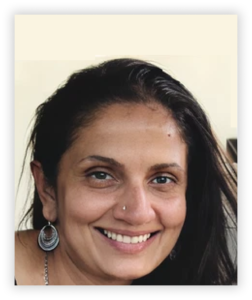
Her observation immediately resonated across the panel. Whether it was music, storytelling, community-building or live entertainment, every speaker agreed that audiences are increasingly prioritizing experiences that allow them to participate rather than simply observe.
This transition is also fundamentally changing the way brands need to think. The audience of today is not impressed by visibility alone, they are looking for connection and connection can only happen when people emotionally feel part of something larger than themselves.
Spotify, Playlists and the Rise of Intimate Experiences
Arjun Kolady, who leads sales for Spotify India, reflected on how music streaming platforms are increasingly turning digital behavior into real-world experiences. “One of the things that really stood out for me was something Spotify did a couple of months back,” he shared.
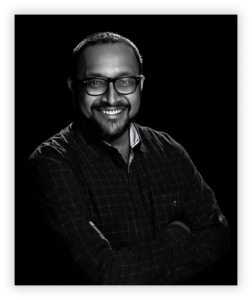
He explained how Spotify transformed listener data into curated physical experiences. “There’s a very popular playlist called ‘Sad Boy Hours,’ which is largely mellow music. Spotify looked at different listener behaviors across cities and converted those playlists into experiences for premium users.”
Instead of massive stadium events, these experiences were intentionally intimate.
“The artist that you were hearing on a streaming platform suddenly performs in front of you only for 200 people,” he said. For Arjun, the future of experiences isn’t only about scale. It is about emotional resonance.
“The way I looked at experiences earlier was large crowds and huge concerts. But now something niche, something personal and something special stays with you much longer.”
For Spotify, the focus is no longer just on distributing music. It is about building long-term cultural ecosystems around genres, communities and artists.
“If K-pop can become a global phenomenon coming out of Korea, then given the richness and diversity of Indian music, what are the bets we can make to create global phenomena out of India?” he asked.
Speaking about Spotify’s RAP 91 initiative, Arjun emphasized that culture-building cannot happen through isolated campaigns. “It’s not just about creating an event or a playlist. It’s about building a journey around that subculture.”
Participation Is the New Entertainment
For storyteller and author Laksh Maheshwari, memorable experiences are defined by participation. “All those experiences where the audience becomes a part of it, those are the ones that stay with me,” he said. He explained how theatre has always fascinated him because of its emotional immediacy. “When you watch theatre, you somehow feel connected to what they’re doing.”
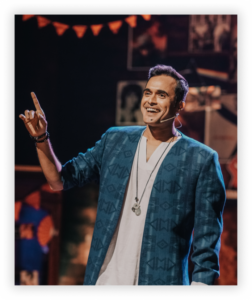
Laksh also recalled attending a performance by musician Jacob Collier, an experience that fundamentally changed the way he thought about live entertainment. “He turns every audience member into a musical instrument. You become the beat, the clap, the metronome.”
That immersive participation, according to him, creates unforgettable emotional memory. “That experience is something very unique. I’ve never seen anything like that.”
Laksh later expanded this thought into a broader philosophy around storytelling itself. “You don’t remember exactly what was said. You remember how you felt after hearing it.”That emotional aftertaste, according to him, is the real power of experiences.
Skillbox and the Business of Fandom
Anmol Kukreja, Founder and CEO of Skillbox, brought the perspective of someone building one of India’s fastest-growing live entertainment and ticketing platforms. Speaking about the psychology of audiences today, he explained that memorable experiences are built when people stop feeling like spectators. “Any experience becomes memorable when fans become participants instead of spectators,” he said.
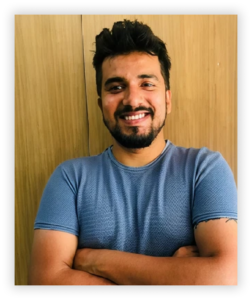
According to Anmol, the strongest experiences create emotional ownership. “The audience should leave feeling, ‘I was there.’”
For Skillbox, fandom is the ultimate validation.“If someone is willing to step out of the digital world, buy a ticket, travel maybe thousands of miles to attend your show, that is real fandom.”
According to him, many marketers continue evaluating events through outdated visibility metrics. “They just want traditional logo placement.” But modern audiences are rejecting overt advertising. “Things have moved beyond logo space. Audiences repel from brands that are too direct.”
He cited Simba as an example of a brand that has understood cultural participation correctly.
“When you think of hip-hop, Simba is probably the first beer brand that comes to mind.” The reason, according to him, is because the brand embedded itself into the culture rather than merely sponsoring events. “They associated themselves with hip-hop as a culture.” He shared how during a Hanumankind concert, Simba recreated the artist’s visual language inside the venue itself. “They brought the digital world into the physical experience.”
Community Is Becoming the New Infrastructure
If one speaker captured the long-term power of community-led experiences most clearly, it was Ritam Bhatnagar. The founder of India Film Project explained how IFP evolved from a content festival into a cultural ecosystem. “The festival happens in two parts. First, people create content. Then they travel to Bombay to showcase it.” “When there’s a community, the event becomes a home.”
He described such experiences as modern-day rituals. “For a community, an event becomes an annual pilgrimage.” Ritam also shared several examples that demonstrated how transformative community-driven experiences can become. “Two musicians met at IFP in 2019, formed a band, and by 2023 they were performing at Lollapalooza.”
Why Brands Still Don’t Understand Experiences
One of the strongest moments during the discussion came when the panel collectively examined why so many brands still fail to engage meaningfully with experiential culture.
According to the speakers, the problem is not lack of opportunity. It is outdated thinking, Ritam Bhatnagar pointed out that most sponsorship conversations still revolve around logos and visibility. “They always ask about logo size, placements and visibility.” But experiential culture, he argued, cannot be measured through footfalls anymore.
Ritam Bhatnagar pointed out that brands are still relying on outdated metrics while evaluating experiential marketing, arguing that visibility alone no longer defines success in cultural spaces. “Footfall is no longer the metric,” he said, explaining that the real value of an experience lies in the emotional connection it creates.
According to him, brands need to move beyond counting attendees and instead ask deeper questions such as, “How many people evoked an emotion after interacting with your brand?” Laksh Maheshwari reinforced the same thought from a creator’s perspective, noting that audiences today instantly disconnect from overly aggressive branding. “If somebody is promoting a brand too directly, audiences walk away from it,” he said, adding that subtle integration creates far stronger recall. “The brand should go subconsciously into the audience’s mind. It shouldn’t be in your face.”
Technology, AI and the Future of Live Experiences
Toward the final leg of the conversation, the panel explored the role of technology and AI in shaping live entertainment.
Anmol Kukreja explained how Skillbox is building technology systems that help brands understand audience behavior beyond vanity metrics.
“We’ve created our own RFID systems and we are able to tell brands which cocktail got consumed the most during a concert.” For Anmol, the future lies in measurable experiential engagement. “At this point in time, brands don’t have access to these metrics. We are trying to change that.”
Laksh Maheshwari added another layer to the discussion by talking about audiences from smaller cities. “For people from tier 2 and tier 3 cities, attending experiences requires much more effort, time, money and attention.” But that effort, he said, also reflects aspiration.
Experiences Are No Longer a Trend. They Are a Cultural Shift.
Closing the session, Ruchi Mathur summarized the conversation by reframing experience marketing not as a media strategy, but as a larger societal shift. “This is not just another media trend. This is a cultural shift that’s happening. It’s not about reach. It’s not about footfalls. It’s about loyalty. It’s about lasting engagement. It’s about the love that a brand creates.”
And perhaps the most memorable line of the session came right at the end.
“I don’t think brands are sleeping on the experience economy boom. They are probably napping. They just need a little nudge.” By the time the conversation ended, one thing had become impossible to ignore.
India’s experience economy is no longer waiting to arrive. It is already reshaping the way consumers engage with music, creators, communities, culture and brands. The audiences have evolved. The fandoms are stronger. The communities are deeper. And the brands that understand this shift early will not just gain attention. They will earn cultural relevance.