
Fashion for Gen Z is no longer simply about keeping up with seasonal trends. A look can emerge from a K-drama, a creator’s reel, a reality show or a cultural moment and move from screen to wardrobe almost instantly. For brands targeting this audience, the challenge is therefore not just to identify what consumers want to wear, but to understand where that desire comes from and how quickly it needs to be fulfilled.
NEWME has built its proposition around this changing behaviour. Founded as a digital-first fashion brand focused on Gen Z women, the company has increasingly expanded into physical retail, creator-led discovery, entertainment partnerships and faster fulfillment.
But the evolution of NEWME has also challenged some of its own early assumptions. What began with the belief that a digitally native generation would naturally prefer online shopping has expanded into a broader omnichannel strategy, with stores becoming spaces not just for shopping but also for discovery, content creation and community.
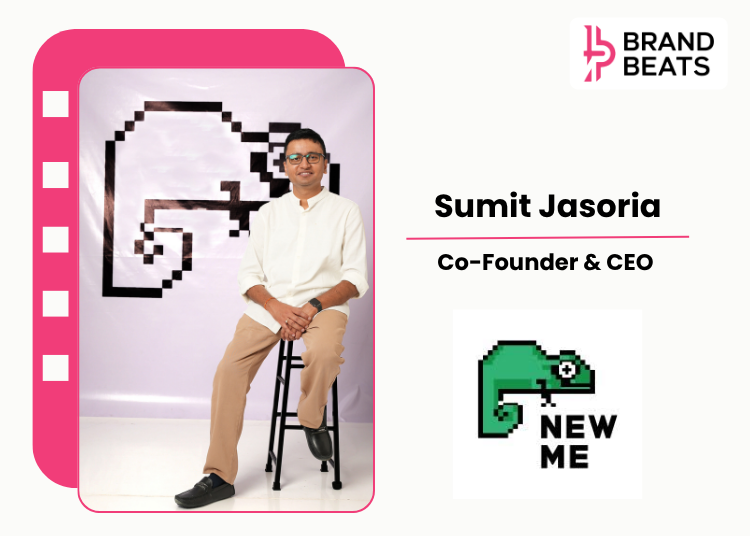
Against this backdrop, Sumit Jasoria, Co-Founder & CEO, NEWME, speaks to Brand Beats about what the company initially misunderstood about Gen Z, how fashion preferences differ across India’s markets, why physical retail became important to a digital-first brand, and how creators, entertainment and commerce are converging to shape the next phase of fashion discovery.
From Digital-First To Omnichannel: NEWME’s Gen Z Learning Curve
When NEWME started, the company assumed that a digitally native generation would naturally prefer to shop online. But its early offline experiments challenged that assumption.
“Initially we thought that we will always be an online only brand because we thought that customers can easily shop online. But once we started doing pop-ups across India we realised that a large section of GenZ expects the brand to be offline with an amazing experience,” says Jasoria.
The learning went beyond simply understanding where Gen Z wanted to shop. According to Jasoria, NEWME’s physical stores have also become spaces where young consumers and creators interact with the brand.
“Our stores became not only a shopping destination but also a content setup for a lot of young and upcoming creators across the country,” he says.
That shift has also influenced NEWME’s expansion strategy. As the brand moved into markets such as Jaipur, Surat, Vadodara and the Northeast, it found that fashion demand was not restricted to the metros.
“The expansion into markets such as the Northeast has reinforced the idea that India’s fashion map is much broader than the traditional metro markets,” says Jasoria.
Shillong, in particular, has emerged as a strong market for the brand despite being classified as a Tier 3 location. Jasoria points out that markets such as Surat and Vadodara have also shown strong demand, particularly among consumers who prefer to touch, feel and try fashion before purchasing.
Reading Gen Z Before The Trend Peaks
Understanding what Gen Z will buy next requires NEWME to look beyond conventional fashion cycles. The brand combines trend mapping, social and cultural cues, consumer behaviour and real-time buying data to identify emerging preferences.
Jasoria says the brand’s trend team creates weekly mood boards, while its technology and data teams analyse customer behaviour to determine which trends are gaining traction.
But some of the strongest signals can come from culture itself.
“Cultural content, including Korean dramas and changing content consumption, can act as an early indicator of emerging fashion trends,” Jasoria says.
That need to identify and respond to trends quickly has shaped NEWME’s product engine. The brand launches 500+ new designs every week, allowing it to respond to changing preferences rather than relying only on traditional seasonal cycles.
The same approach applies when NEWME looks beyond metros. While consumers in Tier 2 and Tier 3 cities may shop differently, Jasoria says their fundamental desire for fashion remains similar.
“Customers in Tier 2 and 3 cities look at social media and build their wardrobe basis the local culture but most important for them is that the brand needs to be aspirational and instill confidence in them when they wear it.”
From Festive Dressing To Everyday Gen Z Occasions
For NEWME, understanding Gen Z also means understanding the occasions around which they dress.
Rather than limiting its festive offering to conventional ethnic silhouettes, the brand has developed a fusion-led approach through its annual Infusion collection.
“At NEWME we always launch a fusion collection called Infusion keeping the festive demand in mind,” says Jasoria. “This collection has been our annual launch with 300-400 styles especially designed for the festive season.”
But the brand’s occasion-led approach extends well beyond Diwali.
Why NEWME Isn’t Choosing Between Celebrities And Micro-Creators
NEWME’s creator strategy similarly reflects the diversity of its Gen Z audience.
Rather than treating celebrity influencers and micro-creators as alternatives, the brand uses different creator tiers depending on the objective.
“In our business there is a need for different creators to unlock new consumer class across the country. We work with different creators as per business need,” Jasoria explains.
For large annual sales campaigns, NEWME works with celebrity influencers alongside micro-creators. At the same time, its college ambassador programme gives emerging creators an opportunity to collaborate with the brand and create content for their own communities.
Entertainment partnerships have added another layer to this strategy. Through MTV Splitsvilla, NEWME has been able to work with upcoming celebrity creators while reaching a wider national audience.
The larger shift, however, is happening in how that content connects with commerce.
When Fashion Discovery Becomes A Shopping Moment
Jasoria believes fashion discovery is increasingly moving away from consumers actively searching for a product towards consumers discovering something they want through content.
“We believe fashion discovery is increasingly becoming inspiration-led rather than search-led, particularly for Gen Z,” he says.
A consumer may see a look on a creator, character or reality show and immediately think, I want that. NEWME’s Shop the Look integration with Splitsvilla on JioHotstar was designed around this exact behaviour.
“Instead of asking viewers to leave the content, search for a product and then make a purchase, we brought the fashion directly into the entertainment experience,” says Jasoria.
The early response, according to NEWME, has been encouraging. 50% of users who shopped through the Shop the Look experience were first-time NEWME customers, while repeat users engaging with the feature increased by 40%.
For Jasoria, this points towards something bigger than a single commerce feature.
“I think the larger opportunity is the convergence of content, community and commerce.”
The opportunity, he adds, is to shorten “the distance between seeing something you love and being able to buy it.”
Building A Brand Beyond The First Transaction
As NEWME scales, the question is also becoming less about simply acquiring customers and more about building long-term brand recall.
Not every creator or brand campaign can be measured through an immediate transaction, particularly when consumers may see content long before they are ready to purchase.
For such campaigns, NEWME tracks Top of Mind Awareness (TOMA) to understand the brand’s resonance with consumers.
Jasoria believes this is increasingly important as the company moves from startup to national fashion brand.
“For NEWME, the two are not mutually exclusive,” he says, referring to customer acquisition and long-term brand building. “We look at every consumer touchpoint, from creators and content to campus communities, entertainment partnerships and our physical stores, as an opportunity to both drive discovery and build the brand.”
The bigger shift, according to Jasoria, is in the question the brand asks after acquiring a customer.
“The bigger shift for us is therefore from simply asking ‘How much did we spend to acquire this customer?’ to also asking ‘What did we do to make this customer want to come back to NEWME?’”
That, ultimately, captures the larger evolution of NEWME from a digital-first fashion platform to a brand attempting to become part of how Gen Z discovers, experiences, shares and shops fashion.