
The sexual wellness industry is booming, spanning condoms, lubricants, toys, and hygiene. Brands are now racing to capture a share of a market that has finally begun to shed its stigma. Yet, beneath the surge of bold campaigns and rapid product innovation lies a striking oversight.
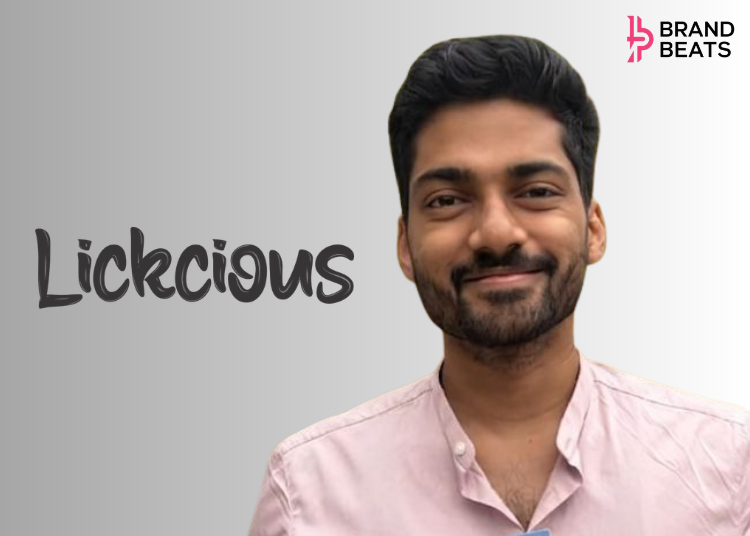
Despite the noise, one of the most fundamental aspects of physical intimacy remains largely ignored: oral intimacy. No dedicated brands, science-backed solutions, or mainstream dialogue addresses it. What persists instead is silence, and with it, a quiet but widespread confidence gap in bedrooms across India. For Ishan Jindal, this silence emerged as a gateway to build a new category. And that’s how Lickcious came to life.
Lickcious is a science-backed sexual wellness brand built exclusively around oral intimacy and intimate hygiene. Where most sexual wellness brands have defaulted to the familiar territory, Lickcious has gone niche, asking a more specific and largely ignored question: how do we make oral intimacy more comfortable, confident, and enjoyable for everyday Indians?
Its current product range reflects exactly that intent. The brand’s hero product is an oral intimacy spray, a first-of-its-kind in India, designed to address taste and odour, the two factors most silently responsible for confidence issues during intimate moments.
Science Was Solved, Stigma Wasn’t
Every great brand begins with an honest conversation. For Lickcious, it began with hundreds of them. Long before there was a product, there were interactions with young Indian adults, sometimes candid, sometimes uncomfortable, but always revealing.
“The hardest part is always customer insight,” says Jindal. “Consumer behaviour around oral intimacy in India is extremely under-discussed. People experience the problem, but they rarely articulate it.” he notes. “When we started doing one-on-one conversations and research with young adults, the same concerns kept coming up.”
Those repeated, unspoken pain points which impact confidence during intimate moments, ultimately became the foundation on which Lickcious was built.
Talking about the actual product, Lickcious doesn’t just solve for pleasure. It solves for trust. Every formulation is dermatologically tested, every ingredient chosen with the sensitivity of its application in mind. “This product needs to be used in the most sensitive parts of the human body. It not only needs to make it taste great and odour-free, it also has to be super safe,” Ishan emphasises.
Where Category Meets Creation
Calling yourself India’s number one oral expert sounds audacious, but only until you realise there’s no one else even in the frame. That’s not a flaw in the claim; it’s the strategy. Lickcious didn’t enter a crowded market. Rather, it identified a gap so ignored it barely existed, and claimed it early. “When we say India’s number one oral expert, we’re not claiming scale yet. We’re claiming category leadership in solving a problem that hasn’t been addressed,” Jindal explains.
Lickcious is equally clear about what it refuses to be. It’s not here to compete with condom brands, lubricants, or the broader universe of intimacy products, which is already crowded, price-driven, and interchangeable.
Instead, it is operating where others haven’t looked, building sharply defined micro-categories within intimacy. “Sexual wellness today has products across condoms, lubricants, toys, and hygiene. But when it comes to oral intimacy solutions, there hasn’t really been any dedicated brand voice,” he notes.
The Shark Tank Moment
By November 2025, Lickcious was barely a few months old when Ishan Jindal walked into the Shark Tank studio and pitched in front of India’s most formidable investor panel. He walked out with a whopping deal of Rs 50 lakhs from Anupam Mittal, making Lickcious the first sexual wellness brand in Shark Tank India to secure investment on the show. But it was what Mittal wrote on the back of the cheque that said everything. Three words: ‘Kama Sutra Revival.’
Those words said it all. Coming from Anupam Mittal, it was more than just an endorsement. It was a point of view. India, the land that gave the world the Kama Sutra, now struggles to openly talk about desire, pleasure, and confidence in intimacy. That contradiction is exactly what he saw in Lickcious, where it was not just a business opportunity, but a cultural correction waiting to happen. “He said we need a Kama Sutra revival,” recalls Jindal, “where we break the taboo and make the conversation more open.”
However, for reasons beyond their control, the episode didn’t make the final cut. For most founders, that’s where the story stalls. For Jindal, it became a turning point. “When the episode did not air, we realised the story still needed to be told,” Ishan says. “We could have recreated the pitch. But we wanted to tell it authentically, through our own platforms.”
The Growth Engine
Marketing in a space constrained by platform restrictions and social hesitation, Lickcious approaches this with a layered, highly intentional strategy. And it starts by sparking the conversation. And bringing on Poonam Pandey as a brand ambassador early on was the most aligned way to do so.
As Jindal puts it, “Poonam represents a lot of what the brand does in the sense that she brings in those unfiltered conversations around sexuality.” The objective wasn’t to position her as the face of the brand, but to make the conversation itself more visible and acceptable.
From there, the baton can be passed to influencers, who offer a relatable, everyday voice which normalises the discussion and brings it closer to lived experiences. But the most critical layer, according to Ishan, is credibility. Doctors and educators anchor the narrative, turning conversation into informed understanding.
This trilogy combines to raise the comfort level around intimacy itself. “The goal is largely not just expanding reach, it’s changing the comfort level of the conversation,” affirms Jindal. Seeing that education sits at the core of Lickcious’s playbook, this move combines building content and encouraging communities to have open, informed conversations around intimacy.
Jindal believes that offline brand awareness will come for the brand, but deliberately and eventually. “Physical outreach is definitely on our roadmap, but it comes with visibility constraints and requires a very strategic approach. We don’t want to rush it, we want to get there the right way,” he says.
Building for Scale, Not Just Numbers
Talking about the business, Jindal pointed out, “Less than a year in, Lickcious is already scaling at over 50% month-on-month revenue, on track to close at the financial year at Rs 5–7 crore.” But the real focus isn’t headline revenue, rather it is category ownership. The roadmap is clear: deepen leadership in oral intimacy, unlock new micro-categories, and expand distribution across channels without losing sight of the larger play. Growth is aggressive, but intentional. Because the larger goal is to define and dominate a category before the rest of the market catches up.
For a brand built on breaking silences, distribution is a brand decision as much as a business one. Lickcious began with its own website, intentionally and by design. “We spent a lot of time building and developing our website, and that has helped us get the majority chunk of revenue,” he clarified. In a sensitive category, D2C serves as more than just a channel. It becomes the hub for establishing trust and reaffirming the narrative.
From there, the brand expanded to e-commerce, driving scale and discovery. “We went live on Amazon and Flipkart and now we are scaling both,” he notes, positioning marketplaces as the next layer of growth. Quick commerce followed, starting with Blinkit and expanding further, serving high-intent, impulse-driven demand where immediacy matters.
The Founders’ Edge
For Jindal, the shift from his earlier venture, Wobb, to Lickcious has been fundamental. “Wobb was a SaaS, product and tech-focused business,” he explains, “but with a D2C brand, it’s about storytelling, consumer trust, brand perception, category awareness.” The biggest change isn’t just what he’s building, rather in how he’s building it. “Where we used to spend a lot of time building a platform, that time is now spent on building a brand.”
At the same time, past experience has become a strategic edge. “My experience from Wobb really helped me understand how the influencer ecosystem works,” he says, an advantage that’s critical in a category where traditional advertising faces constant resistance.
“It becomes far more difficult for a brand in this space to do the kind of influencer partnerships that others can.” The focus now is on structuring and scaling influencer programs that can navigate those constraints.
If there’s one defining takeaway, it’s clarity. The early experience of pitching on Shark Tank India forced the brand to cut through the noise. “When you get two minutes to convey your pitch, you focus only on the real fundamentals,” Jindal says. “It forces you to think clearly about your product, your business, and what you need to do now and next.” That process, he adds, is half the job done. “Once you know exactly what you’re building, it’s about taking that forward.”