
In India, some brands don’t just sell products, they own the category. Say “butter,” and one name instantly surfaces. Ask for glue, and people often use a brand name instead of the generic term. Think of coconut oil, and a familiar blue bottle appears in your mind. That level of recall isn’t accidental. It is the result of deliberate, disciplined marketing.
In a business landscape where companies are constantly expanding into new categories, launching variants, and chasing portfolio growth, a few brands chose a different path. Instead of diversification, they embraced focus. They built their entire identity around one hero product and invested years in making it unforgettable. Rather than spreading their budgets and storytelling across multiple offerings, they concentrated their messaging, visuals, and emotional appeal around a single promise.
This approach creates something powerful in marketing: mental dominance. When a brand consistently reinforces one product, it becomes the default choice in the consumer’s mind. The association grows so strong that the product and the brand become interchangeable. Consumers don’t evaluate dozens of options; they simply remember what feels familiar and trusted.
In a cluttered marketplace, clarity becomes a competitive advantage. These Indian brands understood that owning one space completely can be more powerful than occupying many spaces weakly. They didn’t build empires by doing everything. They built them by doing one thing exceptionally well and marketing it relentlessly.
Here are Five Indian brands that turned a single product into an empire:
1. Fevicol
If there is one brand that perfectly defines the idea of building an empire around a single product, it is Fevicol. In a category as functional and unglamorous as adhesives, Fevicol chose not to diversify wildly or complicate its positioning. It focused on one core product — glue — and one core promise: unbeatable strength. Over decades, that singular focus helped the brand become synonymous with the category itself. For many Indians, glue is simply called Fevicol. That is the power of concentrated brand building.
Instead of relying on technical claims or aggressive expansion, Fevicol invested heavily in consistent storytelling. Its humorous, exaggerated advertisements translated product strength into culturally relatable moments, making the message both simple and unforgettable. By repeatedly reinforcing the same benefit and visual identity, the brand built massive recall and trust. Fevicol didn’t create an empire by selling multiple things, it created one by owning one product so completely that competitors struggled to exist in the consumer’s mind.
Link to the Video:
2. Haldiram Bhujia
Long before it became a global snack powerhouse, Haldiram’s was a small shop in Bikaner built around one specialty: thin, crispy, perfectly spiced bhujia. That original Bikaneri Bhujia wasn’t just another namkeen; it had a distinct texture and flavour that quickly won loyal customers. What started as a local recipe turned into a regional obsession, and soon, into a national favourite. The brand’s early growth wasn’t driven by a wide product range, it was powered almost entirely by the massive popularity of that single product.
As demand grew, so did distribution, packaging, and branding but the core remained bhujia. Even today, despite selling hundreds of snack varieties and sweets, the identity of Haldiram’s is deeply rooted in its original Bikaneri Bhujia. That one product created trust, scale, and recall strong enough to expand into new categories without losing authenticity. It’s a textbook example of how mastering one product first can lay the foundation for a multi-billion-dollar empire.
Link to the Video:
3. Parachute – Coconut Oil
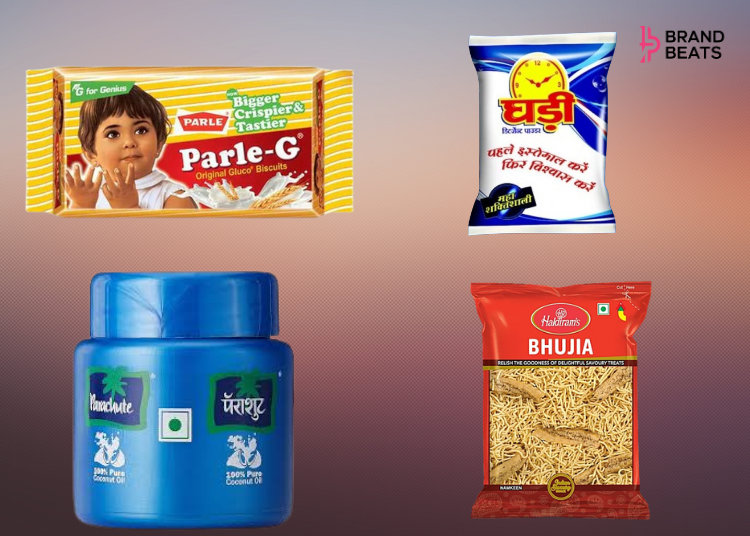
Before it became a diversified haircare brand, Parachute built its entire identity around one simple product pure coconut oil. In a market where loose, unbranded oil was common, Parachute introduced trust through packaging, consistency, and quality control. That iconic blue bottle became more than just a container; it became a symbol of purity and reliability in Indian households. For decades, coconut oil wasn’t just a category it was Parachute.
Rather than rushing into multiple segments, the brand focused on strengthening its dominance in coconut oil, ensuring nationwide distribution and strong recall. The clarity of its positioning helped it become the default choice for generations. Even as it later expanded into shampoos and other haircare products, the empire was undeniably built on that one hero product. Parachute proves that when a brand owns one essential ritual deeply enough, it can turn a basic commodity into a lasting empire.
Link to the Campaign:
4. Ghadi Detergent
In a category dominated by multinational giants and premium positioning, Ghadi Detergent built its empire on one simple idea: affordability for the Indian household. Instead of competing on luxury fragrances or advanced fabric technology, the brand focused on delivering dependable cleaning at a price point that appealed to mass India. Its messaging consistently reinforced value for money, making it a trusted choice in middle- and lower-income households across the country.
While many competitors diversified into premium variants and sub-brands, Ghadi stayed anchored to its core proposition accessible detergent powder that works. By concentrating on distribution in semi-urban and rural markets and maintaining clarity in its communication, the brand secured deep penetration without diluting its identity. Ghadi proves that owning the affordability space with one strong product can be just as powerful as chasing premium innovation.
Link to the video:
5. Parle-G
Long before premium cookies and exotic flavours filled supermarket shelves, there was one biscuit that quietly ruled them all, Parle-G. Wrapped in its unmistakable yellow packaging with the iconic Parle-G girl, the biscuit didn’t promise indulgence or luxury. It promised something far more powerful: familiarity. For generations of Indians, Parle-G was the companion to morning chai, school tiffins, train journeys, and rainy afternoons. It wasn’t marketed as a treat; it was positioned as a staple.
What makes Parle-G extraordinary is how it built an empire around one simple glucose biscuit. Instead of chasing trends or reinventing itself dramatically, the brand doubled down on consistency affordable pricing, mass distribution, and messaging rooted in nourishment and trust. Over time, “glucose biscuit” and Parle-G became almost interchangeable in everyday language. In a market that constantly chases novelty, Parle-G proved that sometimes, staying the same and staying everywhere is the most powerful strategy of all.
Link to the video: