

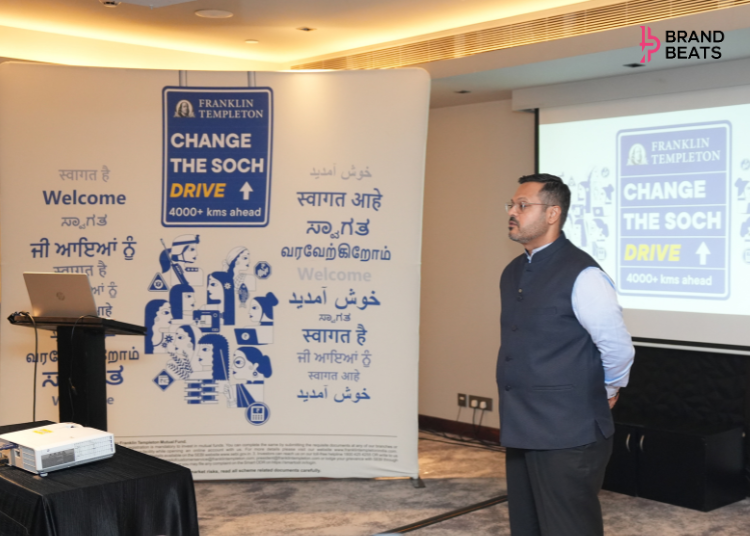
Franklin Templeton India’s nationwide investor education initiative, ‘Change the Soch – Kanyakumari to Kashmir Drive,’ has reached Bengaluru as part of its ambitious 30-day journey aimed at strengthening financial literacy and inclusion across the country, with a special focus on women investors.
Launched to commemorate Franklin Templeton’s 30 years in India, the first-of-its-kind campaign has spanned over 4,000 kilometres, covering 21 cities from the southern tip of Kanyakumari to Srinagar in Jammu & Kashmir. The initiative has sought to demystify mutual fund investing and encourage Indians to move beyond traditional savings towards long-term wealth creation.
The drive has been led by Avinash Satwalekar, President – Franklin Templeton India, who has personally engaged with communities across towns and villages. Every alternate day, the journey has halted in a new location, where investor education workshops have been conducted for women from diverse backgrounds
The Bengaluru leg of the campaign has held particular significance, as Karnataka has ranked among the top 50 mutual fund markets in India in terms of assets under management.
Through the ‘Change the Soch’ drive, Franklin Templeton has aimed to spark a mindset shift, encouraging more Indians especially women to take confident steps towards informed investing and financial independence.
Speaking on the initiative, Satwalekar has said, “Financial literacy among women is fundamental to India’s long-term socio-economic progress. While urban centres have made meaningful advances, lakhs of women across Bharat, especially in Tier 2 and Tier 3 regions remain underserved in terms of access to financial knowledge and tools. Through this initiative, we will engage with women from diverse walks of life and empower them with the knowledge and confidence to save, invest and adopt digital finance.”
Highlighting the broader impact of women’s financial empowerment, Satwalekar added, “When women make informed financial decisions, households could become resilient, communities could thrive and the country moves closer to inclusive growth. Bridging this gap is more than education – it is a vital step towards India’s ambition