
‘I’m lovin’ it.’ But what happens when McDonald’s lands in a country where beef is off-limits and chicken tikka rules? You get a full-blown culture shift… one golden fry at a time.
Here’s the kicker: this wasn’t America’s McDonald’s. In India, where beef is taboo for millions, Ronald McDonald had to go full creative mode rethinking everything from the Big Mac to the very layout of the kitchen.
It all began in 1996, when McDonald’s spotted a billion potential customers. But there was one huge condition: no beef, no pork, and absolutely no cultural missteps. Instead of imposing a global template, McDonald’s did something rare for a fast-food giant: it actually listened.
Two local joint ventures were formed: Connaught Plaza Restaurants for North and East India, and Hardcastle Restaurants for West and South India. Together, they opened the first outlets in Delhi and Mumbai, complete with separate kitchens for vegetarian and non-vegetarian food. A small detail? Maybe. A huge signal of respect for local culture? Definitely.
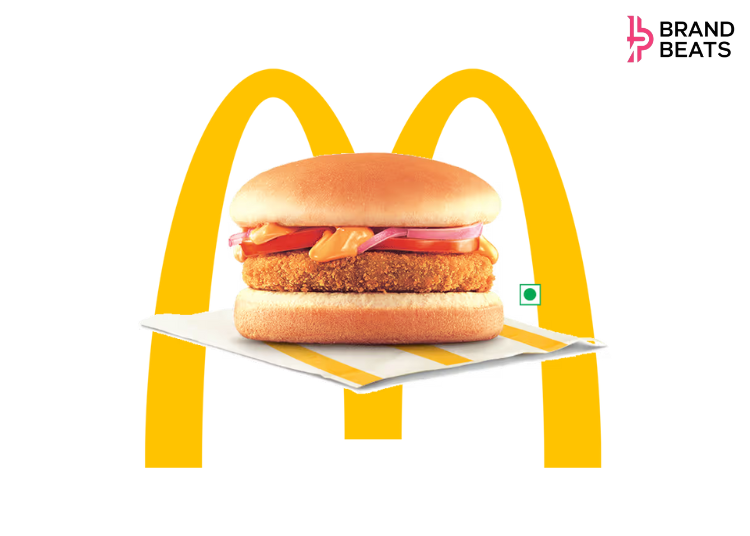
Then came the menu makeover. The Big Mac? Replaced. In came the Maharaja Mac, made with chicken. Filet-O-Fish? Too foreign. So McDonald’s invented the McAloo Tikki, a crispy potato-and-pea patty that went on to become India’s bestseller. Bacon was out and Paneer came into the story. And the spices? A full desi makeover. Suddenly, the golden arches didn’t feel so foreign they felt like home.
Reinventing the Burger
By the early 2000s, McDonald’s had grown beyond a burger joint. It became a symbol of modern India: air-conditioned comfort, reliable quality, and a place where you could hang out without even ordering a full meal. Birthday parties, college breaks, late-night fries runs it all clicked with India’s growing middle class.
And the evolution didn’t stop there. McSpicy Paneer and Masala Grill Chicken joined the menu. McDelivery arrived before most local restaurants even thought about online ordering. McCafé added coffee to the mix, turning it into a full-blown hangout spot. McDonald’s wasn’t just serving food it was shaping experiences.
Today, millions of Indians visit McDonald’s every day. While the Big Mac might rule the world, in India it’s the McAloo Tikki that reigns supreme. This isn’t just fast food, it’s a case study in cultural adaptation done right. McDonald’s didn’t ask India to change. It changed for India. And that’s exactly why it worked.
Brand Beats’ Take
Global doesn’t mean identical. McDonald’s didn’t just “localize” it Indianized. From menu to mindset, it built a brand that respected the market and, in doing so, became part of it. The golden arches may be universal, but the flavour of success? Always local.