
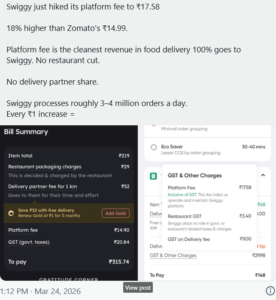
Following a similar move by its rival Zomato, Swiggy has officially increased its platform fee to Rs 17.58 per order. This represents an approximate 17% hike from the previous charge of Rs 14.99. According to the company’s app listings on March 24, 2026, both major food delivery aggregators have now landed at the exact same effective price point for consumers, despite having slightly different billing structures.
The platforms state that these incremental charges are necessary to improve unit economics as the industry shifts from a ‘subsidy phase’ toward a ‘profitability phase.’ While Zomato’s fee is broken down into a base of Rs 14.90 plus GST, Swiggy’s Rs 17.58 is an all-inclusive figure. This marks the fourth time Swiggy has adjusted this fee in the last seven months, highlighting a strategy of frequent, small-scale increases to offset rising operational costs.
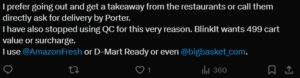
The news of the hike has been met with a wave of frustration and disbelief across social media. Many users are expressing their shock, with some predicting a shift back to local dining to escape the mounting costs of convenience. Viral posts suggest that even the most loyal customers are now reconsidering their ordering habits.
Industry analysts point out that these fees have become a massive revenue stream, generating an estimated Rs 3,500–4,000 crore annually across the e-commerce sector. Since the platforms process over 4 million orders daily, even a Rs 2 to Rs 3 increase translates into significant absolute gains. The consensus among market observers is that as brands look to protect margins against restaurant pushback on commissions, the end-user will likely continue to bear the brunt of these recurring charges.

Brand Beat’s Takes
The fee hike has sparked a strong reaction from users, with many arguing that platforms like Swiggy and Zomato are increasingly shifting costs onto consumers in the name of profitability. A common sentiment across social media is that customers are being made to pay more through layered charges, leading to the perception that platforms are prioritising revenue extraction over user value.
At the same time, several users are questioning the core value of these platforms if costs continue to rise. Many point out that if prices and fees keep increasing, it may make more sense to order directly from restaurants instead. Since a large section of users initially turned to these apps for discounts and convenience, the growing charges are leading to a rethink, with some asking whether the platforms still justify the extra cost.