

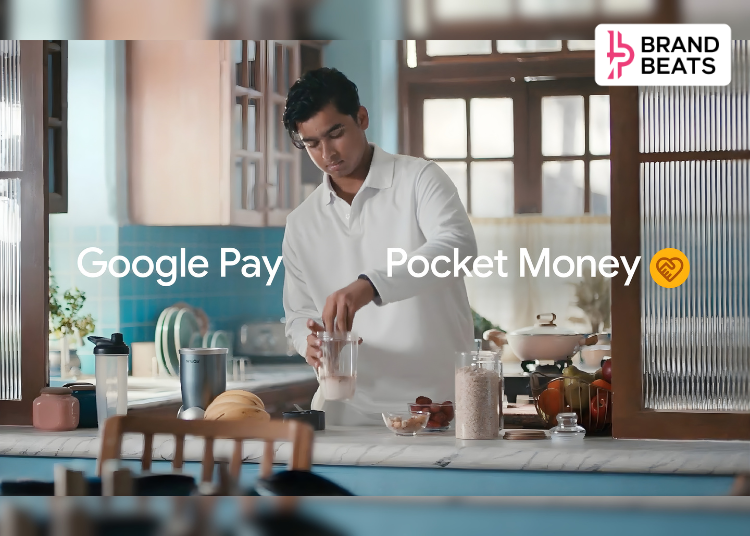
Google Pay has launched a new campaign to highlight Google Pay Pocket Money, a feature designed to enable teenagers to make digital payments through supervised access to their parents’ bank accounts. Developed in partnership with National Payments Corporation of India and built on the UPI Circle framework, the feature reflects a shift toward expanding digital payments access to younger users within a controlled environment.
Conceptualised by TBWA\Lintas, the campaign is structured around a series of films that depict teenagers navigating everyday scenarios where payment autonomy is often limited. The narratives highlight a common friction point, where young users are otherwise independent but rely on parents or older family members for transactions. The feature addresses this gap by allowing teenagers to link their UPI IDs to a parent’s account, enabling transactions with oversight and control.
At the centre of the campaign is Vaibhav Sooryavanshi, a 15-year-old cricketer known for his performances across domestic and international platforms. The films place him alongside other teenagers in everyday situations, illustrating how the feature enables independent payments while maintaining a layer of parental supervision.
The campaign positions Google Pay Pocket Money as a tool that aligns financial access with behavioural independence already visible among younger users. By integrating oversight mechanisms with ease of use, the feature is designed to balance autonomy with security, reflecting evolving expectations around digital finance in households.
Speaking about the campaign, Vasudha Misra, President – Creative, TBWA\ Lintas, said, “Teenage years, whether they are spent breaking records in the IPL or going for tuitions, are usually the time when young adults get their first taste of independence. And responsibility. Pocket Money on Google Pay is a wonderful way (a parent’s PoV here) to introduce them to digital finance and handling money, while equipping them to chase their dreams.”