
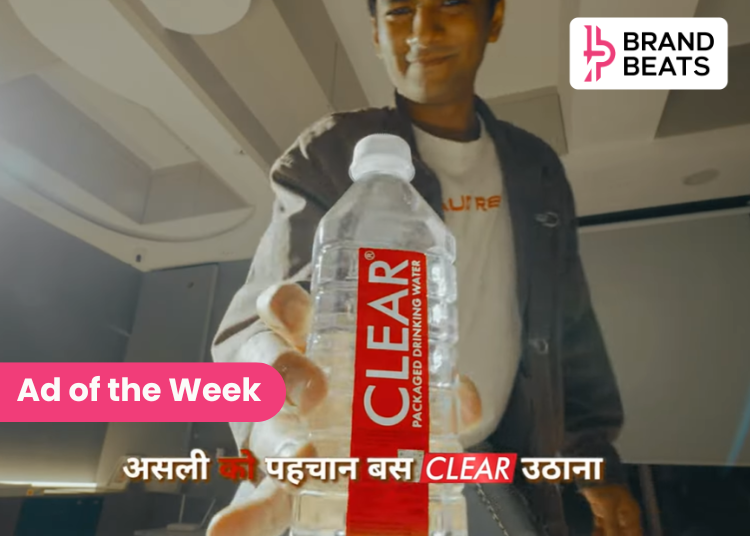
Most brands use advertising to convince people to buy their product. CLEAR Premium Water uses its latest campaign to convince people not to buy the wrong one.
In a market flooded with lookalike bottles, confusing packaging and counterfeit products, the brand’s latest campaign, #FakeSeFree, isn’t built around purity, taste or price. Instead, it tackles a problem that most packaged water brands acknowledge privately but rarely address publicly: fake products. It isn’t asking consumers to choose CLEAR because it’s premium. It’s asking them to choose the original because counterfeit water can have real health consequences.
Counterfeit FMCG products have become an everyday reality in India. Similar brand names, almost identical labels and deceptive packaging often fool consumers into picking fake products without even realising it. While this affects several industries, the stakes are much higher when the product is drinking water.
One wrong purchase isn’t just a branding issue, it can become a health issue.
Rather than framing this as a battle against competitors, CLEAR positions it as a consumer awareness movement. That shift changes the tone of the campaign completely. Instead of saying “Buy us,” it says “Look twice before you buy anything.”
Instead of creating another serious public service announcement filled with warnings, statistics or fear, CLEAR takes a completely different route.
The campaign is built as an original music video featuring digital creators Tejas Dhoke and Manish Kharage. The film borrows the grammar of internet culture catchy beats, hook steps, fast edits and playful choreography to communicate a serious message.
Its central line is brilliantly simple “Copy the hook step. Not the fakes.”
That single line becomes the campaign’s creative anchor.
It cleverly separates the idea of copying in pop culture which is fun from copying products which can be dangerous. The contrast is instantly understandable, highly shareable and perfectly suited to short-form social media.
Music isn’t merely background entertainment in this campaign, it’s the communication strategy itself. Consumer awareness campaigns often struggle because they feel preachy. People rarely stop scrolling to watch a lecture.
Music changes that.
A catchy composition increases recall, encourages repeat viewing and makes the message easier to remember. Instead of forcing awareness into consumers’ feeds, the campaign packages it as entertainment first.
That’s especially relevant for younger audiences, who discover trends through Reels, Shorts and creator content rather than traditional advertising.
By choosing an original soundtrack over a conventional voiceover, CLEAR transforms an educational message into something audiences might actually share
Perhaps the most interesting aspect of the campaign is that it doesn’t aggressively sell CLEAR Premium Water.
The bottle isn’t the hero.
The behaviour is. The campaign also smartly avoids attacking counterfeit manufacturers directly. Instead, it focuses on changing consumer behaviour, a far more sustainable communication strategy.
FAQs
1. What is CLEAR Premium Water’s #FakeSeFree campaign?
The #FakeSeFree campaign is a consumer awareness initiative by CLEAR Premium Water that educates people about the risks of buying counterfeit packaged drinking water.
2. What is the message of the #FakeSeFree campaign?
The campaign encourages consumers to identify and purchase genuine products by highlighting the dangers of counterfeit bottled water.
3. Who features in CLEAR Premium Water’s latest advertisement?
The campaign features digital creators Tejas Dhoke and Manish Kharage in a music-led film promoting awareness against fake products.
4. Why did CLEAR Premium Water launch the #FakeSeFree campaign?
The campaign was launched to raise awareness about counterfeit bottled water and encourage safer purchasing habits among consumers.
5. What makes CLEAR Premium Water’s #FakeSeFree campaign different?
Unlike traditional product advertisements, the campaign focuses on consumer education through music, humour and creator-led storytelling rather than directly promoting the product.