
For years, beauty brands have competed on formulations. First it was clean beauty, then came the race for actives, percentages and clinically proven ingredients. Today, however, consumers are navigating a marketplace where almost every brand speaks the language of niacinamide, ceramides, peptides and barrier repair.
Standing out is no longer just about what goes into a product. It’s about what people remember after using it.
That shift has quietly reshaped the way skincare brands communicate. Instead of relying solely on scientific claims, brands are increasingly expected to simplify complex formulations, build emotional connections and create experiences that consumers genuinely relate to.
Plum’s evolution over the last 12 years reflects this transition. Plum has steadily expanded its identity beyond product ingredients. Today, the brand is centred around a single idea chemistry not merely in formulations, but in every interaction consumers have with the brand.
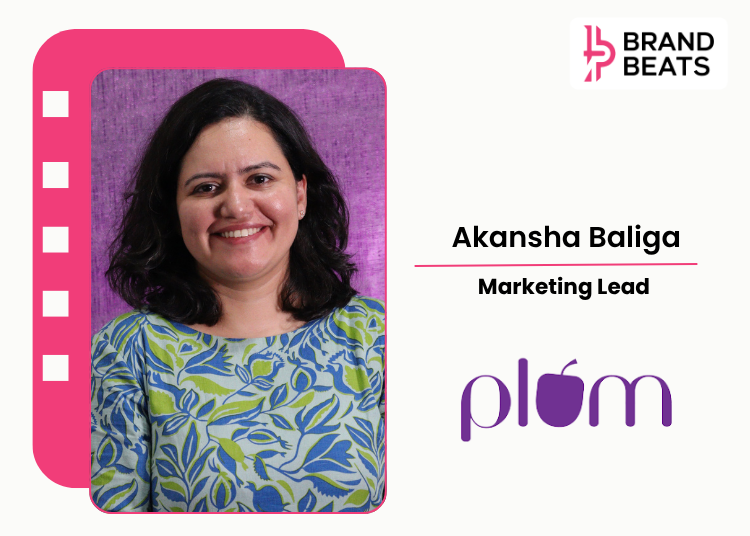
In an interaction with Brand Beats, Akanksha Baliga, Marketing Lead at Plum, spoke about the brand’s changing positioning, why storytelling is becoming more valuable than repetitive product claims, how community is built through product excellence rather than social media metrics, and why the next phase of beauty marketing will belong to brands that make science feel approachable.
For Plum, Chemistry Goes Far Beyond Ingredients
For many skincare brands, chemistry is often associated with formulations and active ingredients. For Plum, the word carries a much broader meaning.
Baliga explains that chemistry is the thread connecting every aspect of the brand from product development and user experience to partnerships, campaigns and consumer relationships.
“When we say chemistry, we don’t really mean the literal chemistry of the product. It’s the chemistry between consumers and the product, how the product looks, how it feels while applying it, the experience of using it and ultimately how it solves a real problem. It’s also the chemistry we share with our partners, vendors, influencers and consumers. That’s really what chemistry means to us.”
That philosophy has become increasingly important as the brand has grown.
According to Baliga, another principle Plum consistently follows is doing things differently.
“One of our core tenets is that no one does it like Plum. We take inspiration from many places, but when we execute something, we bring together science and creativity in a way that’s uniquely ours.”
From Vegan Beauty To ‘Chemistry’: Why Plum’s Brand Story Changed
Reflecting on Plum’s early years, Akanksha Baliga said the brand initially led its communication with values that were still emerging in the Indian beauty industry.
“When Plum started in 2014, vegan and cruelty-free brands were a minority, and that’s what people were really looking for. Hence, that’s what we used to lead with in our communications,” she said.
However, as the skincare market matured, those differentiators gradually became industry norms rather than unique selling propositions.
“By 2020, vegan and cruelty-free had almost become table stakes for everybody. It was no longer a differentiator for us,” Baliga noted. She explained that the rise of derma-led skincare and active ingredients during the pandemic prompted Plum to revisit its positioning through consumer research.
“We did a consumer study and realised that chemistry or the balance of chemistry while making it fun was the intersection that made the most sense for us. That’s when we evolved to talking about chemistry, and today, chemistry has become our tagline.”
Rather than moving away from science, Plum chose to make it more accessible and relatable. According to Baliga, that shift continues to shape not just the brand’s products, but also the way it communicates with consumers through every campaign and touchpoint.
Storytelling, Not Just Product Claims, Is Becoming Beauty’s Biggest Differentiator
Today’s skincare market often appears divided between two distinct approaches.
On one side are highly clinical brands focused almost entirely on education and efficacy. On the other are lifestyle-led brands that prioritise entertainment and aesthetics.
Plum believes consumers increasingly want both.
“Consumers don’t want either science or fun. They want both. They want the seriousness and credibility of science but communicate in a way that isn’t boring.”
Baliga says this balance defines Plum’s communication strategy.
Behind every product sits years of formulation expertise, in-house research and extensive external testing. But instead of overwhelming consumers with technical language, the brand focuses on making skincare accessible.
That thinking also influences its campaigns.
Whether it was its partnership with Mumbai Indians, collaborations with Kalyani Priyadarshan, or IPL-led initiatives, the central idea remained consistent using chemistry as a storytelling lens rather than merely a scientific concept.
“It’s never just about saying this product is clinically proven. We always try to bring the lifestyle element to life and make skincare more enjoyable and relatable.”
How Plum Balances Consistency, Trends and AI in Modern Brand Building
As consumers discover brands on Instagram, compare products on marketplaces and increasingly shop through quick commerce, maintaining a consistent brand identity has become significantly more complex.
For Plum, the solution lies in defining a clear communication framework before execution begins.
Baliga explains that whether consumers encounter the brand through influencers, Meta campaigns, YouTube, product listings or the company’s own website, the messaging remains remarkably consistent.
She said “We first become very clear about what we want to communicate at a brand, category or product level. Then every execution whether it’s influencers, digital advertising, marketplace listings or our website communicates the same two or three core messages.”
The team periodically reviews whether those messages continue to resonate, making adjustments only when consumer behaviour demands it. With brands expected to react instantly to memes, sporting moments, festivals and viral internet conversations, trend participation has become almost mandatory.
Plum, however, follows a far more selective approach.
According to Baliga, the first question the team asks isn’t whether a trend is popular but whether it genuinely fits the brand. “We always ask ourselves, is this on brand? Even if it isn’t directly related, can we make it relevant to skincare in an authentic way?”
Talking about AI, Baliga expressed “AI will generate what you tell it to generate. The real difference lies in defining the business objective, knowing what outcome you want and giving it the right direction. That’s where brands can still create real differentiation.”
The Future of Beauty Lies In Solving Consumer Problems
While many brands measure community through likes, comments and follower counts, Plum views loyalty differently. For Baliga, product quality remains the strongest driver of advocacy.
“Product is at the heart of everything we do. We spend enormous time on formulation, testing internally, testing with consumers and validating products externally. When people genuinely love a product, they naturally come back to the brand.”
Also, the rapid rise of quick commerce has fundamentally changed how consumers shop for beauty products. But contrary to concerns that faster purchases encourage transactional behaviour, Baliga sees the channel as expanding the category.
“Quick commerce isn’t making consumers transactional. It’s opening new discovery opportunities. More people are discovering Plum because we’re present on these platforms, and that has added to our overall consumer base.”
She notes that everyday categories such as face washes and shampoos naturally perform well on quick commerce because of their frequent replenishment cycles, while products like serums continue to see stronger demand across traditional beauty channels.
Consumers now expect products to feel good, look appealing and elevate everyday routines.
“Packaging, textures and how the product makes you feel have become just as important. Consumers still want efficiency, but they don’t want skincare to feel clinical or boring anymore.”
Looking ahead, Baliga believes the skincare industry will only become more crowded.
In that environment, simply claiming better ingredients or stronger formulations won’t be enough. Distinctiveness will come from creating memorable experiences around products backed by genuine science.
“We’ll continue building products rooted in deep science, but we’ll communicate them in simple, relatable language. That’s the balance we’ll continue investing in over the next five years.”
For Plum, the future isn’t about choosing between efficacy and emotion. It’s about proving that the strongest chemistry isn’t just inside the bottle, it exists between the brand and the people who choose it every day.