

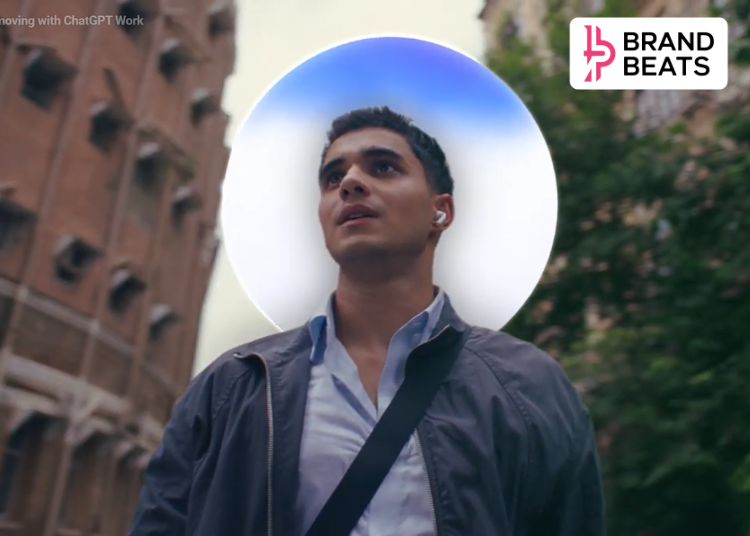
OpenAI has released a new advertising film for ChatGPT Work, featuring actor Abhay Verma, using a familiar workplace crisis to demonstrate how the AI assistant can help professionals get things done when time is running out.
Conceptualised by Mumbai-based creative studio and production house EO2 EXP and directed by Miti Shroff, the film combines workplace chaos, internet humour and a ticking clock to showcase ChatGPT Work through an everyday professional scenario.
The film begins with what looks like an absurd scene at Mumbai’s Marine Drive: a gorilla in blue shorts drinking protein coffee and dancing.
The twist is that the bizarre visual is actually part of a presentation being pitched by Verma’s character to his boss. When his boss questions the idea, Verma attempts to defend it using internet and meme-culture logic.
The boss eventually approves the creative, only to spot a more serious problem, the pricing in the presentation is incorrect.
Before Verma can fix it, another problem lands. He gets a message asking him to perform at a live event that is only around 30 minutes away.
That’s when ChatGPT Work becomes central to the story.
As Verma rushes out of the office, he uses ChatGPT’s voice assistance to handle the work he cannot personally complete at the moment.
He asks ChatGPT to draft an email to the agency explaining the incorrect pricing, get the revised version approved and send it out. The AI also identifies other instances where the incorrect price has appeared, details Verma had missed in his rush.
The film then turns the product demonstration into a literal race against the clock.
While Verma runs through staircases, roads and corridors to make it to his performance, ChatGPT works across mobile and web, handling the updates in the background.
Verma eventually asks it to update the storefront and launch channel, while continuing to monitor the process.
The timing provides the film’s payoff: ChatGPT goes live just as Verma goes live on stage.
What makes the film interesting is that OpenAI does not spend the ad explaining what AI is or listing ChatGPT’s features.
Instead, the product is placed inside a recognisable professional problem: something has gone wrong, there is very little time, and several small tasks need to be completed simultaneously.
ChatGPT is positioned less as a replacement for the protagonist and more as the system handling the tedious, time-consuming parts while he focuses on what only he needs to do, in this case, getting to the stage.
That makes the product demonstration easy to understand without turning the film into a conventional technology commercial.
The campaign also fits into a broader shift in OpenAI’s advertising in India. In this film, that proposition is simple: when work suddenly becomes too much and the clock is running out, ChatGPT can take some of the work off your hands.
And the ad makes that promise by putting the clock quite literally at the centre of the story.