

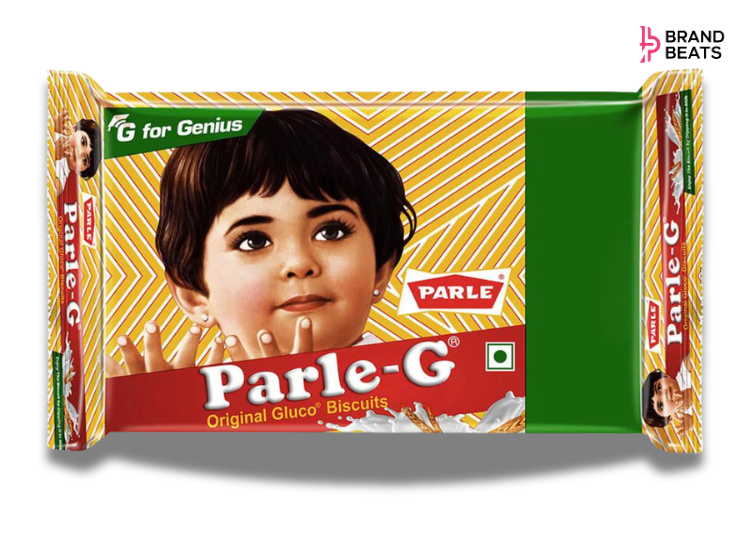
The first thing you learn about habits is that no one remembers when they began. They just slip quietly into your life. A cup of chai is poured, and a Parle-G packet finds its way into your hands. You don’t stop to notice it, because it has always been there on train journeys, in school tiffins, during office breaks, and in the middle of long, ordinary days. That’s the power of Parle-G. It never tried too hard to be remembered, and yet, it never left.
What makes this even more remarkable is that Parle-G’s success is not driven by disruption, but by discipline. The brand has stayed consistent in what it offers an affordable, familiar, no-frills product that consumers don’t have to think twice about. In a category flooded with new flavours, premium positioning, and constant innovation, Parle-G chose stability over spectacle. And in doing so, it built something far more powerful than recall, it built trust.
But the real story runs deeper than pricing or distribution. Parle-G didn’t just create a product people buy; it created a product people return to without thinking. It embedded itself into everyday routines, the chai break, the train journey, the quick hunger fix until it stopped being a choice altogether. Over time, Parle-G moved beyond branding and entered behaviour and that is what truly made it unbeatable.
A Brand Born Out of Necessity
Parle-G’s story begins in 1939, at a time when biscuits in India were not an everyday snack, but a luxury. The market was dominated by British brands, and biscuits were largely imported, expensive, and consumed only by the urban elite.
It was in this context that Parle Products, a small confectionery business started in Mumbai in 1929 with just a small number of workers decided to enter the biscuit category. This was not just a business expansion, it was a response to a gap in the market.
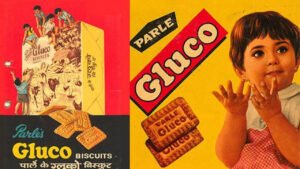
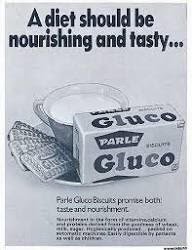
When Parle launched its glucose biscuit, then known as Parle Gluco, it was positioned as an affordable, nutritious, and Indian-made alternative to imported biscuits. This wasn’t about competing with global brands on sophistication or indulgence. It was about democratising access to a product that had been out of reach for most Indians.
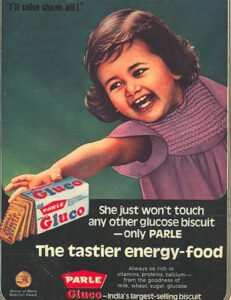
What followed was more than just market acceptance, it was rapid cultural adoption. According to reports, during World War II and the years around Independence, when supply chains were disrupted and affordability became critical, Parle-G emerged as a reliable, easily available source of nourishment. It was consumed by families, stocked in homes, and even supplied in large quantities due to its practicality and shelf life.
This early positioning shaped everything that Parle-G would become. It was never designed to be aspirational. It was designed to be essential and that distinction is crucial. While most brands try to climb up the value chain becoming more premium, more exclusive, more desirable Parle-G built its identity by going in the opposite direction. It focused on scale over status. Parle-G was never trying to be the best biscuit in the room, it was trying to be the one biscuit that every room could afford to have.
The Psychology of Becoming the Default
What sets Parle-G apart is its ability to move beyond preference and enter the realm of habit. In consumer psychology, low-involvement products such as everyday food items are often chosen with minimal cognitive effort. Parle-G has mastered this space by almost removing the need to decide. It is inexpensive, widely available, and instantly recognisable. Over time, this creates what behavioural economists describe as the “default effect” consumers don’t actively choose Parle-G; they simply end up buying it because it feels like the safest, easiest option.
But this default status is not accidental. It is built on a powerful intersection of availability, repetition, and familiarity. When a product is encountered repeatedly across different contexts at home, in school, during travel, at a roadside tea stall it begins to form what psychologists call a “mental shortcut”. The brain starts associating the product with reliability and effortlessness. In such cases, decision-making is replaced by recognition. You don’t evaluate Parle-G; you recognise it, and that recognition is enough to trigger purchase.
Equally significant is the role of nostalgia, which Parle-G has leveraged without ever explicitly marketing it. The brand has resisted the temptation to frequently update its identity, a move that many modern brands consider essential. The familiar yellow packaging, the iconic child illustration, and the unchanged taste profile have remained largely consistent for decades. This continuity strengthens what is known as “memory encoding” the deeper and more frequently a memory is reinforced, the more emotionally sticky it becomes.
Affordability as a Strategic Choice
Parle-G’s pricing strategy reflects a deep understanding of its core market. Instead of maximising margins, the brand has historically prioritised reach over revenue per unit.
By maintaining low price points through small, affordable packs and adjusting grammage rather than sharply increasing prices, Parle-G has ensured that it remains within reach of price-sensitive consumers. This has been particularly crucial in rural and semi-urban markets, where affordability directly influences purchase behaviour.
In doing so, Parle-G has not just sold a product, it has built a perception of reliability and fairness, reinforcing long-term trust.
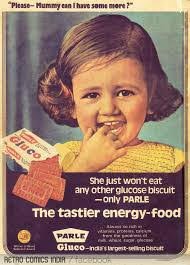
Advertising That Mirrors Everyday Life
Parle-G’s advertising has never tried to be louder than the market, it has tried to be closer to the consumer. It reflected life as it is lived. Its communication has consistently drawn from ordinary Indian moments, a child returning from school, a family sharing tea, a long train journey and turned them into powerful brand narratives.
Early campaigns like “Swad Bhare, Shakti Bhare” were rooted in functional appeal but carried a deeper cultural resonance. At a time when nutrition and affordability were key concerns for Indian households, the messaging positioned Parle-G as both tasty and energy-giving, a practical choice for parents and a comforting one for children. It wasn’t just selling a biscuit; it was selling value with reassurance, something the Indian middle class deeply identified with.
Link to the Ad:
This foundation was later expanded with “G Maane Genius,” one of the brand’s most memorable campaigns. Here, Parle-G subtly tapped into the aspirational mindset of Indian families, where education and intelligence are closely tied to success. By associating the biscuit with “genius,” the brand elevated its role from a simple snack to a symbol of growth and potential. Importantly, the storytelling remained grounded featuring everyday children in relatable settings rather than idealised or unattainable scenarios. This balance between aspiration and relatability is what made the campaign stick.
Link to the ad:
What truly differentiates Parle-G’s advertising, however, is its refusal to over-dramatise. Instead of constructing high-concept narratives, the brand has consistently relied on observational storytelling, moments that feel familiar because they are real. Whether it’s biscuits being shared among friends, dipped in chai during a break, or carried along on journeys, Parle-G inserts itself into situations that consumers already experience. This creates a subtle but powerful shift: the brand doesn’t interrupt life; it blends into it.
In more recent years, Parle-G’s communication has evolved in tone while staying consistent in spirit. Campaigns like “You Are My Parle-G” moved beyond the product to position the brand as a metaphor for reliability and dependability, qualities deeply valued in personal relationships. It was no longer just about what the biscuit does, but what it represents. Similarly, “Genius to Goodness” marked a significant shift in narrative, redefining intelligence not as academic excellence but as kindness, empathy, and emotional awareness. This reflected a broader cultural transition, where consumers, especially younger audiences began valuing emotional intelligence as much as achievement.
Link to the ad:
Ultimately, Parle-G’s advertising strategy underscores a powerful insight, you don’t need to constantly reinvent your voice if your voice already resonates.
Parle-G’s journey offers a compelling counterpoint to modern branding strategies that emphasise constant reinvention. Its success demonstrates that in certain categories, longevity is built not through frequent change, but through consistency, accessibility, and trust. By focusing on scale rather than spectacle, and habit rather than hype, Parle-G has created a form of brand equity that is both resilient and enduring. In the end, its greatest achievement is not just market leadership, it is becoming a product that consumers never feel the need to replace.