

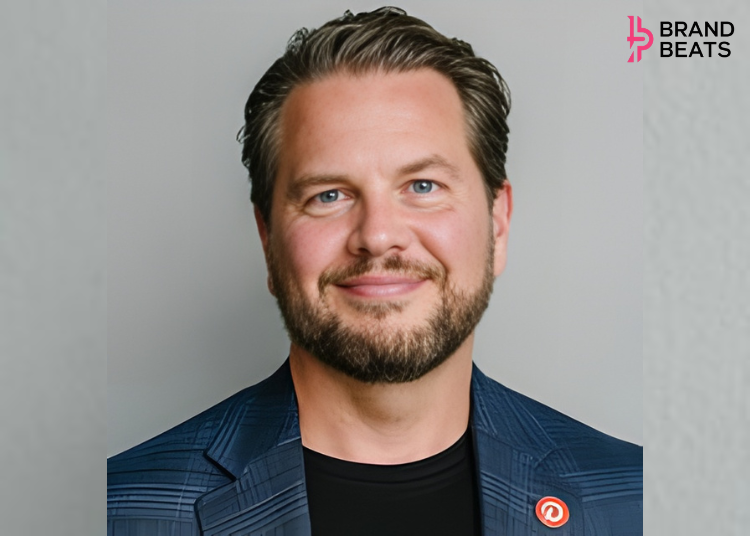
The Chief Executive Officer (CEO) of Pinterest, Bill Ready, has publicly called on governments around the world to ban children under the age of 16 via LinkedIn. In a widely shared essay, Ready argued that platforms in their current form are not built with young people in mind. According to him, they are built to keep users scrolling and that design choice is causing serious harm to children.
This is not a casual opinion piece from a tech outsider. Ready leads one of the world’s most recognisable social platforms. That makes his argument harder to ignore.
Ready’s essay is not just a policy argument. It is a signal about where consumer trust is moving. The data he referenced supports this reading. According to a survey cited in his essay, nearly half of Gen Z respondents wished certain social media platforms did not exist. A separate Pew Research finding showed that 70% of parents worry about their children’s exposure to explicit content or excessive screen time.
Brands that rely on social media to reach younger audiences would do well to watch how this unfolds. More countries are moving towards stricter rules. The platforms that have already taken steps to protect young users are ahead of the curve. However, those that choose to wait may find themselves on the wrong side of it.
Why He Is Saying This Now
Ready’s argument is not new in substance. Researchers, parents, and mental health professionals have raised similar concerns for years. What makes this moment different is who is saying it and how directly he is saying it.
According to Ready, the results of what he describes as “the largest social experiment in history” are now visible. Rising anxiety among teenagers, falling attention spans, and classrooms struggling to compete with screens are, in his view, the direct consequences of giving children unfiltered access to platforms that were never designed for them.
He also pointed to a new concern. Artificial intelligence (AI) chatbots are now being built into social media products. Ready argued that these tools can influence a young person’s emotions, behaviour, and sense of identity, and handing them to teenagers who are still developing emotionally is a serious risk.
The Argument: Self-Regulation Has Failed
One of the most significant claims in Ready’s essay is that the industry has already had its chance. He said tech companies have been aware of the harms for years and have repeatedly failed to introduce meaningful protections. He compared the current situation to past industries where harmful products were defended until legal and public pressure forced change. His reference point was the tobacco industry, a comparison that a growing number of critics, including psychologist Jonathan Haidt, have also made.
Ready’s position is that if companies are unwilling or unable to protect young users, then governments must act. He stated clearly that the time for self-regulation has passed.
How Pinterest Rebuilt Trust With Younger Users
Ready did not speak only from theory. He pointed to what his own platform has already done. According to him, Pinterest removed social features for users under 16. Every account belonging to someone in that age group was made private by default. That means no discoverability, no messaging with strangers, no likes or comments from people they do not know.
When Pinterest made those changes, the expectation in some quarters was that younger users would leave the platform. Ready said the opposite happened, as Gen Z were now reported to make up over half of Pinterest’s user base.
Pinterest CEO’s Call For Stricter Government Regulation
Ready pointed to Australia as the leading example. Australia introduced a ban on social media for users under 16, and Ready has said other governments should consider the same approach. He also referenced European countries like the UK, Spain, and France, who have considered similar measures. In the United States, he noted that the approach taken has focused on app store age verification, which Pinterest has expressed support for.
His core tasks are straightforward: a clear age limit, real enforcement mechanisms, and accountability that extends to both the app developers and the mobile operating systems they run on. He also called for better tools for parents.
What The Critics Say
Not everyone agrees with Ready’s position. Some tech industry figures have described age bans as both unworkable and excessive. A common argument is that determined teenagers will find workarounds, or move to less regulated and potentially more dangerous platforms. Others point out that social media does offer genuine benefits: connection, community, access to information, and creative expression. These are not small things for young people, particularly those who may feel isolated offline.
Ready acknowledged these arguments in his essay. His response was that these concerns are reasons to build smarter safeguards not reasons to do nothing.
Brand Beats’ Take
For platforms that have spent years prioritising growth over safety, this is an uncomfortable moment. But it is also a necessary one. The argument that teenagers will simply find workarounds has always been a way of avoiding responsibility rather than a genuine solution. Imperfect protection is still protection. That logic applies here.
What is perhaps most revealing about this moment is not the regulation itself. It is how the industry is responding to it. Compliance without conviction is not a strategy. It is a holding position. And holding positions rarely hold for long.
The platforms that will come out of this period strongest are not necessarily the biggest ones. They are the ones that understood early that trust is the product not just the content. Pinterest grasped that. Most others did not till now.
From a teenager’s point of view, the assumption has always been that young people want unrestricted access to social media and that any attempt to limit it will be met with resistance. But the data tells a more complicated story. A significant number of young people have said openly that they feel worse after using certain platforms.
Many describe the experience as compulsive rather than enjoyable, something they do because the app is designed to keep them there, not because it genuinely adds to their lives. Regulation, in that sense, may not feel like a restriction to many teenagers. It may feel like relief.
For parents, this shift represents something they have quietly wanted for a long time. Most are not opposed to their children being online. They are opposed to feeling powerless about what their children are exposed to once they are there. Stronger rules, clearer accountability, and better tools give parents something they have lacked for years a meaningful way to be involved without having to fight the platform’s own design every step of the way.
For brands and marketers, the lesson is worth sitting with. The audiences you are trying to reach are paying attention to which platforms feel safe and which ones do not. Young people are not as loyal to these platforms as the industry assumed. They will move. They already are.