

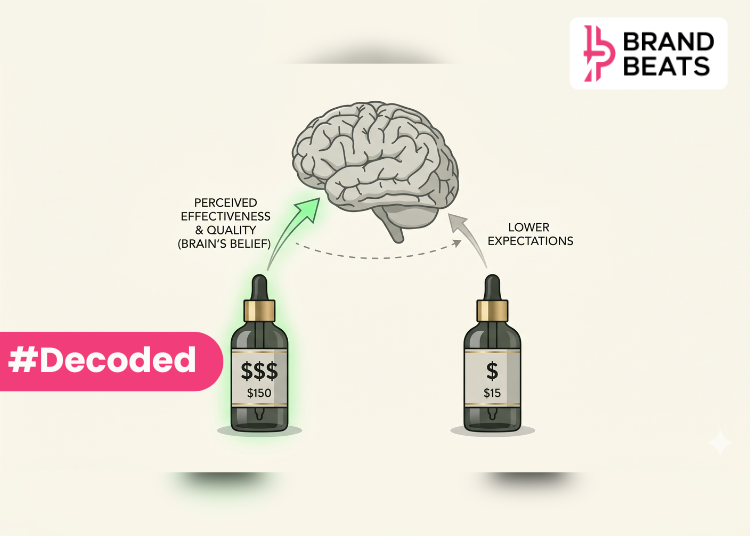
Walk into any supermarket, skincare store, or premium café, and you’ll notice something interesting. The more expensive a product looks, the more people believe it must work better.
A Rs 1200 organic face serum instantly feels more effective than a Rs 300 moisturizer. A handcrafted herbal soap feels safer than a regular soap bar. A protein smoothie served in a glass bottle at a premium café somehow feels healthier than a packaged drink bought from a grocery store.
And sometimes, consumers genuinely feel a difference even when the ingredients are surprisingly similar. This is where two powerful ideas from marketing psychology come into play: the price quality heuristic and the placebo effect.
Why Your Brain Trusts Expensive Products
People naturally associate higher prices with higher quality. Psychologists call this the price quality heuristic. Instead of scientifically comparing ingredients, consumers often use price as a mental shortcut.
The brain assumes: If it costs more, it must be better. This happens across almost every category.
Expensive coffee feels richer.
Premium skincare feels more effective.
Luxury gyms feel healthier.
Organic snacks feel safer.
Handmade candles feel more authentic.
Even restaurants benefit from this psychology. A salad served inside a minimalist organic café with wooden interiors, calming music, handwritten menus, and eco-friendly straws often feels healthier than homemade food eaten at home.

Sometimes the product genuinely is better. But many times, the experience, branding, and price shape perception more than the actual formula.
How the Placebo Effect Changes Consumer Experience
The placebo effect is not limited to medicine. It strongly influences consumer behaviour too.
When people believe a costly product will work better, they often genuinely experience better results. The expectation itself changes how they feel.
For example, someone using an expensive herbal shampoo may believe their hair feels healthier after just one wash. A premium detox tea may make consumers feel cleaner or lighter simply because they expect it to.
The brain often turns belief into experience.
That is why branding matters so much. Premium packaging, glass bottles, earthy colours, minimalist design, and words like organic, clean, herbal, and toxin free all help create the feeling that a product is healthier or more effective.
And once consumers emotionally believe in the product, the experience itself starts feeling different.
Why Similar Products Feel Completely Different
Imagine two skincare creams.
The first says:
Scientifically formulated moisturizing cream with stabilizers and preservatives.
The second says:
Made with natural aloe vera and botanical extracts.
Most consumers instinctively trust the second one more, even if both products contain similar ingredients. The difference is often not just the formula. It is the presentation, pricing, and emotional positioning.

Words like handcrafted, premium, organic, and clean create emotional comfort. Meanwhile, scientific sounding labels often feel cold or artificial to consumers. Brands understand this psychology extremely well. That is why products today are carefully designed to feel premium before consumers even try them.
Social media has only made this effect stronger.
Instagram and TikTok have amplified this behaviour massively. Products today are not just sold through features or ingredients. They are sold through lifestyle imagery.
A protein bar placed beside gym wear and sunlight instantly feels healthier. A ceramic cup of herbal tea shown during a calming morning routine feels more premium. A luxury skincare routine filmed in soft lighting suddenly looks more trustworthy.
Consumers are no longer just buying products. They are buying aspirations and identities.
People often think: ‘If I buy this, I will become healthier, calmer, cleaner, and more mindful.’ That emotional aspiration matters more than ingredient lists.
The Contradiction in Consumer Behaviour
What makes this psychology fascinating is how inconsistent consumer behaviour can be.
Someone may avoid ‘chemicals’ in shampoo while drinking heavily processed soft drinks. People may fear preservatives in bread but trust random supplements bought online.
A customer may reject ‘artificial flavours’ while eating ultra processed snacks during binge watching sessions.
Human buying decisions are rarely fully logical. Most purchases are influenced by emotions, perception, branding, presentation, and mental shortcuts.
And brands know this extremely well.
Brand Beats Take’s
Will brands continue using premium pricing and wellness branding to influence perception? Absolutely.
Because consumers do not only buy products based on ingredients or scientific comparison. They also buy products based on how those products make them feel.
That does not mean all expensive products are ineffective. Many genuinely are better made. But higher pricing, premium branding, and strong emotional positioning can make consumers believe products work better even before they use them.
Sometimes people are paying for better quality.
And sometimes, they are paying for a better feeling.