
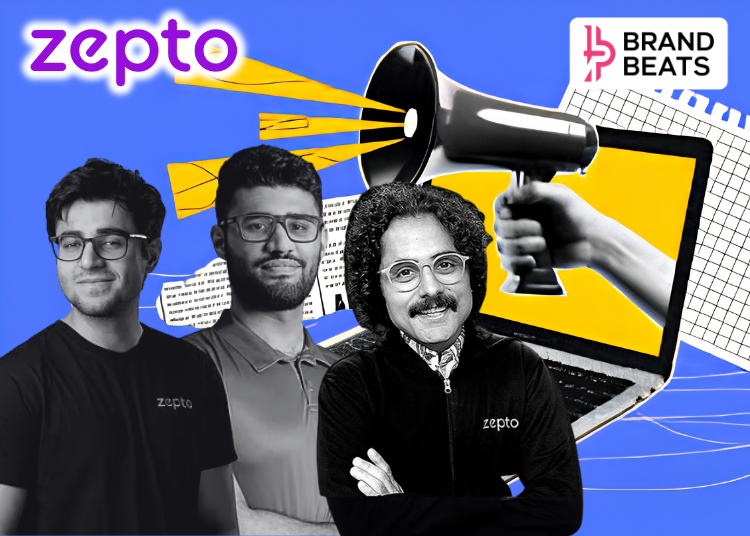
When Zepto launched in 2021, it was not the biggest name in grocery delivery. Zepto did not win India’s quick-commerce race by being first, better funded, or more strategically safe than its competitors. Blinkit had Zomato’s money. Swiggy Instamart had millions of existing customers. BigBasket had the supply chain maturity and the trust of India’s urban grocery buyer built over a decade.
Founded by two childhood friends, Aadit Palicha and Kaivalya Vohra, in 2021, Zepto entered India’s grocery delivery market with a simple promise: get groceries to customers in under 10 minutes.
Four years later, that focus has helped build a business with Rs 9,366 crore in FY25 revenue, 150% year on year growth, a 29% share of India’s quick commerce market, more than 1,100 dark stores planned by 2026, a median delivery time of just 8 minutes 47 seconds, and a 65% repeat purchase rate.
As the company prepares for a public listing, this article breaks down the 12 marketing decisions that fueled its rise, focusing not on slogans, but on the strategic choices that drove growth.
1. Sell a Category, Then Sell Your Brand
Before consumers could choose Zepto, they first needed to believe that 10-minute grocery delivery was useful. The company spent its early years making quick commerce feel reliable and practical rather than focusing only on brand promotion.

Many of the world’s strongest brands first helped build a category before dominating it. Zepto followed the same approach by normalizing instant grocery delivery and making quick commerce part of everyday urban life.
By the time competitors accelerated investments in the space, Zepto had already become closely associated with what quick commerce meant for millions of consumers.
2. Speed Is a Product, Not a Feature
Most brands market features. Zepto marketed an outcome. From the beginning, the company understood that consumers would not remember the size of its dark store network, inventory depth, or logistics infrastructure. What they would remember was the feeling of getting what they needed in minutes.
By positioning speed as the product itself rather than just a service feature, Zepto created one of the clearest value propositions in Indian retail.
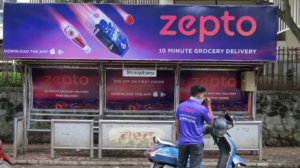
The promise was simple, memorable, and easy to communicate: if you need something now, Zepto will get it to you fast. In a market where competitors often competed on assortment, discounts, and pricing, speed became Zepto’s strongest differentiator and the foundation of its brand identity.
3. Distribution Is Marketing
Traditional businesses often treat distribution and marketing as separate functions. Zepto turned every delivery into a brand experience that reinforced its promise.
Each successful order became proof of the brand’s reliability. Instead of depending solely on advertising, the delivery experience itself became a powerful marketing tool.
When customers repeatedly receive orders quickly, brand trust grows naturally through product performance rather than promotional messaging.
4. Build Mental Availability Before Market Share
Consumers often think of Zepto when discussing quick commerce, even beyond active purchase situations. This level of recall is valuable because awareness frequently precedes market leadership. Brands that dominate consumer memory tend to gain an advantage when consumers make purchase decisions.
A major part of this strategy has been Zepto’s ability to remain visible between transactions. Beyond large campaigns and social media activity, the brand has turned push notifications into a powerful marketing channel.
Rather than relying solely on discount alerts, Zepto frequently uses notifications to tap into cricket matches, weather changes, internet trends, festivals, late-night cravings, and everyday consumer moments, making them feel more like conversations than promotions.
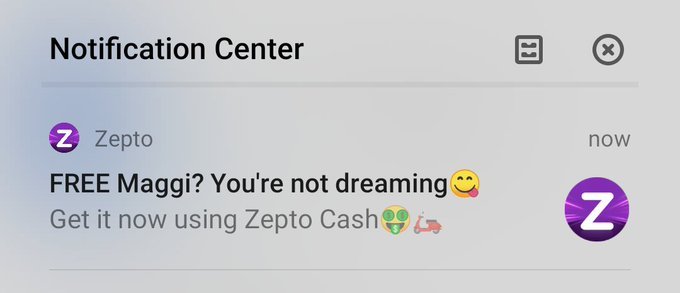
This constant stream of culturally relevant touchpoints helps Zepto stay top of mind long before consumers need groceries. By the time a purchase decision is made, the brand is already mentally available, which is often more valuable than having the biggest market share.
5. Do Not Just Market Products, Market Moments
A major reason behind Zepto’s cultural relevance has been the marketing approach championed by Chief Brand and Culture Officer Chandan Mendiratta. Instead of waiting for shopping occasions, Zepto actively inserts itself into moments consumers already care about.
From ‘Mango Paglu’ and ‘Nani Ka Ghar ‘to ‘wedding-themed activations’, ‘IPL integrations’, ‘exam season campaigns’, and ‘festive marketing’, Zepto consistently builds campaigns around existing consumer behavior. The objective is not simply to advertise products but to become part of conversations people are already having.
Mango Paglu
View this post on Instagram
Nani Ka Ghar
View this post on Instagram
This approach transforms marketing from interruption into participation. Rather than creating attention from scratch, Zepto attaches itself to cultural moments that already command consumer interest.
6. Culture Travels Faster Than Advertising
One of Chandan Mendiratta’s biggest contributions has been turning Zepto into a culture-first brand. Many campaigns are designed for social sharing and internet conversations before they are designed for media efficiency.
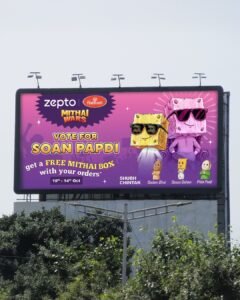
Campaigns such as ‘Make Soan Papdi Great Again’, ‘Mango Paglu’, ‘Nani Ka Ghar’, Fake Wedding Activation, and numerous hyperlocal internet moments generated discussion because they felt culturally relevant rather than commercially driven.
Make Soan Papdi Great Again
Fake Wedding Activation
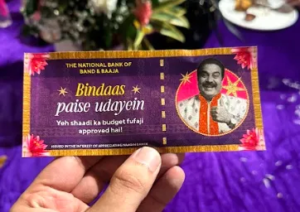
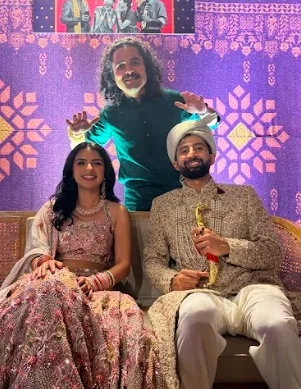
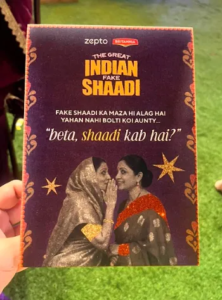
The result is a brand that often earns visibility through conversations and shares, allowing culture to become a distribution channel that travels faster than traditional advertising.
7. Emotional Branding Is Not Just for Legacy Brands
Emotional branding is often associated with long-established companies that have spent decades building consumer trust. Zepto has shown that younger brands can also create emotional connections.
Campaigns rooted in nostalgia, family, and cultural familiarity help the brand move beyond functional benefits like speed and convenience.
View this post on Instagram
These emotional associations create stronger brand memory and help consumers develop a deeper relationship with the platform.
8. Internet Native Brands Need Internet Native Language
Zepto’s communication style reflects a deep understanding of internet culture. Under Chandan Mendiratta’s leadership, the brand rarely sounds corporate or overly polished.
Whether through Instagram posts, campaign copy, memes, or real-time marketing, Zepto speaks in a language that feels familiar to digital audiences. The brand participates in trends instead of observing them from the sidelines.
View this post on Instagram
This internet native communication style helps Zepto remain relevant among younger consumers who increasingly expect brands to behave like creators rather than corporations.
9. Create Participation, Not Just Reach
Many Zepto campaigns are built around participation rather than passive consumption. Consumers are encouraged to engage, share, comment, visit activations, and become part of the experience.
From large-scale cultural activations to social media-led conversations, Zepto creates opportunities for people to interact with the brand beyond transactions. This has become a defining characteristic of Chandan Mendiratta’s marketing playbook.
The focus shifts from buying impressions to building involvement, creating stronger emotional and cultural connections with consumers.
10. Modern Brands Need Distinctive Behavior
Consumers today remember how brands behave more than how they look. Logos and taglines remain important, but behavior often shapes long-term perception.
Zepto has developed a reputation for being fast-moving, experimental, culturally aware, and responsive to trends. These characteristics appear consistently across its marketing efforts.
Over time, recurring behavior becomes a competitive advantage by creating a recognizable brand personality.
11. Attention Is Earned Through Entertainment
One recurring theme across Zepto’s marketing is entertainment. Many campaigns feel closer to content than advertising, making them more likely to be shared and discussed.
The Soan Papdi campaign, wedding-themed activations, Mango Paglu, and numerous social first executions demonstrate a willingness to entertain before selling. This aligns with a broader belief that attention must be earned rather than purchased.
In a crowded digital environment, entertainment often becomes one of the most effective ways to drive awareness and recall.
12. The Strongest Brands Become Part of Everyday Conversation
The ultimate goal of branding is to become part of how people naturally talk. Zepto has increasingly achieved this by creating campaigns and experiences that consumers want to discuss.
People do not talk about Zepto only because it delivers groceries. They talk about its campaigns, cultural references, and social media moments.
When consumers voluntarily spread a brand’s story, marketing becomes significantly more effective and scalable.
BrandBeats Take’s
Most quick commerce companies primarily position themselves as logistics businesses. Zepto has taken a different path by acting more like a cultural brand. The company combines speed, entertainment, community engagement, and cultural relevance to create a broader identity than delivery alone.
This positioning makes Zepto harder to compare directly with competitors and helps create a stronger long-term brand advantage.
FAQs
- What is Zepto Pass?
Zepto Pass is a subscription program that offers members exclusive discounts, lower delivery fees, and priority delivery.
- What is Zepto Atom?
Zepto Atom is a paid analytics platform that provides brands with real-time sales insights and AI-powered data analysis.
- How fast does Zepto deliver orders?
Zepto’s median delivery time is 8 minutes and 47 seconds, enabled by its dark store network and AI routing.
- How does Zepto earn revenue beyond grocery delivery?
The company generates income through advertising, subscriptions, private labels, data products, and food services.
- What is Zepto’s market share in India’s quick commerce sector?
Zepto holds approximately 29% of India’s quick commerce market.