

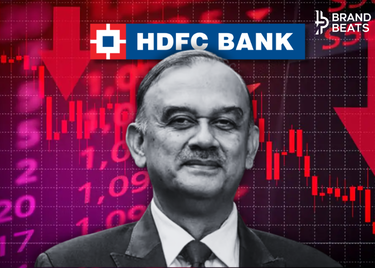
India’s second-largest bank is in the eye of a storm. The abrupt resignation of HDFC Bank’s part-time chairman Atanu Chakraborty, citing “ethical” concerns, has sent shockwaves through the country’s financial markets erasing an estimated $16 billion in market capitalisation within days. What began as a terse regulatory filing has since unraveled into a web of alleged mis-selling, executive terminations, and serious questions about governance at one of India’s most systemically critical financial institutions.
As the crisis continues to develop, what is laid out here is a structured, chronological record of events as they have been reported drawing on regulatory filings, exchange disclosures, official statements, and market data from the moment Chakraborty’s resignation letter became public on 18 March 2026, through to the latest disclosures on executive accountability and the bank’s internal probe.
This is not analysis or conjecture. It is a timeline of what happened, and when.
The Man at the Centre: Atanu Chakraborty
Atanu Chakraborty, who served as HDFC Bank’s part-time chairman and independent director from May 2021 until his sudden departure on March 18, 2026.
Chakraborty is not a career banker. A retired Indian Administrative Service (IAS) officer, he previously served in India’s finance ministry within the Department of Economic Affairs, where, according to reports, he helped shape national economic policy and oversaw the Union Budget process from its drafting stages through to Parliament. His background lends considerable weight to the language he chose in his resignation letter.
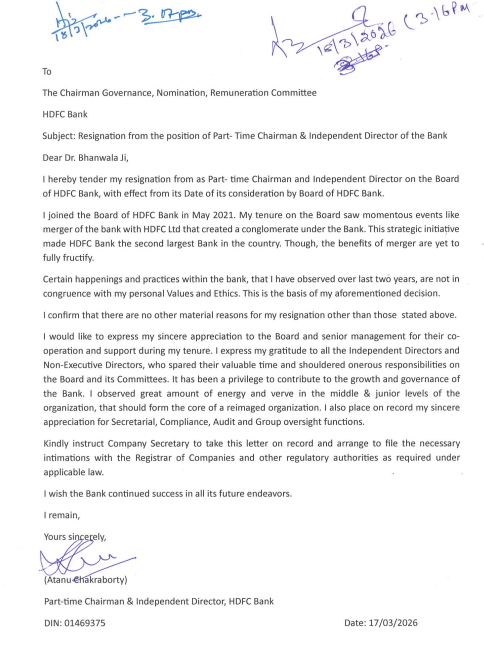
In his letter, Chakraborty stated: “Certain happenings and practices within the bank, that I have observed over the last two years, are not in congruence with my personal Values and Ethics. This is the basis of my aforementioned decision.”
He further mentioned: “I confirm that there are no other material reasons for my resignation other than those stated above.”
Chakraborty also acknowledged that his tenure at the bank had coincided with a period of significant structural change, noting that the merger of HDFC Bank with its parent, HDFC, had made it ‘the second largest Bank in the country’, though he added pointedly that ‘the benefits of the merger are yet to fully fructify.’
HDFC Bank’s: A Statement of Confirmation
HDFC Bank’s official response to the resignation has been notable for what it does not say. In its regulatory filing, the bank stated “We confirm that there are no reasons other than those mentioned in the said letter, for the resignation of Mr. Chakraborty.” The bank did not offer any detailed elaboration, context or public accounting of the concerns raised.
The Credit Suisse Connection: Alleged Mis-Selling of AT1 Bonds
According to the reports, the ‘ethical’ concerns alluded to in Chakraborty’s resignation letter are connected to an alleged mis-selling scandal involving Credit Suisse’s Additional Tier 1 (AT1) bonds.
Credit Suisse, the Swiss banking giant, collapsed in 2023 and was subsequently acquired by UBS. As part of the crisis resolution, Swiss authorities wrote down approximately $17 billion worth of AT1 bonds, instruments that are inherently high-risk and designed to absorb losses in times of financial stress. Their value fell to zero.
According to reports, HDFC Bank’s Dubai branch allegedly marketed these bonds to retail and high-net-worth customers as ‘safe-haven’ investments, a characterisation that, if accurate, would represent a fundamental misrepresentation of the product’s risk profile.
The Dubai Financial Services Authority (DFSA) is reported to have imposed a ban on HDFC Bank from onboarding new customers, citing failures in the sales process for these complex securities. A complaint is also reported to have been filed with the Economic Offences Wing (EoW) in Nagpur, naming four HDFC Bank officials.
As per the report, earlier in October 2025 that the bank had placed two executives on what is colloquially referred to as ‘gardening leave’ as part of its internal investigation into the matter.
Three Senior Executives Asked to Leave
On March 20, 2026, HDFC Bank had asked three senior executives to leave the organisation in connection with the alleged mis-selling probe. Those named in media reports are:
- Sampath Kumar — Group Head of Branch Banking
- Harsh Gupta — Executive Vice President, Middle East, Africa, and NRI Onshore Business
- Payal Mandhyan — Senior Vice President
According to the bank’s response, an internal investigation was initiated following regulatory developments related to its Dubai branch. The Governance, Nomination and Remuneration Committee (GNRC) directed an inquiry, the findings of which were reviewed by the Disciplinary Committee.
Based on these recommendations, the committee took “staff accountability” actions, including the removal of three employees. The bank also stated that the individuals have the right to appeal the decision before the Board of Directors, and clarified that no regulatory or legal proceedings have been initiated against them. The bank has not confirmed or disclosed any official names in its statement.
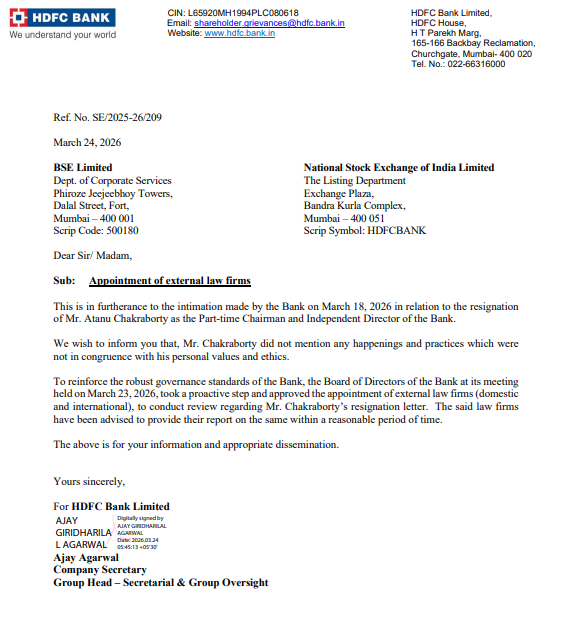
HDFC Bank has also indicated that the bank has appointed external law firms to review the circumstances surrounding Chakraborty’s resignation, a step that, if confirmed, would suggest the bank is treating the matter with a degree of seriousness that its public communications have not yet conveyed.
Market Reaction: $16 Billion Erased
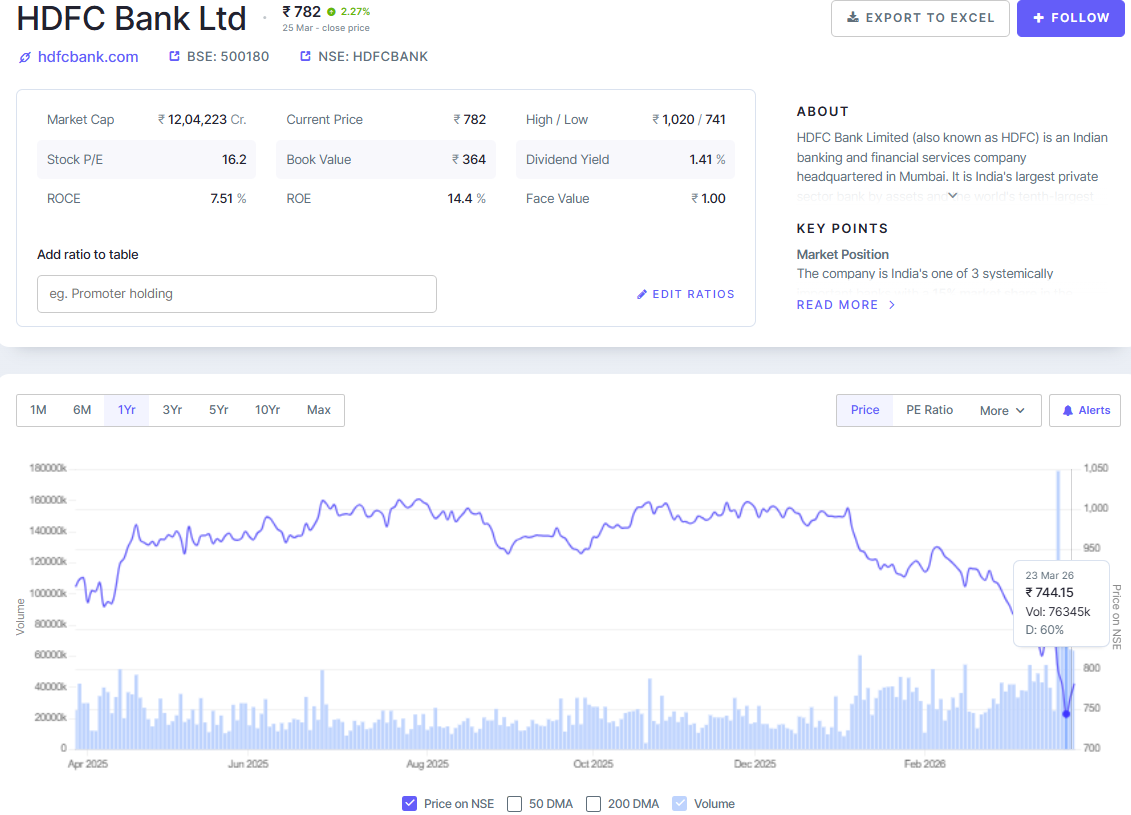
The markets responded swiftly and sharply. HDFC Bank’s share price declined approximately 7% across the two trading sessions following the chairman’s resignation. On March 20, 2026, the stock was trading at Rs 781, down 2.2% on the day.
In total, reports indicate that more than one-tenth of the bank’s market capitalisation has been wiped out, a loss of approximately $16 billion in market value. For context, that is a sum exceeding the GDP of several small nations, erased in a matter of days.
Regulatory Intervention: The RBI Speaks

In what observers have noted is an unusual step for a regulator in relation to a private sector bank, the Reserve Bank of India (RBI) issued a public statement on March 19, 2026 the next day as Chakraborty’s resignation asserting that it had no concerns about HDFC Bank’s conduct or governance.
The intervention is widely interpreted as an attempt to reassure depositors and investors and to prevent a broader loss of confidence. The RBI also granted approval on March 18, 2026 for the appointment of Keki Mistry, one of India’s most respected figures in the financial sector as interim part-time chairman for a period of three months, with effect from March 19, 2026.
The Question What Remains Unanswered
As of the time of writing, several material questions remain without definitive public answers. Questions like What specific practices did Chakraborty observe that he deemed inconsistent with his values and ethics? What is the precise scope and status of the internal probe into the alleged Credit Suisse AT1 bond mis-selling, and what findings, if any, have the external law firms appointed to review the matter reached?
What action, if any, is the DFSA pursuing in relation to the Dubai branch and crucially, is the departure of the three senior executives directly connected to the chairman’s resignation, or merely coincidental in timing? HDFC Bank has not responded publicly to any of these questions in substantive terms, and in the absence of that clarity, the silence itself has become part of the story.