

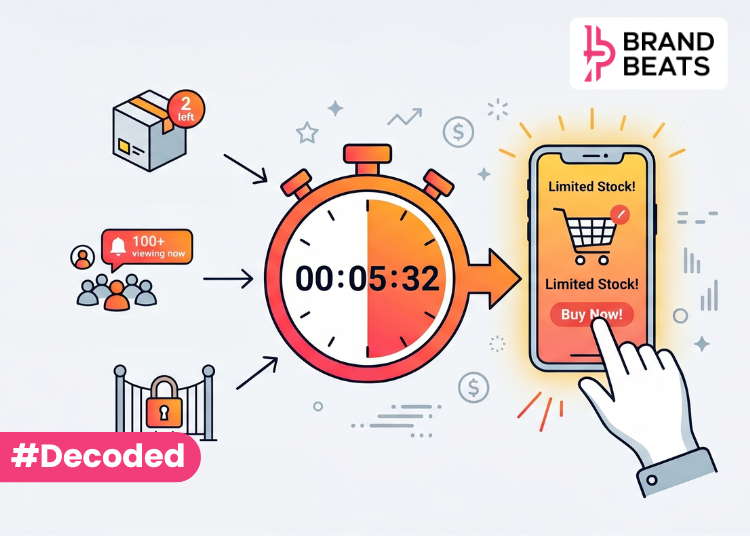
In day-to-day life, most people are not actively looking to buy something all the time. They open apps to scroll, compare, or just pass time. But across these everyday moments, companies use a range of small cues to influence decisions without it feeling obvious.
A limited stock label on Myntra, a ticking offer timer on Swiggy, or a fast filling seat map on BookMyShow may seem like simple details. But together, they form a pattern where small cues shape how and when people decide, often turning casual interest into quicker purchases.
You see the same pattern across platforms like Amazon, Zomato, and Uber. A “few left” message, a limited time offer, or surge pricing does not change the product, but it creates urgency. What started as browsing suddenly becomes a faster decision to act.
Scarcity marketing is not a new idea, but it shows up in very everyday ways now. It is in the apps people open daily, in small labels and timers that look harmless but change how decisions are made. Based on research in consumer behaviour, the pattern is quite consistent. When something appears limited, people tend to move faster, even if their original interest was low.
From a marketing research perspective, this behaviour is linked to how people respond to possible loss and to what others seem to be doing. When something looks like it may run out, the decision shifts from do I need this to what if I miss this. That shift is small but has a strong effect on action.
There are a few common types of scarcity that are widely used across large consumer platforms
1. Quantity Scarcity
When you are scrolling through Flipkart or Amazon and a product suddenly shows only 3 left or last piece available, that is quantity scarcity quietly doing its job. Nothing about the product has changed, but now it feels like someone else could grab it before you do. Even if you were just browsing, the moment it looks limited, the decision starts feeling a bit more urgent.
2. Time Scarcity
On apps like Nykaa or Ajio, the pressure comes from a different angle. You see a timer saying sale ends tonight or deal expires in 20 minutes, and suddenly you are making faster decisions than you planned. That is time scarcity stepping in, where the clock replaces the competition. The offer may not even be very different, but the ticking timer makes it feel like now is the moment.
3. Social Scarcity
Then there are those subtle nudges on platforms like MakeMyTrip, where you read something like 5 people booked this in the last hour or many people are viewing this right now. This is social scarcity at play. It does not say the product is running out, but it gives the feeling that others are already interested. That alone can make you think maybe I should not wait too long on this.
4. Access Scarcity
And sometimes, it is not about time or stock at all. Apps like CRED make you eligible only if you meet certain criteria, like a specific credit score. This is access scarcity, where not everyone gets in. Even people who were not thinking about the product start paying attention, because now it feels like something exclusive rather than something easily available.
In the Indian context, this tends to work strongly because people are used to time bound sales during festivals and major shopping events. Over time, this has built a general expectation that good deals may not last long. As a result, when a platform shows a timer or low stock message, it often feels credible enough to act on.
At the same time, not all scarcity signals are always accurate. Some products continue to show low stock messages for long periods. Some timers reset after refresh. These patterns have been observed across platforms, and while they may improve short term conversions, they can reduce trust if users notice them repeatedly.