
Dementia is often reduced to a few familiar explanations. A forgotten name becomes old age. A missed appointment is dismissed as forgetfulness. A repeated question is brushed off with a casual Budhapa aa gaya or Bhulne ki bimari.
Tata Trusts’ new campaign, ‘Vajood Rahe Maujood’, asks audiences to look at dementia differently. Instead of focusing only on memory loss, the campaign explores something less visible but equally significant: the gradual loss of identity that can accompany the condition.
The campaign is built around the idea that dementia does not simply make people forget things. As the condition progresses, it can affect the roles, relationships, routines and abilities that have long defined who someone is. A mother may struggle with the responsibilities that once came naturally to her. A familiar relationship may begin to feel unfamiliar. Everyday tasks that were once effortless can become difficult.
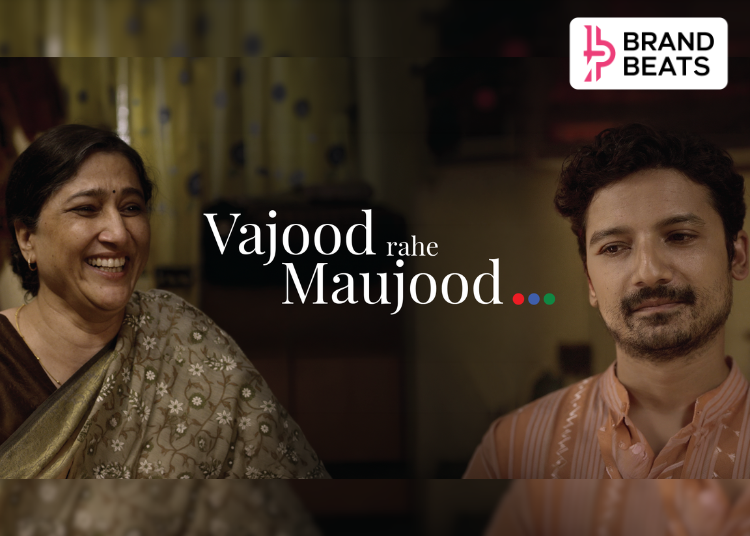
The campaign brings this shift to life through the story of a woman experiencing early-stage dementia, with her son stepping into the role of caregiver. The choice is deliberate. Dementia disproportionately affects women, while caregiving is still often seen as a role that naturally falls to women within Indian families. By placing a son at the centre of the caregiving journey, the campaign also opens up a conversation around men taking a more active role in caring for ageing parents.
The timing is significant. India is ageing rapidly, with the number of people aged 60 and above projected to cross 347 million by 2050. As the population grows older, dementia is likely to become an increasingly visible public health concern, making conversations around early recognition even more important.
One of the biggest challenges, however, is that early signs are easy to overlook. Changes in behaviour, memory and everyday functioning are frequently attributed to normal ageing, delaying conversations and diagnosis. Research suggests that around 45% of dementia cases could potentially be prevented or delayed, while changes linked to the condition may begin 10 to 20 years before symptoms become obvious.
That makes the campaign less about creating alarm and more about encouraging attention. Notice the small changes. Pay attention when something feels different. Start the conversation before the changes become impossible to ignore.
With Vajood Rahe Maujood, Tata Trusts is attempting to shift the dementia conversation from what a person forgets to what they may gradually lose along the way. At its heart is a simple reminder: preserving someone’s identity can begin with recognising the changes before they become part of everyday life.
Watch the campaign
Shilpi Ghosh, Head, Brand & Marketing Communications, Tata Trusts, said, “Of the various barriers that Dementia faces in India, the biggest is a lack of awareness – the misestimation, the misattribution, the dismissal. Addressing patients exhibiting mild symptoms was therefore a conscious choice of audience for nudging behavior change. And when “loss of identity” and its various dimensions across the stages of the disease, were uncovered as an insight, we knew we had something powerful to work with, that would lead to captivating communication that was persuasive and not preachy.
She further added, “Communication that was not just empathetic but also encouraged action, so caregivers and their loved ones could have an improved quality of life. We’re hopeful that the campaign will be able to move the needle on dementia from ignorance to awareness.”
Kalyan Challapalli, Founder & Chief of Strategy, Wolfzhowl, said, “Our qualitative research showed us that dementia cannot be addressed as a health issue alone. Its impact ripples through caregivers, families, the healthcare ecosystem, and even the economy. We capture this interconnected impact through what we describe as ‘The Butterfly Effect’, highlighting why dementia requires a concerted response across the ecosystem.”
He further added, “An interesting insight that emerged from our interactions was the absence of regional-language vocabulary to describe the diseases and its early changes. This makes the disease easier for people to dismiss. Because you cannot ask people to recognise what they do not have the language to describe. The campaign thus, offers a common ground that hopefully makes the condition easier to decipher, talk about and act on, in homes and communities, not just in clinics.”
Turning these insights into an accessible and engaging film was one of the central creative challenges of the campaign. Keigan Pinto, Creative Chief, Writer and Director, sheds light on this process, “The creative challenge was to make something as invisible as identity loss felt without reducing dementia to a list of symptoms. That is why we chose to make this a short film rather than a conventional public service announcement. We wanted to give the audience enough time to inhabit an everyday relationship and notice the small shifts that can otherwise be overlooked.”
He further added, “The poem which the son wrote for his mother on her birthday is a creative device used to carry the message of care as the greatest gift. Through the poem, the son has a difficult conversation with his mother, while empathising with her. Vajood Rahe Maujood, the tagline sums up the vision of this campaign, to encourage more people to act towards preserving their identity for as long as possible.”