

Marketing has become a game of numbers where clicks, conversions, and acquisition costs can make growth look neatly measurable. But consumers do not experience brands through dashboards. They remember what a brand stands for, what problem it solves, and whether they trust it.
For FTA Global, this makes the bigger challenge less about chasing every new marketing metric and more about understanding what actually creates long-term brand value in a market shaped by AI, performance marketing, creator influence, and increasingly informed consumers.
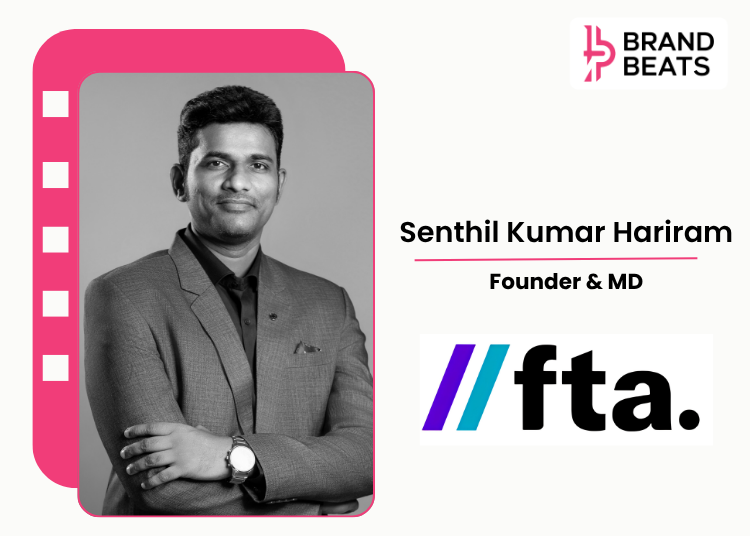
Senthil Kumar Hariram, Founder & Managing Director of FTA Global, discusses how brands can stay adaptable without losing their identity, why being recognised is different from being remembered, how AI is reshaping discovery, and why trust, reputation, and strong brand building still matter beyond the numbers.
Building Brands That Adapt Without Losing What Makes Them Distinct
Building a business rarely means following the original plan exactly. Markets shift, customers evolve, people move on, and assumptions that once looked obvious can lose relevance surprisingly quickly.
Hariram noted that adaptability has become as important as strategy itself. “Today, I believe the ability to adapt is just as important as the original strategy. A team should be willing to question its own views and recognize when something isn’t working.”
He further added, “Note that this does not mean changing a plan every time you face a challenge. Rather, it’s about having the wisdom necessary to decide what should stay the same and what should change.”
The same challenge appears in brand building, where being visible is becoming easier but being remembered requires something more specific than repetition.
He explained, “Being recognised and being remembered are two unrelated things. Recognition may come through sheer repetition, but memory relies on clear associations in consumers’ minds.”
According to Hariram, “Strong brands consistently stick to the main message they want to be identified with, even though their delivery may vary from one channel to another.”
The Most Valuable Marketing Assets May Not Show Up On The Dashboard
Marketing has become increasingly measurable, but Hariram believes some of the outcomes marketers value most are precisely the ones that are hardest to tie to a single campaign.
He noted, “I would invest in reputation because it can drive considerable profitability, but it is not always captured in campaign reporting.”
He further added, “The problem is that these outcomes can be influenced by many things, so it is hard to connect them to one particular promotion effort.”
That does not make reputation less valuable.
Hariram emphasised, “In fact, I would say some of the most valuable assets a company develops are the ones that take time to produce results instead of bringing immediate profits.”
The same long-term view applies to brand building and performance marketing. While companies may manage them through separate teams, consumers experience them as connected parts of the same journey.
Furthermore, he explained, “He sees an ad, learns about the brand from someone, reads a review, finds the brand on social media, and finally makes a purchase. All these interactions affect his perception of the brand.”
The two serve different purposes, but both need to work towards the same business goal. According to Hariram, “Performance marketing can capture existing demand effectively, while brand building can stimulate future demand and preference.”
That also raises a larger question around what marketers choose to measure.
He pointed out, “An assumption I would challenge is that anything significant in marketing should lend itself to precise, instant measurement. The industry is good at measuring indicators such as clicks, impressions, conversions, acquisition costs, and more. But while the data are great, sometimes the amounts are more reassuring than they should actually be.”
He believes, “I’m not suggesting reducing measurement, but acknowledging its shortcomings.”
AI May Change Discovery But Brands Still Have To Create Demand
Consumer discovery is moving beyond the traditional search box, with AI tools increasingly giving people direct answers instead of sending them across multiple websites
Hariram explained, “Artificial intelligence is changing how people find information, and brands must understand it. This is now much more than just ranking higher on Google and making sure customers see your brand’s site when they search for anything”
Being visible in this new information environment, however, is not simply about creating more content.
He further added, “It is not about creating more content; it’s about credible know-how, meaningful messages, trusted sources, and a strong reputation in the areas where brands want to be present.”
The same distinction applies to performance marketing, where better conversion numbers do not necessarily mean that demand for the brand itself has grown.
According to Hariram, “The error of confusing increased conversion with increased demand occurs frequently.”
He further added, “Demand creation is a different activity that involves building awareness, familiarity, preference, and a reason to know the brand in the first place.”
“Profitable growth requires increasing the pool first, and only then improving conversion efficiency,” Hariram further noted
Creators Can Amplify A Brand, But Trust Still Has To Be Earned
Creator marketing works because creators bring something brands cannot simply manufacture overnight: an existing relationship with an audience. Hariram believes brands therefore need to protect their core promise while giving creators enough freedom to make the story their own.
He noted, “A brand has to own its essence, but the creator also needs the freedom to communicate the brand’s story in a way that resonates with their audience.”
He further added, “If the brand insists on dictating every word, it may as well lose the credibility it intended to borrow. The ideal situation is when the brand knows exactly what it wants to communicate and lets the creator deliver that message in their own way”
That balance becomes even more important when competitors can quickly copy product features, pricing and creative execution.
According to Hariram, “It is difficult to replicate the bond built between a brand and its clients.”
He further explained, “This trust comes from consistently keeping promises and knowing customers well enough to understand what they want as their needs keep changing.”
That relationship is also tested when things do not go according to plan.
He pointed out, “One should remember that this forming process is also influenced by the way any organisation acts when things go wrong. These things don’t come together during one campaign or one product release.”
The Consumer Is Buying More Than The Product
More information should, in theory, make consumers better equipped to make decisions. But for brands, an information-rich marketplace can also make differentiation harder, especially when everyone starts communicating through similar features, prices and specifications.
Hariram believes brands can sometimes contribute to that problem by focusing too closely on the transaction itself. “I think marketers sometimes become too fixated on the transaction itself and overlook the issues it’s trying to address.”
That distinction changes how marketers approach the consumer, particularly when the purchase is driven by a need beyond the product itself
He further added, “For instance, someone purchasing a mattress might seem to be choosing the mattress itself, whereas the reason behind their purchase may be the need for comfortable sleep. Similarly, a person undergoing medical tests may not care much about the tests themselves, but rather about the hope of getting reassurance or an answer to their concern.”
He explained that looking beyond the transaction can also open up more possibilities for marketers. “This difference in approach can change the way a marketer needs to do business. While focusing only on the product one has purchased may lead to communicating different features and functional benefits of the product, when knowing the problem someone is trying to address, it opens a lot more opportunities.”
That becomes even more important when brands begin communicating around the same set of product information.
According to Hariram, “Brands often focus on certain product features, like price, specifications, and capabilities, because it’s simpler and easier for consumers to understand. When brands in the market focus on the same type of information, it becomes increasingly difficult to differentiate themselves from the rest.”