
It rarely begins with a business plan.
It begins with something smaller, almost invisible at first. A comment under a post asking, “Where did you get this?” A DM about hair fall that doesn’t have a real solution. A joke about uncomfortable shapewear that lands a little too truthfully. For years, these moments lived and died in comment sections, until a new kind of creator started paying closer attention.
Because somewhere between content and community, a pattern was forming.
India today has millions of creators, but only a fraction manage to build what brands have always chased: deep, sustained trust. And it is this trust not just reach that has quietly become the foundation of a new wave of businesses. What we are witnessing is not just influencers “launching products,” but a structural shift from visibility-led influence to insight-led entrepreneurship.
For women creators in particular, this transition has been both intentional and deeply personal.
Take the categories they are entering. Hair extensions that address real concerns like thinning and damage. Innerwear that rejects the discomfort and unrealistic standards the industry has normalised. Beauty products built around inclusivity and everyday use, rather than occasion-driven glamour. These are not accidental choices; they are reflections of years spent in direct conversation with audiences, understanding not just what looks good on screen, but what is missing from it.
What sets this cohort apart is not just that they built brands but how they built them.
They didn’t start by asking, What can I sell?
They started by noticing, What is not being solved?
And then, they built slowly. Testing ideas through content. Validating demand before launch. Creating anticipation without traditional advertising. In some cases, even building communities before the product existed. The result is a new kind of brand.
This list looks at those women who didn’t just grow audiences, but translated them into businesses rooted in need, identity, and long-term relevance.stant entity, but as something more personal, more immediate, and often, more responsive.
1. Parul Gulati – Nish Hair
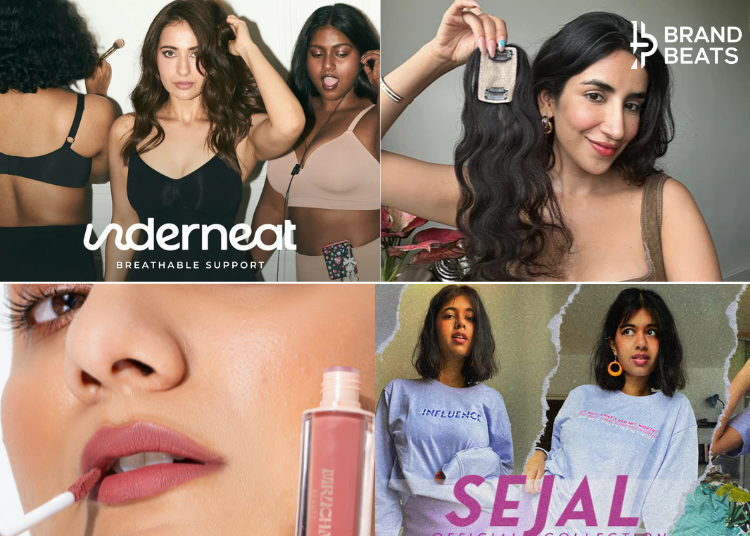
Parul Gulati’s Nish Hair is a solution-driven beauty brand focused on hair extensions, toppers, and wigs made from 100% human hair. Built to address common concerns like hair thinning and lack of volume, the brand prioritises natural look, ease of use, and accessibility for everyday consumers. Unlike typical influencer-led ventures, Nish Hair is strongly product-focused designed to solve a real gap in the Indian market offering practical, ready-to-use hair solutions rather than aspirational beauty alone. feels familiar, almost like an extension of his videos, rather than a detached business venture.
2. Kusha Kapila – UnderNeat
Kusha Kapila’s UnderNeat emerges from a space she has consistently engaged with through her content, body image, everyday discomforts, and the unspoken realities of being a woman navigating societal expectations. Co-founded with a focus on innerwear and shapewear for Indian consumers, the brand is built around practicality rather than idealised beauty standards. It addresses common gaps in the market, poor fits, lack of size, inclusivity, and discomfort masked as design by offering functional, everyday essentials that prioritise ease and wearability. What makes UnderNeat stand out is its clarity of purpose: it doesn’t rely on Kapila’s persona alone, but uses her credibility to anchor a product that solves a real, often overlooked need, positioning itself as a thoughtful entrant in an
3. Aashna Shroff – Snob Home
Aashna Shroff’s Snob Home extends her long-established aesthetic sensibility into the home décor space, translating her signature minimal, neutral, and detail-oriented style into tangible products. Built around the idea of making elevated living accessible, Snob Home focuses on thoughtfully designed pieces, ranging from soft furnishings to décor accents, that mirror the clean, curated visuals her audience associates with her content. Rather than a generic influencer extension, the brand reflects a clear alignment between creator identity and category choice, tapping into a growing market of young consumers looking to personalise their spaces with a distinct, Instagram-informed sensibility. It positions itself not just as décor, but as a lifestyle continuation, bringing the influencer’s visual language off the screen and into everyday living.
4. Mrunal Panchal – Mrucha Beauty
Mrunal Panchal’s Mrucha Beauty is a direct extension of her core identity as a beauty creator who built her audience through makeup tutorials, product experimentation, and trend-led content. Positioned within the affordable beauty segment, the brand focuses on everyday essentials particularly lip products designed for young consumers who engage with beauty through social media. What sets Mrucha Beauty apart is its strong alignment with Panchal’s personal aesthetic, playful, expressive, and rooted in current trends, making the products feel instantly familiar to her audience. Rather than overextending into multiple categories, the brand stays focused, leveraging her credibility in makeup to build trust. It reflects a strategic move from recommending products to creating them grounded in her understanding of what her audience actually uses, not just what they watch.
5. Sejal Kumar – Merch Garage
Sejal Kumar’s approach to building her own brand is less about a single, defined label and more about creating a multi-hyphenated creative identity. Through her clothing drops on Sejal Kumar Merchandise, she has experimented with capsule collections that reflect her personal style, comfortable, slightly offbeat, and rooted in everyday wearability rather than high fashion. However, what sets her apart is that fashion is just one layer. Alongside it, she has steadily invested in original music and storytelling, positioning herself not just as an influencer but as a creator exploring multiple formats. The result is a brand that doesn’t rely on a single product category but on personality-led versatility where her audience engages as much with her journey of self-growth and experimentation as they do with anything she puts out to sell.