

Fashion has become a race where being fast is no longer enough. Trends move quickly, products can reach consumers across multiple channels, and the same styles can appear across competing brands almost simultaneously.
For SNITCH, which has grown from a digital-first fashion challenger into an increasingly omnichannel brand, the challenge is no longer simply keeping pace. It is figuring out what makes consumers choose one brand when speed, price, and product availability can start looking increasingly similar.
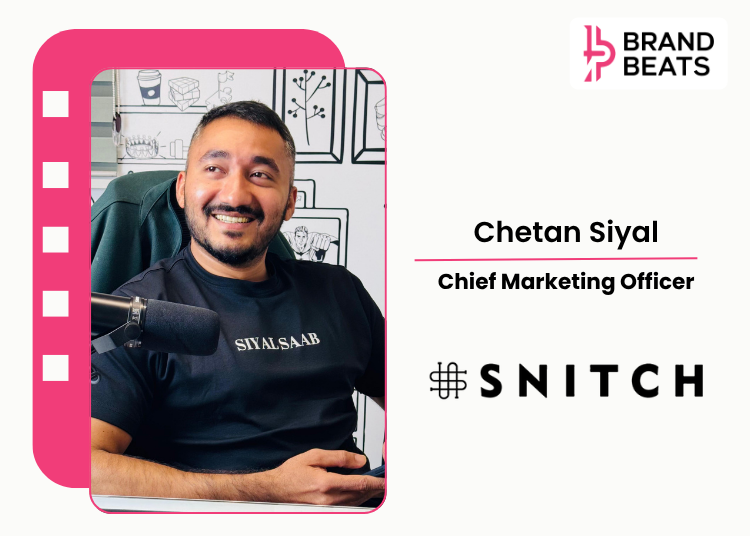
Chetan Siyal, Chief Marketing Officer (CMO) of SNITCH, discusses how the brand is thinking about that challenge, from using creators beyond short-term sales and building urgency through newness to connecting online and offline experiences and protecting SNITCH’s identity as it scales.
Fashion Is Getting Faster; Standing Out Is Getting Harder
Fashion brands have become increasingly good at moving quickly. But Siyal believes speed itself is becoming less of a differentiator as more players improve their product development, supply chains, technology, and distribution.
“Speed is becoming hygiene. Everyone is getting faster. Supply chains will improve. Technology will become accessible. Distribution can eventually be built.” Siyal noted.
For Siyal, the harder question is what makes a consumer want one brand over another when products and prices can look increasingly similar.
“The harder thing to replicate is desire. Why should somebody choose your shirt when twenty brands can make a similar shirt at a similar price and deliver it equally fast?” he explained.
That makes differentiation less about simply getting products to market first and more about how product, brand and customer experience come together.
“That answer increasingly comes from brand, product taste and customer experience working together. I think the next competitive advantage in Indian fashion will belong to brands that can build enormous scale without becoming interchangeable,” he argued.
The same thinking applies to trends. Siyal believes brands need a distinct point of view rather than simply reacting to what is going viral.
“You cannot manufacture culture by putting ‘viral’ in a campaign brief,” he pointed out.
Instead, consistency helps consumers associate certain ideas and behaviours with the brand.
“The goal isn’t to predict every trend before everyone else. It’s to become recognisable enough that when you do something, people know where it came from,” Siyal added.
That also means not every trend needs to become a SNITCH moment. The brand looks at whether it can contribute something meaningful before joining the conversation.
“We ask a very simple question: can SNITCH add something to it?” Siyal said.
“If we’re simply going to reproduce what everyone else is doing, being fast doesn’t make it interesting. Some moments deserve speed. Some deserve our interpretation. And some are better left alone,” he explained.
For Siyal, missing a trend is less of a concern than forcing the brand into conversations where it has nothing distinctive to contribute.
“There is also nothing wrong with missing a trend. I’d rather we miss ten trends than force the brand into ten conversations where we have nothing interesting to say,” he observed.
Customers Don’t Think In Channels; Brands Do
SNITCH began as a digital-first brand, with its physical presence developing as the business expanded. The shift brought a different way of thinking about how consumers encounter the brand.
“We initially thought about stores primarily as another sales channel. What we underestimated was how much they would become a trust and discovery channel.”
A consumer might encounter SNITCH in a store and purchase online later, or discover the brand digitally before visiting a physical location to experience the products.
“Customers don’t think in channels nearly as much as brands do.”
For SNITCH, that has changed how it views omnichannel retail.
“They don’t wake up thinking, ‘Today I’m an offline customer.’ They just want SNITCH wherever it is most convenient for them. Once we understood that, omnichannel stopped being a distribution conversation and became a customer experience conversation.”
The same question of how consumers move between brand experience and action comes into play in SNITCH’s digital advertising.
“I don’t think brand and performance are two different jobs anymore.”
Digital gives SNITCH a faster read on how consumers respond to its communication, from stopping and clicking to searching, sharing and buying. But Siyal cautions against letting last-click conversions dictate every creative decision.
“If every creative decision is made purely around immediate conversion, eventually everything starts looking the same.”
That tension comes down to the different roles each serves.
“Performance tells you what worked today. Brand determines whether somebody will still care about you tomorrow. You need both.”
Speak The Local Language, But Don’t Become A Different Brand
A national fashion brand cannot communicate identically across every market. Humour, references, language and expressions of style can vary considerably between cities.
For Siyal, that makes localisation important, but only within clear boundaries.
“The conversation can change. The personality cannot,” Siyal explained.
SNITCH can adapt its communication for different audiences, while keeping its core character intact.
“India isn’t one consumer market. The humour, references, language and even how people express style can change dramatically from one city to another. We should absolutely understand and participate in that,” he added.
“But SNITCH still needs to feel like SNITCH everywhere,” Siyal pointed out.
The challenge of preserving that character becomes different as the company grows. What works naturally in a smaller organisation can require more deliberate effort as teams and processes expand.
“The temptation as you scale is to become more structured, more predictable and, in some ways, more careful. Some of that is necessary. You cannot run a much larger business exactly the way you ran a smaller one,” Siyal noted.
“But the one thing I never want us to institutionalise is slowness,” he stated.
That also comes down to ownership. As responsibilities become more specialised within a larger organisation, Siyal wants people to remain closely connected to the outcomes of their work.
“I want people at SNITCH to continue behaving like the business belongs to them, not just the function they happen to work in,” he explained.
That principle also shapes what Siyal wants to preserve from SNITCH’s challenger phase and what he is willing to leave behind.
“I would protect our bias for action at all costs,” Siyal said.
“We built SNITCH by doing, not endlessly discussing. Launch it. Test it. Listen to the customer. Improve it. Move again. I don’t want scale to turn every decision into a committee,” he further added.
“What I’m willing to break is the idea that everything that got us here deserves to come with us. A lot of founders become emotionally attached to the playbook that made them successful. But the company you’re building next cannot always be run like the company you built yesterday,” he observed.
“So the mindset stays. The playbook is always up for negotiation.”
The Real Value Of A Creator Goes Beyond The Sale
Creator marketing can produce an immediate spike in attention or sales, but Siyal looks at what happens after that initial moment.
“Sales are probably the easiest thing to measure, but they are not always the most interesting outcome,” Siyal noted.
The brand also looks at whether a creator association changes how people perceive SNITCH, brings the brand into new conversations, or encourages consumers to explore beyond the product featured in the collaboration.
“For me, the better question is whether the association made SNITCH more desirable. Did people talk about it? Did it enter conversations we weren’t part of earlier? Did people discover another side of the brand?” he explained.
Beyond immediate attention, SNITCH also tracks whether the association drives continued interest in the brand.
“We also look at what happens after the spike. Are people searching for SNITCH? Are they exploring other categories? Are new customers coming back?” Siyal added.
For Siyal, that distinction separates a useful creator transaction from a brand-building moment.
“A creator selling one T-shirt is useful. A creator making someone want to know what SNITCH is is brand building,” he pointed out.
Newness Creates A Habit; Scarcity Creates A Transaction
Fashion has always relied on urgency, but SNITCH’s approach is less about convincing consumers that a product might disappear and more about using newness to sustain interest.
“Urgency for us comes more from newness than artificial scarcity.”
“Fashion customers today are constantly discovering something new. So instead of telling them, ‘Buy this because it might disappear,’ we’d rather give them a reason to keep coming back because there is always something new to discover.”
Siyal summarises the difference simply:
“Scarcity can create a transaction. Newness creates a habit.”
That philosophy extends beyond product launches to the overall experience, with SNITCH aiming to make the brand feel active whether consumers encounter it through a store or its digital platforms.
“Our job is to make SNITCH feel alive every time somebody walks into a store or opens the app.”