

A consumer choosing between two sneakers may not always be comparing cushioning, durability and price. Someone picking a motorcycle may not be thinking only about engine capacity, mileage or specifications. And when a shopper reaches for one beverage over another, the decision may have little to do with thirst.
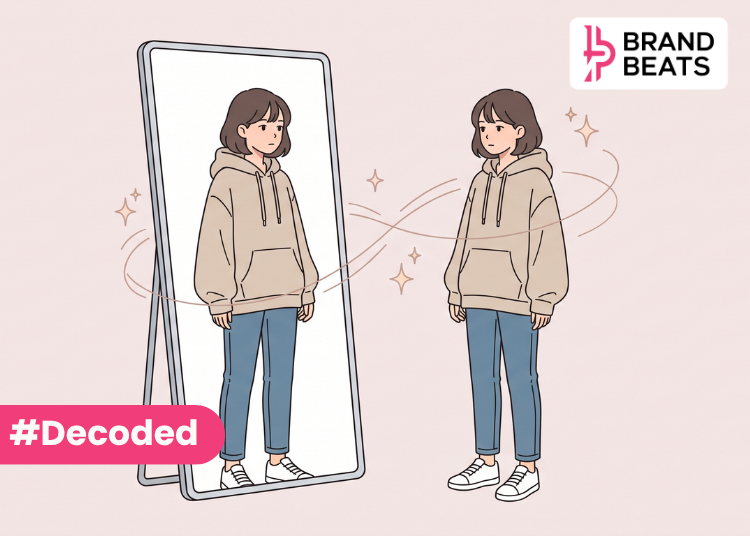
Sometimes, the more powerful question is much simpler: “Does this feel like me?”
That feeling sits at the heart of self-congruence, the idea that consumers are more likely to respond positively when the personality or image associated with a brand aligns with their own self-concept.
In other words, people do not always choose brands purely for what their products do; they can also choose them for what those brands say about who they are, who they want to become or how they want to be perceived. A meta-analysis of 46 empirical studies and 262 effect sizes found a robust relationship between self-congruity and consumer outcomes such as brand attitudes, preferences and purchase behaviour.
For marketers, that distinction matters because a product can satisfy a functional need while a brand can satisfy something much more personal.
When a motorcycle becomes an identity
Take Royal Enfield. A motorcycle can be sold on its engine, design, performance and riding comfort, but the brand has spent years building an identity around what it calls “Pure Motorcycling”. Its ecosystem extends beyond the motorcycle into riding experiences, communities, events and merchandise. Its current Motoverse, for instance, brings together riders, creators, racers and enthusiasts around what the company describes as motorcycling culture.
The result is a brand that can speak to several versions of the consumer’s self. For someone who already considers themselves a serious motorcycling enthusiast, the brand reinforces the actual self “this is who I am.” For someone who wants to become more adventurous or exploratory, it can speak to the ideal self “this is who I want to be.” And when the motorcycle becomes a visible part of someone’s lifestyle, it can also work through the social self “this is how I want other people to see me.”
Royal Enfield has itself described its community as helping define the DNA of its motorcycles, while its annual report has positioned “Pure Motorcycling” around authentic experiences and people trying to explore and discover themselves.
That is an important distinction for brand leads: self-congruence becomes stronger when consumers can experience an identity, rather than simply being shown an advertisement about it.
Brands can sell the person you want to become
Not every brand needs to mirror the consumer they are today. Some succeed by reflecting the person they aspire to become.
Nike is a useful example. Its appeal does not depend on consumers being elite athletes. The brand can represent discipline, ambition, movement, resilience and self-improvement qualities that consumers may already possess but may also be trying to build into their lives.
This distinction between the actual and ideal self becomes particularly relevant in fashion. A 2021 study of 751 millennials in India found that ideal fashion self-congruity was a stronger predictor of fashion consciousness and status consumption than actual self-congruity. The study found that actual self-congruity did not have a significant effect on the two outcomes examined, while ideal self-congruity did.
For marketers, the implication is significant. Consumers do not always buy a brand because it perfectly describes them today. Sometimes they buy into an image of themselves that they are moving towards.
That is why a premium fashion label, luxury car or beauty brand can operate beyond its functional proposition. A watch tells time. A handbag carries things. A pair of shoes protects the feet. Yet the symbolic meaning attached to these products can become much larger than their utility.
The consumer may be buying sophistication, individuality, ambition, status or a particular aesthetic and the product becomes the vehicle through which that identity is expressed.
The Indian consumer and the need to belong
The idea becomes even more interesting in India because identity is rarely one-dimensional.
A consumer can want global fashion while remaining culturally rooted. They can want premium experiences while remaining value-conscious. They can seek individuality while being deeply connected to family and community.
Research examining self-congruity across India and the US has found that the relationship between different forms of self-congruity and brand attitudes can vary across cultural contexts. The study found that actual self-congruity held across both markets, while some effects involving ideal and social self-congruity differed depending on cultural orientation.
That makes the question for Indian brands more nuanced than simply asking, “Who is our target audience?”
A demographic profile can tell a marketer that the consumer is 25, urban and professionally employed. It cannot necessarily tell them whether that person sees themselves as ambitious, practical, adventurous, traditional, experimental, status-conscious or independent.
Two consumers can look identical on a media plan and still respond differently to the same brand because they have different ideas about themselves.
When a beverage becomes a memory
Paper Boat offers another route into the idea.
Instead of competing in beverages purely through refreshment, taste or functional benefits, the brand built much of its identity around traditional Indian drinks and memories. Its “Drinks and Memories” campaign deliberately tapped into nostalgia and childhood, using familiar flavours and storytelling to evoke a simpler period of life. According to WARC’s case study, the campaign was followed by a 179% increase in sales volumes.
The psychological connection here is not necessarily, “This brand is exactly like me.”
It is closer to: “This belongs to my world.”
That distinction matters.
Paper Boat takes something culturally and personally familiar and puts it into a contemporary branded format. The consumer is not simply choosing a drink; they are reconnecting with memories, flavours and experiences that already form part of their identity.
For marketers, this demonstrates that self-congruence does not always have to come from a brand literally describing its consumer’s personality. It can emerge from memory, culture, values, lifestyle or shared experiences.
From “I like this” to “People like me use this”
The same principle can work through community.
boAt’s use of the term “boAtheads” is an interesting example because it turns consumers from an audience into a group with a shared identity. The brand has built a community around the people who use its products, giving the consumer another psychological route into the brand: not just “I like these earbuds”, but “I am one of these people.”
That distinction is particularly important in categories where products are visible to others.
Fashion, smartphones, cars, sneakers, jewellery, beauty and even food and beverage choices can become signals of taste, personality, values or social position.
This is where the social self enters the picture.
Consumers can use brands to communicate how they would like to be perceived by others. The purchase therefore becomes more than a private decision. It becomes a small piece of social signalling.
A consumer choosing a particular sneaker, watch or car may not consciously think, “This is an expression of my social self.” But the brand can still carry that meaning.
Self-congruence is not simply “relatability”
This is where marketers can easily oversimplify the idea.
A relatable advertisement is not automatically an example of self-congruence.
A consumer may laugh at a meme, recognise a situation in an advertisement or enjoy a celebrity endorsement without developing any deeper connection with the brand.
Self-congruence asks a different question:
Does the identity represented by this brand fit into the way I understand myself?
That is a much deeper relationship.
Amul, for example, has spent decades inserting itself into India’s cultural conversation through topical advertising around cricket, films, festivals and current events. Its communication often reflects the humour, references and everyday cultural moments familiar to Indian audiences.
The consumer doesn’t necessarily think, “I am exactly like Amul.”
Instead, the relationship can be closer to: “This brand understands the cultural world I live in.” That is another way a brand can create psychological closeness.
The real opportunity for brand leads
The strongest identity-led brands therefore need to answer three questions.
Who does our consumer believe they are?
That is the actual self.
Who does our consumer want to become?
That is the ideal self.
And how does our consumer want other people to see them?
That is the social self.
The answers can completely change the brand strategy.
If consumers see themselves as practical, the brand may need to reinforce simplicity and value. If they aspire to become adventurous, the brand can build a world around exploration. If they want to signal sophistication, the product, packaging and experience may need to communicate that status consistently.
But the identity cannot exist only in advertising.
A brand that calls itself adventurous but offers no adventurous experience creates a disconnect. A brand that talks about community but gives consumers nowhere to participate leaves the positioning at the communication level.
This is why Royal Enfield’s ecosystem is instructive. The brand doesn’t just communicate motorcycling; it creates spaces where consumers can actually participate in that culture through rides, events and communities.
The same principle can be applied across categories. A beauty brand can give consumers a platform for experimentation. A sports brand can create participation. A fashion brand can create communities around aesthetics. A food brand can build rituals around consumption.
The objective is to move from communicating an identity to enabling one.
When the brand becomes part of the consumer
Consumers rarely walk into a store thinking explicitly about self-congruence. They are not asking themselves whether a brand aligns with their actual or ideal self.
They simply think:
“This feels like me.” Or “This is the kind of person I want to be.”
Or “People like me use this.”
That is what makes the idea so useful for brand strategy.
The most successful brands are not always the ones that tell consumers the most about their products. They are often the ones that give consumers something to recognise about themselves.
Because a product can solve a problem. A campaign can capture attention. A promotion can drive a transaction.
But when a brand becomes connected to the way a consumer sees themselves, the relationship moves beyond the product.
The consumer is no longer simply buying what the brand makes. They are buying into what the brand helps them express.