
A PR crisis can take years to build and only minutes to explode. One controversial advertisement, one product-safety allegation or one poorly received campaign can suddenly turn a familiar brand into the centre of a national conversation. But while the first instinct in a crisis is often to go silent, the brands that survive such moments understand that reputation cannot be repaired simply by waiting for the internet to move on.
For consumer brands, the stakes are particularly high. A crisis doesn’t just affect what people say about a company; it can alter whether they trust its product, walk into its stores or recommend it to someone else. And in an age where a single post can trigger a boycott hashtag within hours, PR has become as much about how a brand responds as it is about the crisis itself.
India has seen several such moments. From Cadbury’s battle with a food-safety scare to Maggi’s extraordinary comeback after a nationwide ban, brands have had to rebuild something far more valuable than visibility: consumer confidence. Others, such as Tanishq and FabIndia, found themselves caught in cultural and social-media controversies where every response risked becoming another headline.
What makes these cases interesting isn’t simply that the brands survived. It is what they did once the crisis became bigger than the campaign itself, whether they changed the product, changed the communication, brought in a trusted face, clarified their position or, in some cases, pulled the campaign altogether. Here are some of the most instructive examples.
1. Cadbury
The crisis: 2003
In 2003, Cadbury faced one of the biggest reputation crises in its history in India after reports emerged of worms being found in Dairy Milk chocolate bars. The controversy quickly became a serious quality and consumer-trust issue for the brand.
For a brand built around something as emotionally simple as “meetha”, the problem was particularly damaging. Chocolate is an impulse purchase, but it is also a product associated with children, families and celebrations. Once consumers began questioning whether the product was safe, Cadbury’s challenge wasn’t simply to sell chocolate again, it had to convince people that they could trust the chocolate again.
The company responded on two fronts. It worked on the product and packaging itself, moving towards improved packaging technology designed to prevent infestation, while simultaneously communicating these changes to consumers.
Then came the celebrity-led communication.
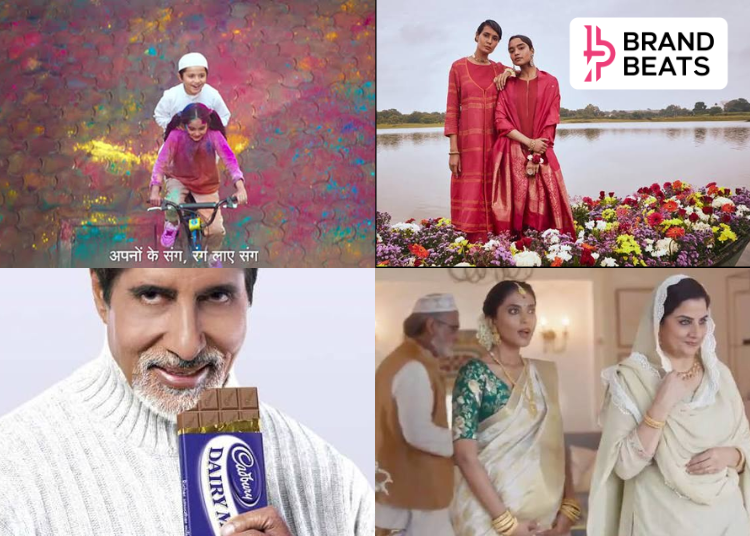
Cadbury brought in Amitabh Bachchan as the face of its communication, lending the campaign an additional layer of credibility. Rather than pretending the controversy hadn’t happened, the brand’s communication focused on the measures it had taken to address the problem and reassure consumers.
The move was significant because Cadbury understood that PR recovery couldn’t come from advertising alone. Advertising could say the product was safe; the changes to packaging and quality controls gave consumers a reason to believe it.
The episode eventually became one of India’s most frequently cited examples of reputation recovery: fix the product first, then communicate the fix.
The marketing lesson
Cadbury’s biggest move wasn’t hiring Amitabh Bachchan. It was making the celebrity communication part of a larger trust-rebuilding exercise.
The crisis was solved through a combination of:
- Product and packaging intervention
- Consumer reassurance
- Transparent communication
- A highly trusted celebrity spokesperson
- Continued investment in brand equity
In other words, Cadbury didn’t try to out-advertise a product problem. It addressed the underlying problem and then used marketing to rebuild confidence
2. FabIndia
The crisis: October 2021
FabIndia’s 2021 festive campaign demonstrates a very different kind of crisis, one where the advertisement itself became the problem.
On October 9, 2021, FabIndia promoted its festive collection under the name “Jashn-e-Riwaaz”, describing it as a collection that paid homage to Indian culture. The campaign featured models dressed in festive clothing. The backlash came quickly.
Several social-media users and political leaders criticised the campaign, objecting to the use of the Urdu phrase Jashn-e-Riwaaz in communication associated with Diwali. The controversy escalated into calls for a boycott of FabIndia, with #BoycottFabIndia trending online.
FabIndia eventually removed the promotional post. But the interesting part came with the clarification that followed.
The company said “Jashn-e-Riwaaz” was not actually its Diwali collection and pointed to its upcoming “Jhil Mil Se Diwali” collection. In other words, the brand attempted to separate the disputed campaign from its main Diwali communication.
FabIndia did not turn this particular crisis into an obvious marketing victory. It withdrew the campaign after the backlash. But the case is valuable because it shows a different aspect of crisis PR: knowing when not to fight the internet.
The brand avoided allowing the controversy to consume its wider festive business and clarified the positioning of the collection.
The marketing lesson
Sometimes crisis management isn’t about producing a clever comeback post. FabIndia’s case shows that when the creative becomes the controversy, protecting the larger brand can matter more than defending one campaign.
3. Tanishq: The Ad That Became Bigger Than the Brand
The crisis: October 2020
Tanishq’s Ekatvam campaign remains one of India’s most talked-about advertising controversies.
Released in October 2020, the 43–45-second film showed a pregnant Hindu woman being welcomed into a Muslim family, which was organising a traditional baby shower for her. The film was positioned around the idea of different traditions and cultures coming together.
Instead, it triggered a huge social-media backlash.
Critics accused the campaign of promoting what they called “love jihad”, while #BoycottTanishq began trending. The controversy escalated quickly enough for the brand to make the advertisement private on YouTube.
Tanishq subsequently issued a statement explaining that the idea behind Ekatvam was to celebrate people from different communities, families and traditions. However, it said the film had generated reactions contrary to its objective and that it was withdrawing the film while keeping the safety and wellbeing of employees, partners and store staff in mind.
The PR strategy
Tanishq’s response was notable because it didn’t issue a long defensive argument about why the campaign was right.
Instead, it:
- Explained the original intent
- Acknowledged the intensity of the reaction
- Withdrew the film
- Put employee and partner safety at the centre of the decision
But there’s a catch.
This shouldn’t be presented as a straightforward “marketing win.” Several advertising and brand experts criticised Tanishq for withdrawing the campaign, arguing that it should have stood its ground.
Yet the controversy generated enormous earned media and turned Ekatvam into one of the most discussed Indian advertisements of the year.
The marketing lesson
Tanishq’s case demonstrates that brand visibility and brand victory aren’t always the same thing.
The campaign was pulled, but the conversation around Tanishq’s positioning, advertising philosophy and social messaging became significantly larger.
4. Maggi: From Nationwide Ban to One of India’s Biggest Comebacks
The crisis: 2015
If there is one brand that belongs on a list about crisis management in India, it is Maggi.
In June 2015, Nestlé India faced a massive crisis after laboratory tests raised concerns about lead levels in Maggi noodles. The controversy escalated rapidly, resulting in the withdrawal and nationwide ban of the product. The episode became one of the biggest food-brand crises India had seen. Nestlé India’s former chairman and managing director Suresh Narayanan later described the Maggi crisis as one of the greatest challenges of his career.
Suddenly, a product that had occupied Indian kitchens for decades disappeared from shelves.
And that’s where the emotional value of the brand became visible.
Consumers began talking about missing Maggi. Social media filled with memories, jokes and nostalgia. The crisis had inadvertently demonstrated something brands spend millions trying to build: Maggi wasn’t just a product. It had become part of everyday Indian life.
When the ban was eventually lifted and Maggi returned to shelves in November 2015, Nestlé didn’t treat it like an ordinary product relaunch.
It turned the return into an event.
The communication leaned into the emotional relationship consumers had with the brand, with the comeback fuelled by the now-famous “Miss You Maggi” sentiment and a strong nostalgia-led narrative.
The message was essentially simple: You missed us. We missed you too.
Why the comeback worked
Maggi’s recovery wasn’t built on one advertisement.
A clever campaign could not have rescued Maggi while the product was still banned. The brand first had to establish that it could return to the market, and only then could marketing turn the return into an emotional moment.
A decade later, the crisis is still considered one of the defining episodes of Nestlé India’s history. In 2025, Narayanan again described the Maggi crisis as one of the most daunting challenges of his career.
5. Surf Excel: When a Holi Ad Triggered a Boycott Call
The crisis: February–March 2019
For a detergent brand, Holi is almost too obvious an advertising opportunity. Colours, stains and children naturally lend themselves to a detergent narrative. But in 2019, Surf Excel decided to take its Holi communication beyond stains and cleaning and walked straight into a social-media storm.
On February 27, 2019, Surf Excel released its one-minute film “Rang Laaye Sang”, built around the idea of colours bringing people together. The film showed a young girl playing Holi with children in her neighbourhood. She deliberately lets herself get covered in colours until the others run out of them. The reason becomes clear at the end: she wants her Muslim friend to be able to reach a mosque for namaaz without getting his white clothes stained. He then promises to join her for Holi after his prayers.
The film closed with Surf Excel’s familiar “Daag Achhe Hain” proposition positioning the stains as worthwhile because they came from doing something good.
Then the backlash arrived.
The advertisement initially received considerable praise for its message of communal harmony. But within days, sections of social media began calling the campaign anti-Hindu and accusing it of promoting “love jihad”. #BoycottSurfExcel began trending, with calls to boycott both Surf Excel and its parent company, Hindustan Unilever.
But HUL didn’t pull the advertisement.
Instead, the company stood by the thinking behind it.
A Hindustan Unilever spokesperson told Financial Express that the #RangLaayeSang campaign was an extension of Surf Excel’s “Daag Achhe Hain” philosophy and was intended to show how the colours of Holi could bring people together and melt differences.
At the same time, fact-checkers also began addressing misinformation circulating alongside the controversy. BOOM contacted an HUL spokesperson and reported that several claims being circulated against the brand were false.
And that became an important part of the story: Surf Excel didn’t allow the backlash to completely redefine what the campaign was about.