

Not every viral campaign is a marketing win.
Every year, brands find themselves trending for the wrong reasons, an insensitive tweet, a tone-deaf advertisement, or a social media stunt that sparks backlash instead of engagement. In the race for attention, going viral has become easier than ever, but earning genuine appreciation remains far more difficult.
That is what made several campaigns stand out in 2026.
Rather than chasing controversy, these brands captured attention through creativity, cultural relevance, participation, and strong storytelling. Some turned everyday consumer behaviour into engaging experiences. Others tapped into internet culture, nostalgia, sports fandom, or social conversations in ways that felt authentic rather than forced. The result was the kind of virality every marketer hopes for: widespread sharing, positive sentiment, and meaningful audience engagement.
From interactive treasure hunts and creator-led activations to campaigns that blurred the line between entertainment and advertising, these examples proved that audiences still reward ideas that are clever, timely, and genuinely enjoyable.
Here are seven viral brand campaigns from 2026 that got people talking—for all the right reasons.
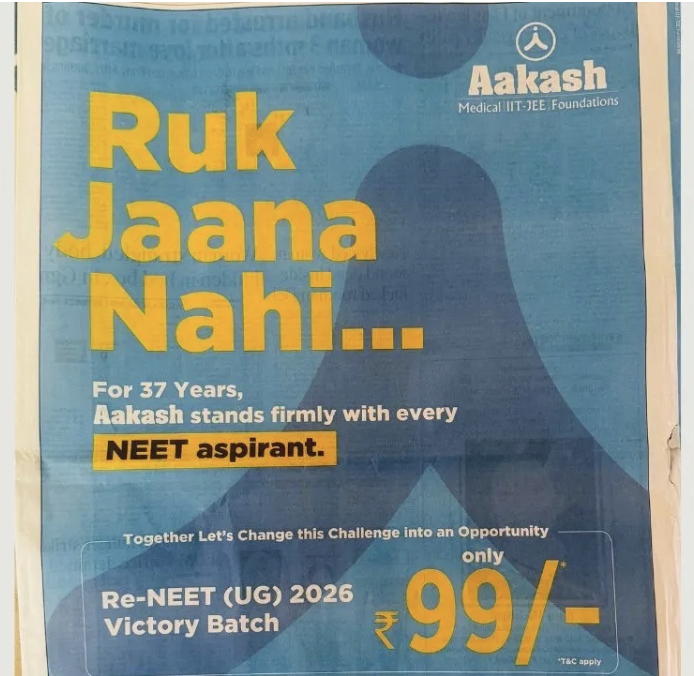
1. Aakash
In a year when the NEET examination was overshadowed by cancellation controversies, paper leak allegations and uncertainty around re-examinations, most brands would have preferred to stay away from the conversation.
Aakash Educational Services did the opposite.
Instead of promoting courses, discounts or admissions, the coaching institute released a simple print campaign carrying a powerful message: “Ruk Jaana Nahi” (Don’t Stop). The campaign was aimed at lakhs of students who suddenly found themselves preparing for a possible re-NEET after months of intense preparation.
What made the campaign stand out was its timing. At a moment when social media was flooded with frustration, uncertainty and debates around the future of NEET, Aakash chose empathy over promotion. The creative acknowledged the emotional exhaustion students were experiencing and encouraged them to keep going despite circumstances beyond their control.
The message resonated because it understood the audience’s state of mind. The campaign went viral because it tapped into a real national emotion instead of manufacturing one.
While many viral campaigns rely on humour, celebrity appearances or shock value, ‘Ruk Jaana Nahi’ succeeded because it offered reassurance when students needed it most. Parents, educators and aspirants shared the creative across social media, turning a print ad into a larger conversation about resilience and mental strength.
2. The Hindu
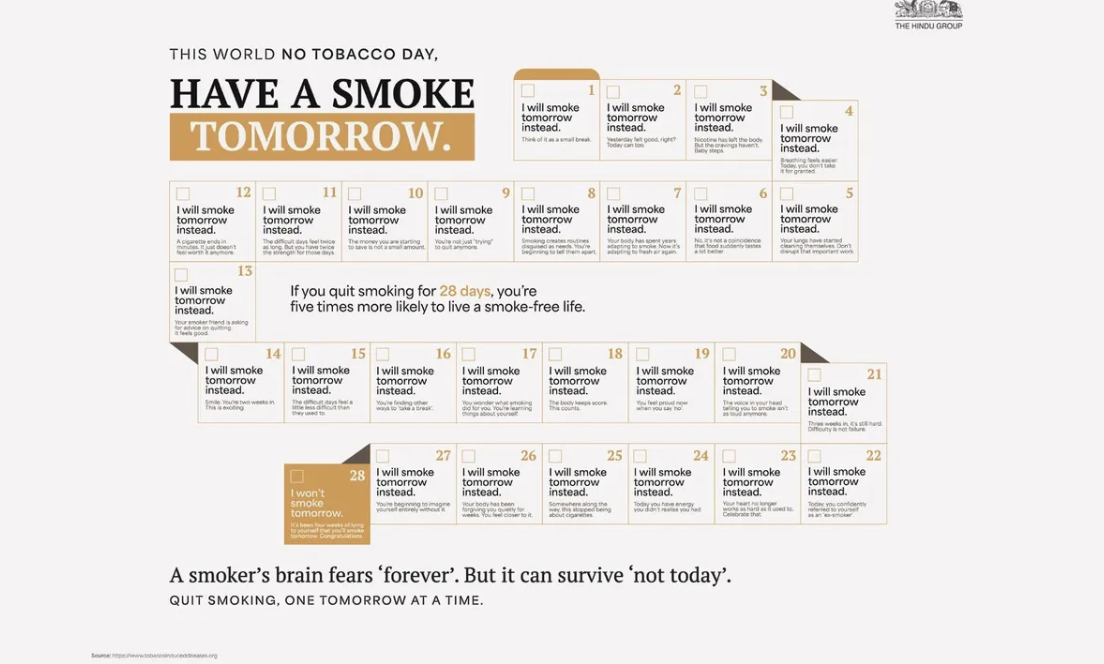
Most anti-smoking campaigns rely on fear. They show damaged lungs, health warnings and grim statistics. The Hindu and creative agency Talented took a completely different route. On World No Tobacco Day, they launched a campaign that didn’t tell smokers to quit forever, it simply asked them to delay their next cigarette until tomorrow.
The idea was built around a simple behavioural insight: quitting can feel overwhelming, but postponing feels achievable. By reframing the challenge from “never smoke again” to “not today,” the campaign made the first step towards quitting feel less intimidating and more realistic.
The campaign went viral because it avoided preaching and instead used psychology. Rather than guilt-tripping smokers, it invited them to make a small decision that could lead to a larger habit change. The unconventional message sparked conversations across social media and marketing circles because it broke every rule associated with traditional anti-smoking advertising.
In a year filled with attention-grabbing campaigns, The Hindu proved that sometimes the most powerful idea is not telling people what to stop doing forever but simply asking them to wait until tomorrow.
3. Asian Footwears
Most footwear advertisements talk about comfort, performance or style. Asian Footwears chose to sing about it quite literally. In its campaign featuring comedian Sunil Grover as a quirky qawwali singer, the brand transformed a simple product proposition into a highly entertaining cultural performance. Set during a “Qawwali Night,” the film sees Grover humorously praising the brand’s shoes, joking that people love them so much they would never want to take them off.
The ad’s clever writing, musical format and Grover’s trademark comic timing made it instantly stand out in a sea of conventional footwear advertising.
The campaign went viral because it felt less like an advertisement and more like a piece of shareable entertainment. Instead of relying on celebrity glamour or product demonstrations, Asian Footwears used humour rooted in familiar Indian cultural references.
One of the film’s most talked-about moments playfully suggests that audience members wearing the brand’s shoes would never throw them at a performer, no matter how bad the show gets, a joke that subtly reinforces the comfort proposition while generating laughs.
4. DreamSetGo
Most travel advertisements try to convince consumers to book a trip. DreamSetGo’s campaign featuring Tanmay Bhatt, Sourav Ganguly and Ayush Mehra did something smarter, it made viewers wish they had lived someone else’s experience.
Built around a casual game of “Never Have I Ever,” the film sees Ganguly and Mehra casually recount bucket-list moments such as accessing Formula 1 paddocks, watching Wimbledon from Centre Court, enjoying private cricket hospitality and even meeting David Beckham, while Tanmay Bhatt reacts with growing disbelief and envy. Instead of selling sports travel directly, the campaign transformed premium sports experiences into entertaining storytelling.
The campaign went viral because it perfectly matched how modern audiences consume content. Rather than looking like a traditional advertisement, it felt like a creator-led conversation that audiences would willingly watch and share. The chemistry between Ganguly, Tanmay and Ayush created humour, while the aspirational experiences generated instant FOMO among sports fans.
By combining creator culture, celebrity credibility and the growing demand for experience-led fandom, DreamSetGo created a campaign that blurred the line between content and advertising and that is exactly why people kept talking about it.
View this post on Instagram
5. Flipkart
Every summer, brands talk about rising temperatures, but Flipkart turned the heat into a personality. Through its Too Hot To Handle Uncle campaign, the e-commerce giant introduced a hilariously frustrated character struggling to cope with the scorching season.
From exaggerated reactions to the weather to his constant search for ways to stay cool, the character became the centre of a campaign that showcased Flipkart’s summer deals and products without making the communication feel like a sales pitch. The humour, relatable situations and instantly recognisable “uncle” archetype helped the campaign connect with audiences across age groups.
The campaign went viral because it leaned into entertainment rather than promotion. Instead of listing discounts and offers, Flipkart built a character that viewers enjoyed watching and sharing. Social media users related to the summer struggles, while the campaign’s memorable dialogues, expressions and situations generated conversations beyond the brand’s owned channels.
By turning a seasonal consumer problem into a recurring comedy narrative, Flipkart created a campaign that felt more like content than advertising making Too Hot To Handle Uncle one of the most talked-about brand characters of the season.
6. Dabur
Most FMCG campaigns focus on the finished product. Dabur’s Miswaknama chose to focus on the ingredient instead. Created for Dabur Meswak toothpaste, the campaign took audiences on a travel-led journey across India to rediscover Miswak, the natural ingredient that has been used in oral care traditions for centuries.
Through regional creators, local stories and cultural exploration, the brand transformed what could have been a routine toothpaste advertisement into a content series about heritage, wellness and discovery. Rather than talking about benefits and formulations, Miswaknama asked a simple question: How many people actually know the story behind the ingredient they use every day?
The campaign went viral because it tapped into a growing consumer appetite for authenticity and ingredient-led storytelling. Instead of pushing a sales message, Dabur created content that felt educational, culturally rooted and genuinely interesting.
The travel format made the campaign highly shareable, while the focus on a lesser-known traditional ingredient sparked curiosity among younger audiences. In a year dominated by quick-scroll content, Miswaknama stood out by turning a toothpaste ingredient into a rediscovery journey proving that sometimes the most powerful brand stories are hidden in plain sight.
View this post on Instagram
7. Havells
Most brands try to avoid online trolls. Havells decided to build a campaign around them. For its Hawa Badlegi campaign, the brand tapped into the familiar internet culture of “fans versus trolls” and gave it a meaningful twist. The film highlights how people often spend time arguing online while ignoring issues that affect them in the real world such as poor indoor air quality.
By using humour, relatable social media behaviour and a format audiences instantly recognised, Havells managed to make a category as functional as air purifiers feel relevant and conversational. Rather than leading with technical specifications, the campaign focused on a cultural insight that resonated with digital-first audiences.
The campaign went viral because it spoke the language of the internet without forcing itself into internet culture. The “trolls versus fans” dynamic is something social media users encounter every day, making the message immediately relatable and shareable.
At the same time, the campaign linked the conversation back to a genuine consumer concern, ensuring it wasn’t just another meme-driven marketing stunt. By combining cultural relevance with a clear product message, Havells created a campaign that entertained audiences while reinforcing its larger proposition that when it comes to air quality, hawa badalni zaroori hai.