

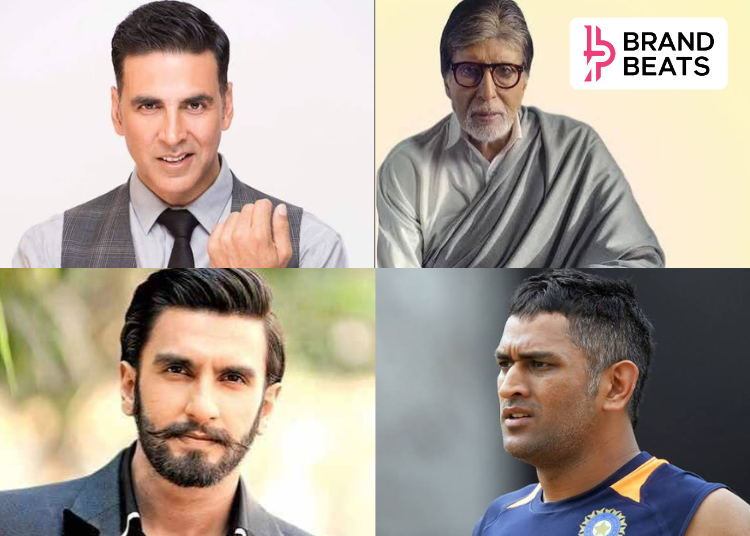
Celebrity endorsements are one of advertising’s oldest shortcuts to attention. Put a familiar face next to a product and brands can instantly borrow recognition, aspiration and, sometimes, trust.
But the same equation can work in reverse.
When a product is questioned, a campaign crosses a social line or a company fails its customers, the celebrity attached to it rarely remains insulated from the fallout. In India, there have been several instances where an endorsement that looked like a straightforward brand deal turned into a reputational headache for the star and, in some cases, the brand itself.
From Akshay Kumar’s highly scrutinised association with Vimal Elaichi to MS Dhoni’s connection with the Amrapali Group, these episodes underline an increasingly important reality for marketers: celebrity fit is about more than popularity.
Here are eight instances where celebrity endorsements became controversies of their own.
1. Akshay Kumar
Few recent celebrity endorsement controversies have been as stark as Akshay Kumar’s association with Vimal Elaichi.
Kumar had spent years cultivating an image around fitness, discipline and a relatively health-conscious lifestyle. So when he appeared alongside Ajay Devgn and Shah Rukh Khan in a Vimal Elaichi campaign in 2022, the internet immediately questioned the association because of the brand’s connection with pan masala.
The backlash became particularly intense because Kumar had previously spoken publicly against tobacco consumption.
Social media users resurfaced his earlier statements and advertisements, creating a clear disconnect between the actor’s established image and the new endorsement. The criticism was strong enough for Kumar to apologise publicly, announce that he was stepping away from the association and say that his endorsement fee would be donated to charity.
The episode became a classic example of why brand-celebrity fit matters. A celebrity can be perfectly capable of selling a product on paper, but when the product contradicts the identity they have spent years building, the backlash can become much bigger than the campaign’s intended reach.
2. MS Dhoni
MS Dhoni’s association with the Amrapali Group demonstrates another, potentially more serious, risk of celebrity endorsements: what happens when the company itself gets into trouble?
Dhoni was the brand ambassador for Amrapali’s real estate projects, including Amrapali Heartbeat. According to a 2020 Supreme Court order, the Heartbeat City projects were launched with Dhoni as brand ambassador, while homebuyers who had paid their dues faced construction delays and problems with possession.
As the crisis around Amrapali intensified, Dhoni’s name inevitably became part of the conversation. For homebuyers, the celebrity association had helped provide an additional layer of familiarity and credibility to the project.
The case illustrates the particular vulnerability of celebrity endorsements in sectors such as real estate. Unlike a soft drink or smartphone, a property purchase can represent a family’s largest financial commitment. When things go wrong, the celebrity’s association can consequently attract much greater scrutiny.
The marketing lesson: due diligence cannot stop at whether a brand can afford a celebrity. It has to include the company’s financial, regulatory and reputational health.
3. Shah Rukh Khan
For years, Shah Rukh Khan was the face of Fair & Handsome, a men’s grooming brand positioned around the idea of fairness.
The problem was that the conversation around beauty and fairness in India was changing.
As criticism of colourism in advertising grew, fairness-product advertising increasingly came under scrutiny for suggesting that lighter skin could translate into greater attractiveness, confidence or success. Campaigns associated with fairness creams were consequently examined not just for what they sold, but for the social message embedded in the advertising.
Khan’s association with Fair & Handsome became part of this larger conversation around colourism and the responsibility of celebrities in shaping beauty standards.
This wasn’t a conventional scandal involving a defective product or legal action. Instead, it represented a different kind of endorsement risk: cultural relevance can change faster than a brand’s advertising strategy.
What may once have been considered an aspirational proposition can eventually become a liability when consumer attitudes evolve.
4. Amitabh Bachchan
The 2015 Maggi controversy became one of India’s biggest examples of how a product crisis can pull celebrity endorsers into the spotlight.
Maggi came under intense regulatory scrutiny after tests raised concerns over lead levels and labelling. The controversy eventually led to the product being withdrawn from the Indian market temporarily.
But the crisis did not stop with Nestlé.
Amitabh Bachchan, Madhuri Dixit and Preity Zinta, all of whom had appeared in Maggi advertising came under scrutiny over their endorsement of the product. Consumer forums issued notices to the celebrities, while an FIR was also registered against Bachchan, Dixit and Zinta in connection with the controversy.
Bachchan subsequently pointed out that his Maggi contract had ended about two years earlier and said he had checked with Nestlé regarding the product before endorsing it.
The episode highlighted a difficult question for celebrity advertising:
How much responsibility does an endorser carry for claims made by a product they are paid to promote?
For brands, the answer is increasingly important because consumers often remember the celebrity alongside the product, even when the celebrity’s association has already ended.
5. Aishwarya Rai Bachchan
Sometimes, it isn’t the product that creates the controversy. It’s the creative.
In 2015, a Kalyan Jewellers print advertisement featuring Aishwarya Rai Bachchan sparked criticism from activists who described the imagery as racist and evocative of colonial-era power dynamics.
The advertisement showed Rai Bachchan dressed in regal attire, with a dark-skinned child holding a parasol over her. Activists criticised the depiction, while Rai Bachchan’s representatives said the published image had been altered from what had originally been approved.
Kalyan Jewellers subsequently decided to withdraw the advertisement and expressed regret if the creative had hurt sentiments.
The controversy was a reminder that celebrity endorsement does not give the celebrity complete control over how the final campaign is perceived.
6. Amitabh Bachchan
Amitabh Bachchan’s association with Kamla Pasand became another major example of the risks surrounding surrogate advertising.
In 2021, Bachchan faced criticism after appearing in an advertisement for the pan masala brand. The backlash was particularly notable because of his stature and his association with public-awareness initiatives.
Bachchan eventually terminated his endorsement agreement, returned the money he had received and said that he had not been aware that the association could fall under surrogate advertising.
The controversy did not end there. After the contract was terminated, reports said the actor’s side sent a legal notice asking the company to stop airing advertisements featuring him.
For marketers, this case demonstrated the growing scrutiny around surrogate advertising, especially when celebrities promote products that consumers perceive as being linked to tobacco or other restricted categories.
It also showed how quickly a seemingly routine endorsement can become incompatible with a celebrity’s broader public image.
7. Malaika Arora and Arbaaz Khan
Malaika Arora and Arbaaz Khan’s coffee advertisement became controversial for leaning heavily into the couple’s chemistry and suggestive imagery.
The commercial attracted criticism over its sexualised portrayal and questions around whether such content was appropriate for television audiences.
At the time, provocative advertising was often used to make otherwise ordinary consumer products stand out. Celebrity chemistry provided brands with an easy way to generate attention.
But the MRG Coffee episode showed the downside of that strategy: when the provocative element becomes the story, the product can disappear from the conversation entirely.
It is a lesson that remains relevant in contemporary advertising, where brands increasingly compete for attention through humour, shock value, celebrity moments and deliberately provocative creative.
8. Genelia D’Souza
Real estate celebrity endorsements can create particularly complicated situations because the celebrity’s association can become part of the trust equation for prospective buyers.
Genelia D’Souza was associated with Hyderabad-based real estate company Anjaniputra Infrastructure. The company later faced allegations surrounding property investments, bringing scrutiny to its celebrity association as investors and buyers sought answers.
The episode raised an uncomfortable question that extends beyond one celebrity or one real estate company:
When consumers trust a company partly because a celebrity endorses it, where does the celebrity’s responsibility begin and end?
That question has become even more relevant as influencer marketing has grown. A celebrity or creator may simply see an endorsement as a commercial arrangement, while audiences can interpret the association as an implicit recommendation.
And in high-value categories such as real estate, financial services and education, that distinction becomes especially important.
The common thread across these controversies isn’t that celebrity endorsements don’t work. In fact, they often work extremely well. The problem is that the same attention brands borrow from celebrities can be transferred back to them when something goes wrong.
Ultimately, celebrity endorsement is a reputation exchange. Brands borrow fame, credibility and cultural relevance from celebrities and celebrities, in turn, become associated with the brands they represent.
When everything goes right, that exchange can create some of advertising’s most memorable campaigns. When it goes wrong, the celebrity doesn’t just endorse the brand. They can end up endorsing the controversy too.