

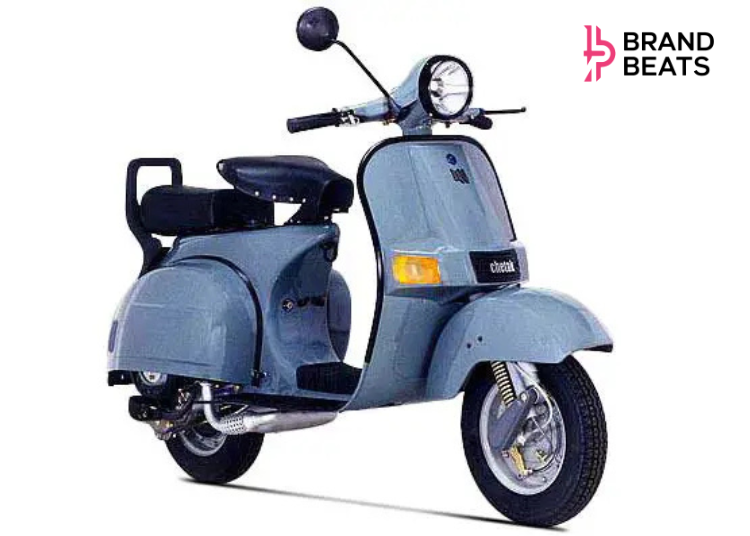
The Bajaj Chetak 2-stroke wasn’t built from scratch; it was reverse-engineered from a lapsed licence. Bajaj Auto’s 1960 technical agreement with Piaggio gave India its first taste of the Vespa step-through format. When that licence expired in 1971, Bajaj kept the tooling, dropped the name, and in 1972 launched the Chetak. This article unpacks the engineering decisions, origin story, and technical specifications that made it India’s best-selling scooter for two decades.
The story begins not with product design but with industrial policy. In 1960, Bajaj Auto signed a formal technical collaboration with Piaggio of Italy to manufacture Vespa-branded scooters at its Pune plant. These sold through the 1960s as the ‘Vespa 150,’ establishing the step-through scooter as a viable format for Indian urban roads, congested and shared by pedestrians, cattle, and cycles simultaneously.
The collaboration ended in 1971 when India’s revised foreign-ownership regulations made renewal unfavorable for Piaggio. The critical legal distinction is that Bajaj lost the right to use the Vespa trademark, not the right to manufacture scooters using the knowledge and tooling it had already legally acquired. That distinction is what made the Chetak possible.
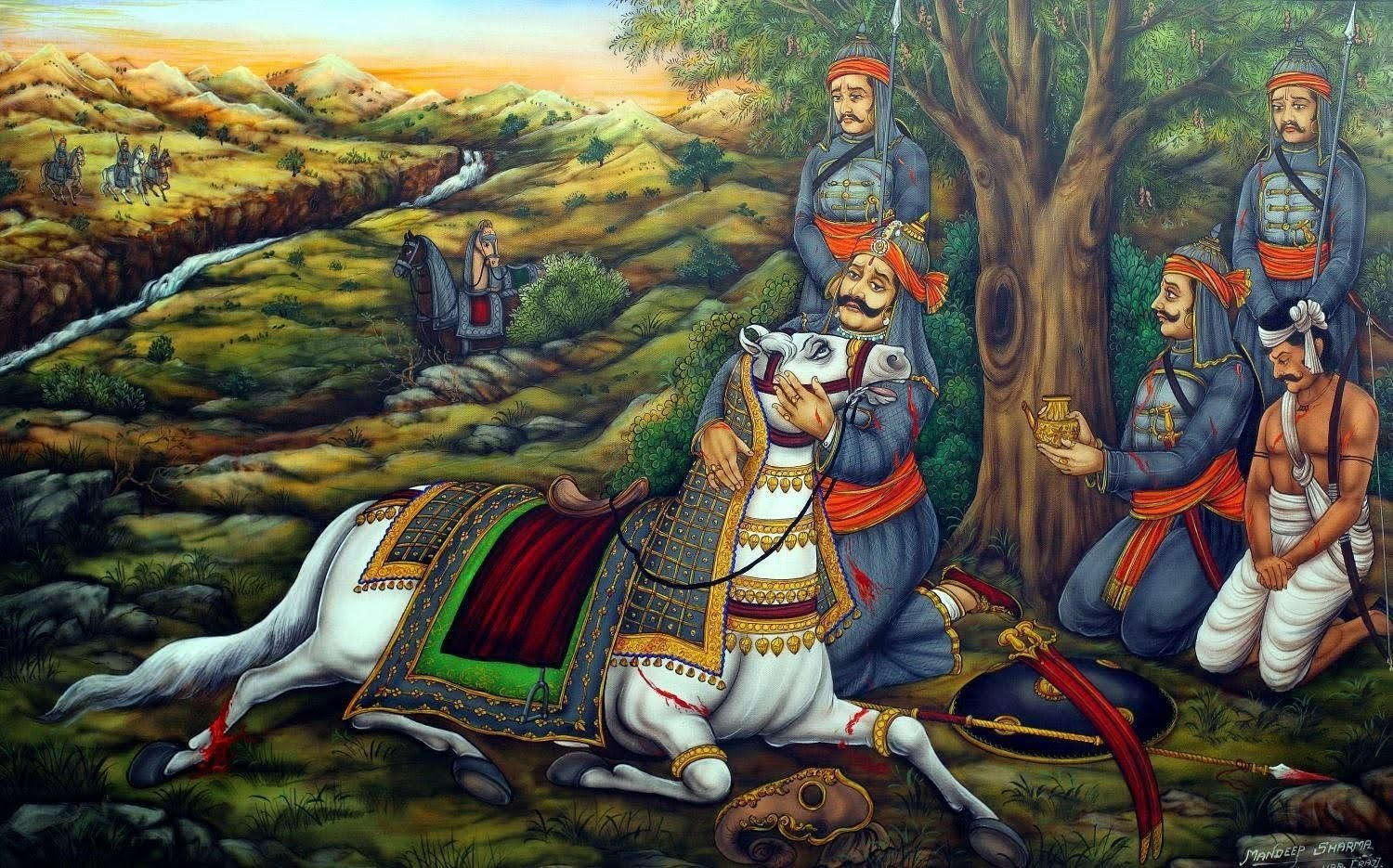
Launched in 1972, the Chetak was named after the warhorse of Maharana Pratap Singh, a 16th-century Rajput ruler, a deliberate cultural signal during a period of strong import-substitute nationalism. Around 1980, Bajaj replaced the Vespa-licensed bodywork with an all-new in-house design, though the core architecture, monocoque body, enclosed engine, and step-through layout remained structurally unchanged throughout the 2-stroke production run.
The Licence Raj Effect on Demand
To understand why the Chetak became a near-mythological object, the context of India’s Licence Raj, the system of industrial regulation that governed manufacturing quotas from 1951 to 1991, is non-negotiable. The government allocated production ceilings to manufacturers, effectively capping the number of units Bajaj could produce per year, regardless of demand. With production fixed at roughly 20,000 units annually in the early years, the market for a vehicle that families genuinely needed turned into a long queue.
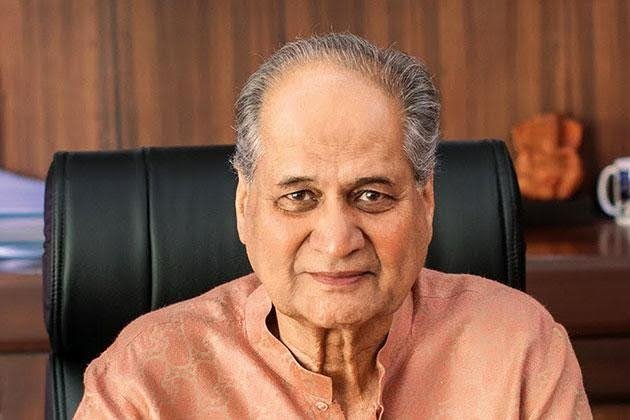
Waiting periods of two to three years were routine; during peak-demand phases, buyers endured waits of up to ten years. Autocar India has noted this was ‘possibly a world record’ for a consumer durable. Rahul Bajaj himself acknowledged it publicly. The consequences were tangible: Chetak scooters traded on the grey market at nearly double their showroom price. In some regions, the scooter entered the dowry system a Chetak promised to a groom’s family was considered a serious asset.
“A 10-year delivery period is not a joke.” Rahul Bajaj, Chairman, Bajaj Auto
The structural scarcity turned ownership into a status marker that advertising alone could never manufacture. When the Chetak’s tagline ‘Hamara Bajaj’ saturated television and print in the 1980s, it wasn’t persuasion. It was recognition of something that already felt collectively owned.
Market Position & Competition
From the late 1970s through the early 1990s, the Chetak’s chief rival was the LML NV manufactured by LML India as a licensed copy of the Vespa PX 150. Both machines competed for the same middle-class buyer, but LML never matched Bajaj’s manufacturing scale or service network, which gave the Chetak a structural advantage that compounded over time.
Bajaj operated in a broader ecosystem that it largely controlled. The Bajaj Super, Priya, Classic, Legend, and Bravo were positioned around the Chetak at various price and feature points, but the Chetak sat at the center, the most balanced proposition in the range. By the 1980s, scooters accounted for the dominant share of India’s two-wheeler market, and the Chetak accounted for the dominant share of scooters.
The inflection point arrived in the late 1990s. Rising disposable incomes, combined with the liberalization-era arrival of Japanese motorcycle technology through companies like Hero Honda, shifted buyer aspirations. Motorcycles offered better highway speed, lighter handling, and, after Hero Honda’s fuel-efficiency campaigns, a compelling efficiency narrative.
Simultaneously, Honda Motorcycle and Scooter India introduced the Activa gearless scooter, which eliminated the learning curve associated with the Chetak’s left-grip gear shifter. The Chetak had no response to either threat at its existing configuration.
Chronology of Key Decisions
1960- Bajaj Auto signs technical collaboration with Piaggio to manufacture Vespa-branded scooters in India.
1971- Piaggio licence expires under India’s revised foreign-ownership rules. Bajaj retains tooling and technical capability.
1972- Bajaj Chetak launches as the company’s first in-house scooter, featuring a 145cc 2-stroke engine.
~1980- In-house body redesign replaces the Vespa-licensed bodywork. Core mechanical and ergonomic architecture remains unchanged.
Late 1990s – Market share begins to erode. Hero Honda motorcycles and HMSI Activa gearless scooter redefine buyer expectations.
2002- Bajaj introduces the Chetak 4S, a 145cc 4-stroke variant designed in-house to meet tightening BS-II emission norms. The 2-stroke era effectively ends.
January 2006 – Bajaj Auto announces the end of Chetak production after approximately 10 million units across all variants.
The 2-Stroke’s End: Emissions & the 4S Transition
The 2-stroke engine’s inherent combustion cycle, which burns a petrol-oil mixture on every downstroke, was the Chetak’s eventual structural liability. It produced higher hydrocarbon and particulate emissions per kilometer than a 4-stroke equivalent, a problem that became impossible to paper over as India adopted progressively stricter Bharat Stage emission regulations in the early 2000s.
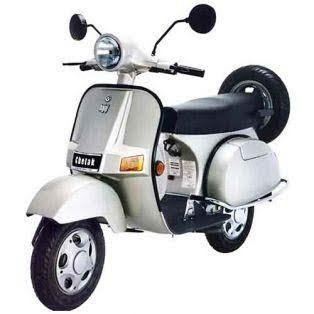
In 2002, Bajaj responded with the Chetak 4S (Chetak 4-stroke), powered by a 145cc 4-stroke engine designed entirely in-house, a meaningful engineering milestone, since the earlier 2-stroke unit had been based on licensed Vespa architecture. The 4-stroke delivered comparable power and torque while meeting BS-II norms, but it arrived four to five years after the market had already begun migrating to gearless scooters and lightweight motorcycles. The technical fix arrived too late to reverse the commercial trajectory.
By 2005–06, Bajaj was selling over 100,000 Chetak units per month at its late-cycle peak, respectable volumes, but insufficient against the structural shift. When production ended in January 2006, the 2-stroke Chetak had already been off the line for four years. What was discontinued was the badge, not the engine.
The Chetak’s longevity wasn’t a function of engineering superiority in any narrow technical sense. In 1972 and for years afterward, it solved a very specific problem: transporting an Indian nuclear family, typically two adults and a child, over distances of 5 to 25 kilometers on roads that ranged from asphalted urban arteries to broken rural tracks, with a single machine that could be maintained by any mechanic in any town.
The platform’s flat footboard, absent in motorcycles, allowed a pillion rider to sit sideways, which is how most women rode in conservative urban households. The enclosed engine reduced oil spray on sarees and formal trousers. Underseat storage held a tiffin box and an office bag simultaneously. The rear carrier rack carried market vegetables or a child’s school bag. None of these were features Bajaj advertised as engineering achievements; they were consequences of a form factor inherited from Vespa and retained because it worked.
In that respect, the Chetak’s 30-year run is less a story of product innovation than of product fit, an almost frictionless alignment between a vehicle’s capabilities and a society’s daily movement requirements. The 2-stroke engine at the center of it was never the point. Durability, availability of spares, and the predictability of repair costs were the points. The engine was simply good enough for long enough.