

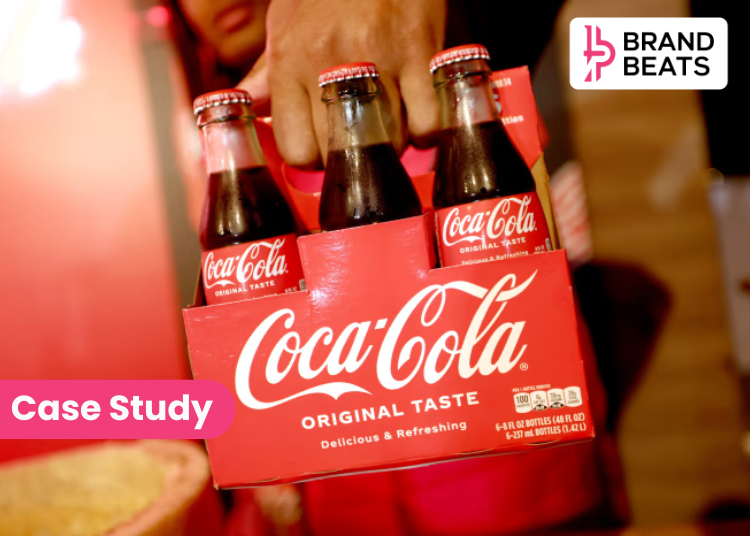
Coca-Cola’s history in India defies the pattern usually associated with a brand built on global ubiquity. The company left the country in 1977 rather than comply with a law that would have required it to dilute ownership and disclose its concentrate formula, only to return sixteen years later by acquiring the very domestic rival that had risen in its absence.
Even after re-entering the market, Coca-Cola spent years navigating forces it could not fully control, from regulatory pressures and local competition to shifting consumer habits and political scrutiny. What followed over the next three decades makes India one of the company’s most revealing case studies.
A pesticide controversy triggered nationwide debate and temporarily froze sales in parts of the country. A dispute over groundwater extraction led to the closure of a bottling plant, becoming a global symbol of resistance to multinational corporations.
At the same time, Coca-Cola built one of its most sophisticated marketing operations anywhere in the world, expanding from a five-rupee bottle aimed at first-time rural consumers to serving more than 180 million drinks at a religious gathering attended by an estimated 660 million people.
This story offers a rare look at how a global giant adapts when market leadership cannot be won through scale alone, but must be earned through local understanding, resilience, and reinvention.
A Brand Built on Bottlers, Not Borders
Coca-Cola began in 1886 as a soda fountain syrup mixed by an Atlanta pharmacist, but the structure that would allow it to become a genuinely global brand took shape soon after. The company would own the concentrate formula, the trademark, and the marketing, while independently capitalised bottlers handled production and last-mile delivery in each territory.
That franchise model let Coca-Cola expand into dozens of countries throughout the twentieth century without the parent company building a single factory itself, moving alongside trade routes, the American military presence abroad, and, later, the broader opening of post-colonial and post-Soviet markets to Western consumer goods.
The same structure still runs the business today. The Coca-Cola Company is, at its core, a concentrate and marketing operation; bottling, cooling, and distribution sit with a global network of partner bottlers, many of them locally owned.
That is also why the company’s quarterly results read less like a single retailer’s numbers and more like a scorecard across roughly 200 separate national markets.
Out Under Indian Law, Back Through a Rival’s Brands
Coca-Cola had operated in India since the 1950s but withdrew completely in 1977, after the government required foreign companies in regulated sectors to cede majority ownership to Indian shareholders and, in Coca-Cola’s case, to disclose its concentrate formula to a local partner under the Foreign Exchange Regulation Act.
Coca-Cola chose to exit rather than comply, leaving a gap that Bombay-based Parle Group filled within months with Thums Up, a homegrown cola launched the same year. Built around an aggressive, distinctly Indian positioning, Thums Up grew through the 1980s into the country’s dominant cola, at one point.
Coca-Cola’s return came in 1993, two years into the economic liberalisation begun under Prime Minister P.V. Narasimha Rao and Finance Minister Manmohan Singh, and four years after PepsiCo had already entered through a joint venture.
Rather than rebuilding brand recognition and distribution from scratch, Coca-Cola bought them outright. For a sum reported at around $60 million, it acquired Parle’s entire soft-drink portfolio, Thums Up, Limca, Gold Spot, Citra, and the mango drink Maaza together with the bottling and retail network built around them, reportedly handing Coca-Cola control of close to 60% of the Indian soft-drink market in a single transaction.
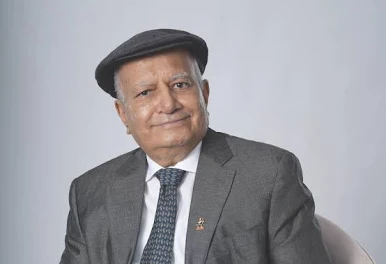
Ramesh Chauhan, the Parle promoter who sold the brands, later said he had limited room to negotiate. In the months before the deal, Coca-Cola had been buying up the independent bottling plants Parle relied on, narrowing the older company’s ability to manufacture and distribute on its own terms.
The Pesticide Charge, the Water Response, and What Recovery Looked Like
Coca-Cola’s rural expansion was still gaining momentum when it faced its first major public-relations crisis. In August 2003, the Centre for Science and Environment (CSE) published a report on test results claiming that leading soft-drink brands, including Coca-Cola and PepsiCo products, contained pesticide residues far above European limits.
Parliament removed both brands from its canteen, several states ordered independent testing, and a Joint Parliamentary Committee was formed to investigate. While both companies disputed CSE’s methodology and the health ministry later questioned the statistical rigour of the sampling, the controversy significantly damaged public confidence.
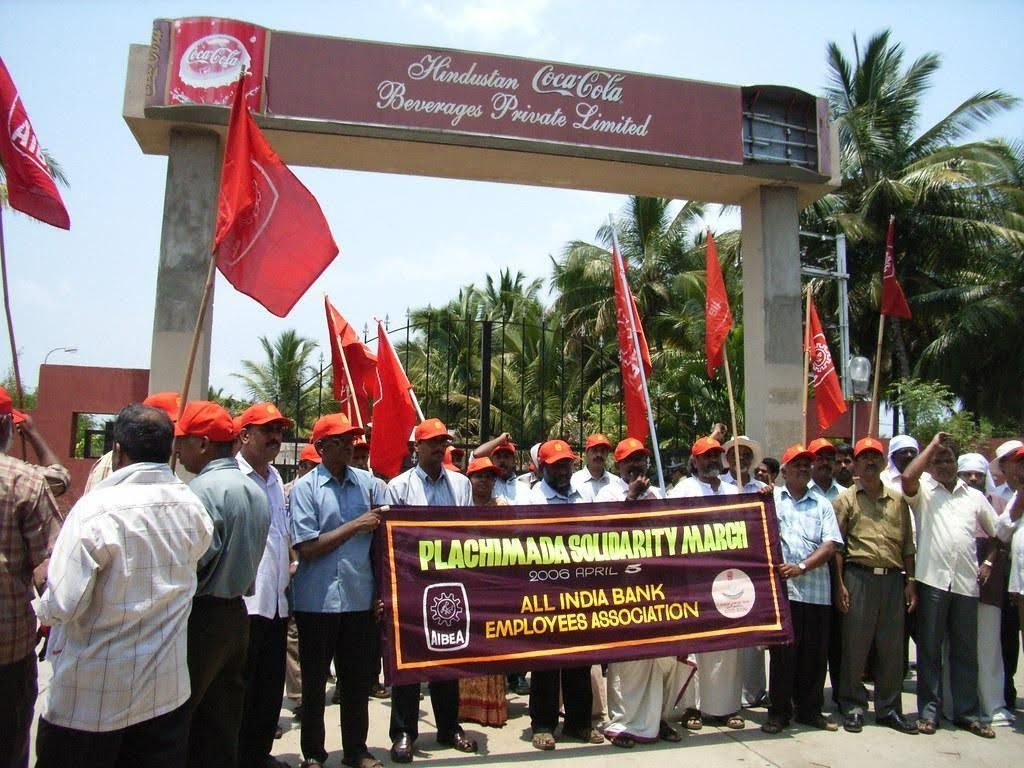
As per multiple media reports, the allegations fed into a separate dispute over groundwater use at Coca-Cola’s bottling plant in Plachimada, Kerala. Villagers accused the plant of depleting local water resources, leading the local panchayat to revoke its licence in 2003. The plant shut down in 2004 and never reopened. Tensions escalated after a second CSE study in 2006, prompting Kerala to impose a statewide ban on Coca-Cola and PepsiCo products, while Karnataka restricted sales in government institutions.
Coca-Cola challenged the move, and the Kerala High Court later struck down the ban. A state-appointed committee subsequently recommended compensation of roughly Rs 216 crore for environmental and livelihood damage, but legislation to enforce the claim never received presidential assent. No compensation has been paid, and the site has remained idle for longer than it ever operated.
Coca-Cola’s response was largely operational. It reduced water use across its plants, expanded rainwater-harvesting projects, and later folded those efforts into broader sustainability programmes focused on water replenishment and packaging. Despite the controversy, the company continued investing heavily in India, committing more than $250 million in 2008–09 to expand the bottling and distribution network that underpins its position today.
Selling Cold Drinks, Then Owning the Category
Throughout the rest of the 1990s, Coca-Cola and PepsiCo fought what India’s press came to call its own cola war, largely through urban advertising featuring Bollywood stars.
Aishwarya Rai and Hrithik Roshan were both early Coca-Cola endorsers.
By 2000, though, the company had concluded that the more decisive battle lay outside the cities. Roughly three-quarters of India’s population lived in rural and semi-urban areas, neither cola brand had seriously penetrated, and the word most people actually used at a roadside stall wasn’t Coke or Pepsi but ‘thanda’ cold.
Coca-Cola’s response, developed with McCann Erickson’s Prasoon Joshi and built around actor Aamir Khan, was the ‘Thanda Matlab Coca-Cola’ campaign: three films released between March and September 2003 in which Khan played a Mumbai street character, a Hyderabadi shopkeeper and a Punjabi farmer, each one steering the word ‘thanda’ toward the brand rather than away from it.
The films ran alongside a new 200ml bottle priced at five rupees, sized and priced deliberately for first-time rural buyers, and a distribution push organised around what the company internally called the four A’s: availability, affordability, acceptability, and accessibility, which prioritised reaching small kirana stores over expanding modern retail.
Rural sales reportedly grew by more than a quarter in the campaign’s first year, and variations on the thanda line stayed in circulation for over a decade afterward.
From rural pricing to personalised bottles
Coca-Cola’s next major India-specific push was personalisation rather than pricing. The global ‘Share a Coke’ idea, which replaces the brand’s own logo with a person’s name, arrived in India in 2013. By 2018, the local version had moved past first names into the language of family and friendship: a campaign called ‘Mere Naam Ki Coca-Cola’ printed words such as Bhai, Didi, Bae, Bro, and BFF on bottles and cans in twelve Indian languages, timed to that year’s Indian Premier League (IPL) season.
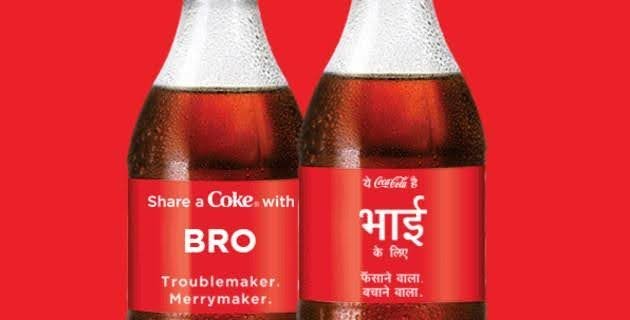
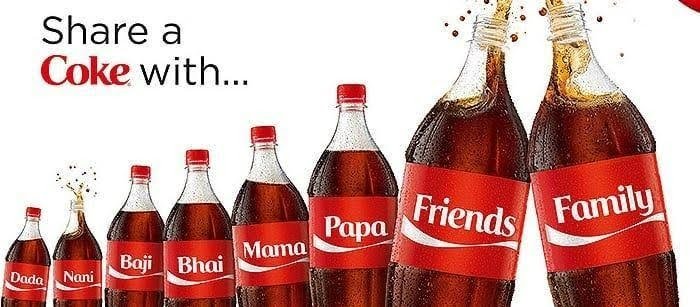
The tie-in reportedly drew around 400 million cumulative views across eight languages and roughly 1.3 million purchase transactions tagged to the campaign, which was run out of a dedicated social-media ‘war room’ that produced real-time content for each match.
Cricket as the recurring battlefield
Cricket sponsorship has been a constant in Coca-Cola’s India playbook since well before the IPL existed. At the 1996 Cricket World Cup, Coca-Cola paid roughly Rs 10 crore to become the tournament’s official sponsor, only to be outflanked by PepsiCo’s unofficial ‘Nothing Official About It’ campaign fronted by Sachin Tendulkar, a near-textbook ambush-marketing case that Indian advertising still references.
The rivalry resurfaced almost thirty years later: through the IPL’s 2024 season, Coca-Cola’s Thums Up held the league’s co-presenting sponsorship slot for a fee reported at around Rs 200 crore, while Coca-Cola separately ran team-level sponsorships with Chennai Super Kings and Kolkata Knight Riders.
For the 2025 season, that marquee co-presenting slot was bought instead by Reliance’s relaunched Campa Cola brand, at a similar price, the clearest sign yet of new domestic competition entering a category Coca-Cola and PepsiCo had effectively split between themselves for decades.
Coca-Cola kept its existing team deals and answered with a new campaign built around in-game moments, ‘Half Time Push,’ which PepsiCo promptly needled with its own ‘Anytime is Pepsi Time’ ad an exchange industry commentators compared directly to 1996.
View this post on Instagram
BrandBeats’ Take
Read end to end, Coca-Cola’s India story is neither a straightforward success nor a cautionary tale, but both at once. After leaving the country in 1977 and buying its way back in through a domestic rival, the company rebuilt its position through India-specific decisions on pricing, packaging and distribution.
Yet some of the controversies that shaped its reputation remain unresolved: the Plachimada plant never reopened, compensation recommended in 2010 has still not been paid, and the market is once again becoming more competitive, with Reliance’s Campa Cola challenging the dominance long enjoyed by Coca-Cola and PepsiCo. Together, those threads illustrate both Coca-Cola’s ability to adapt to a complex market and the limits of its control over it.
FAQ’s
- Why did Coca-Cola leave India?
Coca-Cola left India in 1977 because of government rules requiring foreign companies to share greater ownership and disclose more business details.
- When did Coca-Cola come back to India?
Coca-Cola returned to India in 1993 after the country opened up more to foreign businesses.
- What challenges did Coca-Cola face in India?
It faced public criticism over pesticide claims, water use concerns, and competition from Pepsi and local brands.
- What was the Plachimada issue?
People in Plachimada, Kerala, accused Coca-Cola of overusing groundwater. The plant was shut down and never reopened.
- How did Coca-Cola grow so quickly after returning?
It bought local brands like Thums Up, Limca, Gold Spot, Citra, and Maaza, which helped it reach Indian consumers faster