

Every Indian summer comes with its own coping mechanisms. Closed curtains. Afternoon naps that stretch longer than intended. The quiet resignation that stepping outside is a bad idea.
And then, there’s Rooh Afza.
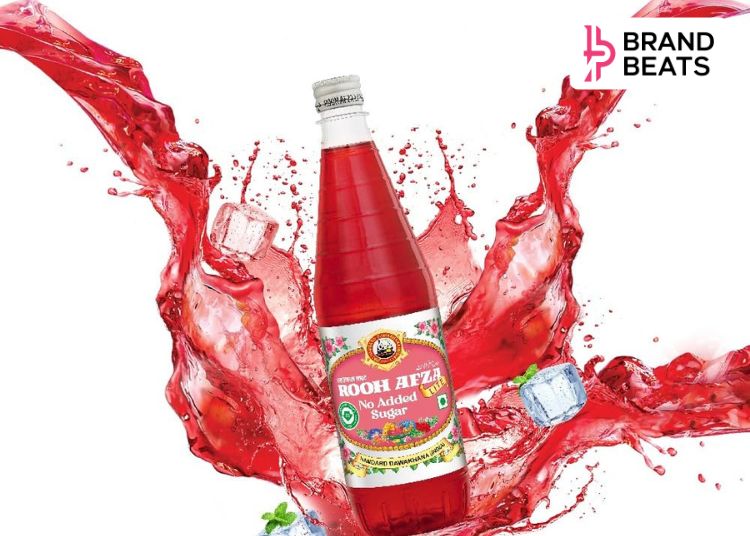
It doesn’t announce itself like a seasonal trend. It just…reappears. Somewhere between the first unbearable heatwave and the moment the fridge starts working overtime, that unmistakable deep-red bottle finds its way back into the routine. No one really “buys into” it. It’s already there. On a kitchen shelf. Slightly sticky at the neck. Waiting.
The ritual is almost mechanical. Two spoons into a glass. Water, or milk if you’re feeling indulgent. A quick stir. And then, relief-instant, familiar, and oddly reassuring. There’s nothing subtle about it. The colour is aggressively reddish-pink. The flavour is unapologetically floral. And yet, it works. Not just as a drink, but as a cultural reflex-something that kicks in the moment summer becomes unbearable.
What makes this even more fascinating is how long this reflex has existed. Since 1906, Hamdard’s Rooh Afza has survived changing tastes, modern retail, global beverage giants, and an entire shift in what “cooling” drinks look like. It didn’t pivot. It didn’t reinvent itself. It just stayed.
And somehow, in a market obsessed with newness, that consistency became its biggest advantage.
Decades ago, somewhere in the lanes of Gali Qasim Jan in Old Delhi, a Unani physician named Hakim Hafiz Abdul Majeed was mixing herbs, flowers, and fruit extracts together into a cooling syrup he believed could help people survive the punishing North Indian summer. He called it Rooh Afza which translates roughly as that which nourishes the soul.
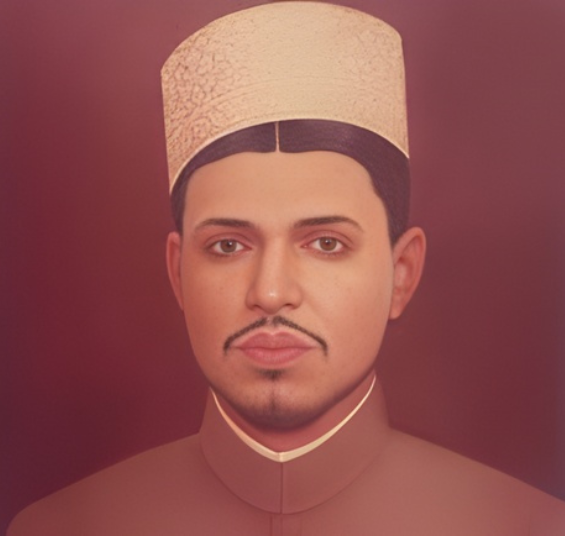
He could not have known that what he was actually creating was one of the most durable consumer brands in South Asian history. But that is exactly what happened.
The Bottle That Survived Everything
Here is a partial list of things that happened between 1906 and today that did not manage to kill Rooh Afza:
Two world wars, the partition of the subcontinent, the Emergency, liberalisation, the entry of Coca-Cola and Pepsi into the Indian market, the rise of packaged juices, energy drinks, cold brew coffee, oat milk smoothies, bubble tea, and about forty-seven other beverage trends that were going to change everything and mostly did not.
Rooh Afza remains a strong presence in the market, with Hamdard generating annual revenue from the product worth hundreds of crores. Each summer, demand rises sharply across several cities, creating a level of consumer pull that many modern FMCG brands would spend heavily to achieve through marketing.
The question worth asking is not simply that it survived. Lots of old products survive on the margins. The interesting question is why it did not just survive but remained culturally relevant
Why a drink invented during the British Raj is something a 24-year-old in 2025 posts on Instagram of their own free will, without being paid to, without a hashtag campaign, without a limited edition collaboration with a streetwear brand.
Hamdard’s Ownership Model and Its Impact on Rooh Afza
To understand Rooh Afza’s brand behaviour, it is relevant to consider Hamdard’s ownership structure. Hamdard Laboratories India operates as a waqf, or trust based entity, rather than a conventional shareholder owned company. Under this structure, the organisation’s income is directed towards social welfare, healthcare and educational initiatives instead of being distributed to individual owners or investors.
This ownership structure has a direct and significant effect on the company’s strategic decision-making. The pressures that cause most consumer goods companies to make the brand decisions that eventually damage them quarterly revenue expectations, investor demands for premiumisation, pressure to expand into adjacent categories, requirement to demonstrate growth beyond the core product are structurally absent at Hamdard in the way they exist at listed or investor-backed companies.
This structure allows Hamdard to follow a consistent approach over time. The company has largely retained the core product formulation, kept pricing accessible and limited expansion into categories that could dilute the brand’s core identity. This reflects a long term orientation in decision making, supported by a business model that places less emphasis on short term growth pressures.
When India was partitioned in 1947, Hamdard split. Hamdard India continued operations from Delhi. Hamdard Pakistan was established in Karachi, later relocating to other cities. Both entities maintained the right to produce Rooh Afza, both kept the original formula, both used the same bottle design, and both sold the product at accessible price points in their respective markets.
How Rooh Afza Wins by Not Changing
Rooh Afza is a concentrate. It is sold in a glass bottle of consistent design, the tall, narrow form with a distinctive label featuring floral and botanical imagery and consumed by diluting it in water or milk. The product is positioned at a price point that makes it accessible across income levels, which has historically been a conscious decision rather than a market outcome. The core format has not changed materially in over a century.
An equally relevant observation is what the brand has not done. Rooh Afza has not introduced a premium ready to drink variant, nor has it expanded into formats such as diet or sugar free versions aimed at urban health focused consumers. Its presence in modern trade has not been driven by high promotional spending, and it has not relied on celebrity endorsements or large scale packaging changes to appear more contemporary.
These choices reflect a combination of deliberate restraint and a limited emphasis on following category trends that typically influence such decisions. The result is a product that has maintained a consistent identity over time, with continuity itself becoming one of the brand’s primary strengths.
How Consistency Turned Rooh Afza into a Generational Brand
There is a category of brand activity that marketing teams call nostalgia marketing. It involves digging up old logos, releasing retro packaging, running campaigns that make people feel warmly about how things used to be. It is a tactic that works because emotional memory is a powerful driver of purchase behaviour. It is also a tactic that almost every brand eventually needs, because most brands are not old enough to have genuine nostalgia attached to them yet.
Rooh Afza does not have a nostalgia marketing strategy. It is nostalgia.
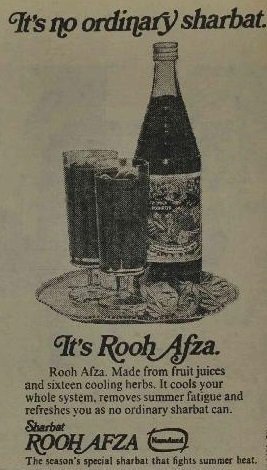
There are 35-year-olds who remember being handed a glass of Rooh Afza by their grandmothers after playing outside in the heat. There are 24-year-olds who remember it from childhood visits to relatives. There are people who have never bought it themselves but who, when they smell it, are immediately transported to a specific kitchen in a specific summer in a city they might not even live in anymore. This is not manufactured emotional association. It is the natural consequence of a product being genuinely present in people’s lives across multiple generations.
You cannot buy this. You cannot campaign your way to it. You can only arrive at it by being consistently, reliably present for long enough that you become part of the architecture of people’s memories. Most brands do not survive long enough to achieve this. Most brands that do survive long enough try to update themselves out of it.
Hamdard did neither. It just kept showing up.
Brand Beat’s Takes
The takeaway from Rooh Afza isn’t that brands should resist change. Most categories demand constant evolution. But every once in a while, a brand wins by being unmistakably clear about what it stands for-and staying there.
Rooh Afza has never tried to be everything. It owns a very specific moment: relief in peak summer. And by showing up for that one need, consistently, for over a century, it has built something most brands spend crores trying to manufacture-instinctive consumer recall.
In a market obsessed with reinvention, that’s the real lesson: clarity, repeated long enough, becomes memory. And memory becomes a habit.