

Imagine building a company worth thousands of crores without getting Shah Rukh Khan to say, “Investing ka naya tareeka, Zerodha ke saath!” No celebrity endorsements, no flashy television commercials, no Bollywood-style brand campaigns and certainly no marketing department burning through crores to acquire customers.
Sounds like a marketer’s nightmare, right?
Well, Zerodha seems to have missed that memo.
Founded in 2010 by brothers Nithin and Nikhil Kamath, Zerodha entered an Indian brokerage market dominated by traditional players, expensive brokerage structures and physical distribution networks. Instead of following the industry’s conventional playbook, the company decided to compete on pricing, technology and customer experience.
And the interesting part? It worked.
Zerodha went on to become one of India’s largest stockbroking platforms, building a business that generated Rs 8,847 crore in revenue and approximately Rs 4,237 crore in net profit in FY25, without relying on the conventional advertising-heavy growth model.
But did Zerodha really build its brand without marketing?
Not quite. It simply made its product, educational platforms, customer referrals and even its founders do much of the talking.
However, Zerodha’s story is not just about a different approach to brokerage or advertising. A significant part of its brand identity is also tied to the people who built it — particularly its co-founders, Nithin and Nikhil Kamath.
The Founder Effect: How Nithin And Nikhil Kamath Became Part Of The Brand Story
A company can have a great product, competitive pricing and an impressive business model. But what happens when the people behind it become recognisable personalities in their own right?
Well, Zerodha offers an interesting example.
The Kamath brothers have developed two different public identities, and both contribute to the larger story surrounding the company. They are not interchangeable founders, and their approaches to public communication are quite different.
Nithin Kamath: The Founder Who Explains Why Zerodha Does Things Differently
Nithin Kamath’s public identity is closely connected to Zerodha’s business philosophy. His communication often revolves around bootstrapping, profitability, customer interests, market regulations and the economics of running a brokerage business.

He discusses why Zerodha avoids conventional advertising and prefers to grow through product quality and customer recommendations.
In May 2024, Nithin publicly explained how avoiding heavy customer acquisition expenditure gave Zerodha greater freedom in running its business. His argument was that companies burdened with high acquisition costs often face pressure to encourage more transactions or sell additional financial products to recover that expenditure.
In August 2025, he also discussed the role of word of mouth in Zerodha’s growth, highlighting the company’s focus on building products and services that customers would willingly recommend.
Through these conversations, He reinforces Zerodha’s positioning around profitability, customer interests and long-term relationships rather than aggressive customer acquisition..
Nikhil Kamath: The Founder Who Took Conversations Beyond The Stock Market
Nikhil Kamath’s public identity follows a somewhat different route.
While he remains associated with Zerodha as its co-founder, his growing visibility also comes from entrepreneurship, investing, technology and long-form conversations with influential personalities.
And this is where WTF Is enters the picture.
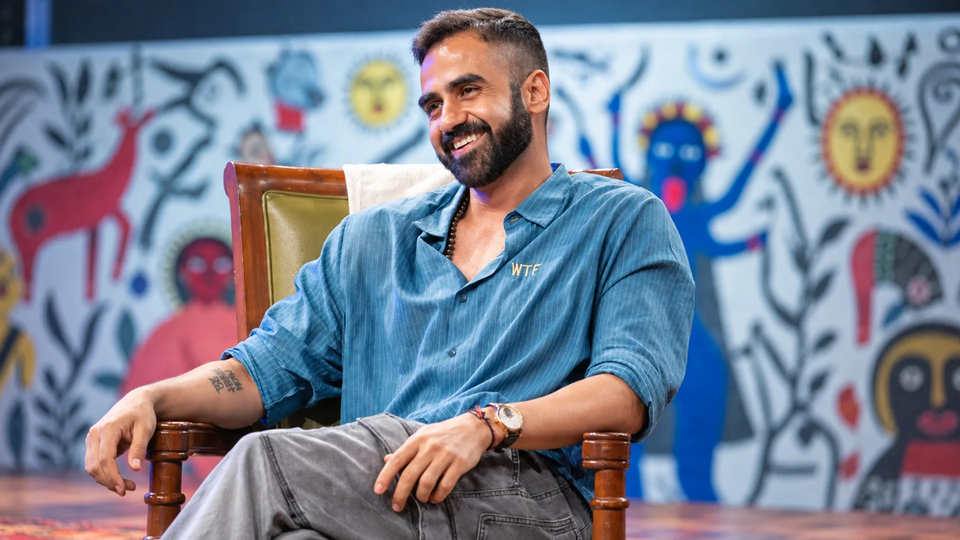
Launched in March 2023, WTF Is brought together founders, entrepreneurs, investors and industry professionals to discuss subjects ranging from technology and business to the future of industries.
The initiative later expanded through People by WTF, featuring individual conversations with prominent personalities.
Some of the notable guests include:
| Guest | Why the conversation attracted attention |
| Sam Altman | OpenAI, artificial intelligence and the future of technology |
| Dario Amodei | AI development and the technology industry |
| Ted Sarandos | Netflix, entertainment and content distribution |
| Elon Musk | Entrepreneurship and technology |
| Bill Gates | Technology, business and global challenges |
| Nandan Nilekani | India’s digital infrastructure and entrepreneurship |
| Vinod Khosla | Venture capital and emerging technologies |
These conversations have helped Nikhil develop a public identity that extends beyond the brokerage industry.
Think about it.
Someone who may not follow stock markets could still discover Nikhil through a conversation with Sam Altman, Ted Sarandos or another well-known personality.
That person might subsequently learn that he is also one of the founders of Zerodha.
This creates an indirect brand-awareness opportunity.
How WTF Is potentially contributes to founder-led branding
The mechanism is fairly straightforward:
- Recognisable guests attract audiences: Popular personalities bring their existing audiences to the conversation.
- Long-form discussions build familiarity: Viewers get to know Nikhil’s personality, interests and communication style.
- Clips extend distribution: Short videos can circulate across YouTube Shorts, Instagram and other social platforms.
- Founder association creates visibility: Nikhil’s identity as a Zerodha co-founder becomes part of his wider public profile.
- The corporate association reaches new audiences: People outside the traditional investing community may encounter the Zerodha connection.
However, there is an important distinction here.
WTF Is and People by WTF should not automatically be described as Zerodha advertising campaigns. They are separate media initiatives associated with Nikhil.
Their potential contribution to Zerodha is through indirect founder visibility and association, rather than established direct customer acquisition.
Two founders, two different brand personalities
| Brand dimension | Nithin Kamath | Nikhil Kamath |
| Public identity | Operator and entrepreneur | Investor and media personality |
| Main communication | Business philosophy and company decisions | Podcasts and conversations |
| Key audience | Traders, investors and business readers | Entrepreneurs, investors and wider audiences |
| Brand association | Operational credibility | Founder visibility |
| Key platforms | Zerodha blog, interviews and social media | WTF Is, People by WTF and social media |
Together, these identities create a broader founder narrative.
Nithin communicates how Zerodha operates. Nikhil brings the founders into conversations that extend well beyond the stock market.
And that gives the company an interesting form of visibility without necessarily requiring a traditional corporate advertising campaign.
Of course, a strong founder narrative can make people curious about a company, but it cannot build a brokerage business on its own. Zerodha’s real differentiator was the idea it was built around: challenging the traditional brokerage model instead of spending heavily to compete within it.
The Big Idea: Challenge the Brokerage Industry, Not Its Advertising Budget
Before Zerodha became a familiar name among retail investors, the Indian stockbroking industry relied heavily on physical offices, sub-brokers and relationship managers to acquire and serve customers.
The costs of maintaining these networks were often passed on to investors through brokerage charges.
Nithin Kamath, who had experienced these pricing structures firsthand as a trader, recognised an opportunity to build a more accessible brokerage platform.
In August 2010, Nithin and Nikhil Kamath founded Zerodha.
The name combines ‘Zero’ and ‘Rodha’, the Sanskrit word for barrier, reflecting the company’s proposition of removing financial barriers to market participation.
Rather than building an extensive physical distribution network, Zerodha focused on technology and online operations.
Its biggest differentiator was its pricing model.
The company introduced a flat-fee brokerage structure, eventually making equity delivery trades brokerage-free while charging a maximum of Rs 20 per executed order on other eligible trades.
This was a significant departure from traditional percentage-based brokerage models. But cheaper brokerage alone wasn’t going to build a lasting brand.
Zerodha needed to give customers a reason to stay, recommend the platform and trust it with their investments. That meant investing in the product itself.
Kite, Zero Brokerage And The Product That Became The Advertisement
Most brands spend money telling customers how good their products are. Zerodha took a different route: it made the product speak for itself.
In September 2015, the company introduced Kite, its in-house trading platform. Rather than treating trading software as just an operational requirement, Zerodha made it central to its brand identity.
Kite offered a cleaner interface, integrated charting, market watchlists and instrument search, making the trading experience more streamlined for users accustomed to complicated platforms.
And then came another important decision.
In December 2015, Zerodha introduced zero brokerage on equity delivery trades, allowing customers to buy and hold shares without paying brokerage.
Together, a better trading interface and transparent pricing gave customers a tangible reason to choose the platform. They could experience the difference themselves, without needing a celebrity to explain it.
How the product helped Zerodha grow
In its retrospective, Broking Goes Mainstream, Zerodha identifies three developments that accelerated its growth:
- Kite: Improved the trading experience through technology.
- Zero brokerage: Challenged conventional brokerage structures and reduced trading costs.
- Online onboarding: Made account opening easier by reducing dependence on physical paperwork.
The impact of online onboarding was particularly interesting.
According to Zerodha, monthly account openings increased from approximately 5,000 to nearly 30,000 within a year of introducing online account opening.
That’s roughly six times the monthly account-opening volume.
| Development | Year | What it changed |
| Varsity | 2014 | Made financial education accessible |
| Kite | 2015 | Improved the trading experience |
| Zero brokerage on delivery | 2015 | Reduced trading costs |
| Online account opening | 2016 | Reduced onboarding friction |
This is what made Zerodha’s product-led growth strategy interesting.
Instead of spending heavily to convince people to try the platform, the company focused on removing the reasons they might hesitate.
A better interface, lower costs and easier onboarding did much of the convincing. The product wasn’t just what Zerodha sold; it was also one of the strongest ways the company communicated its brand promise.
Varsity: When A Brokerage Decided To Become A Financial Teacher
Here’s an interesting question: What if a brokerage company helped people understand the stock market even before they became its customers?
That’s essentially the thinking behind Varsity.
Launched in November 2014, Zerodha Varsity was designed to make financial and investment education accessible through structured learning modules.
Instead of filling its website with product promotions, Zerodha invested in explaining concepts such as technical analysis, fundamental analysis, futures and options, taxation and personal finance.
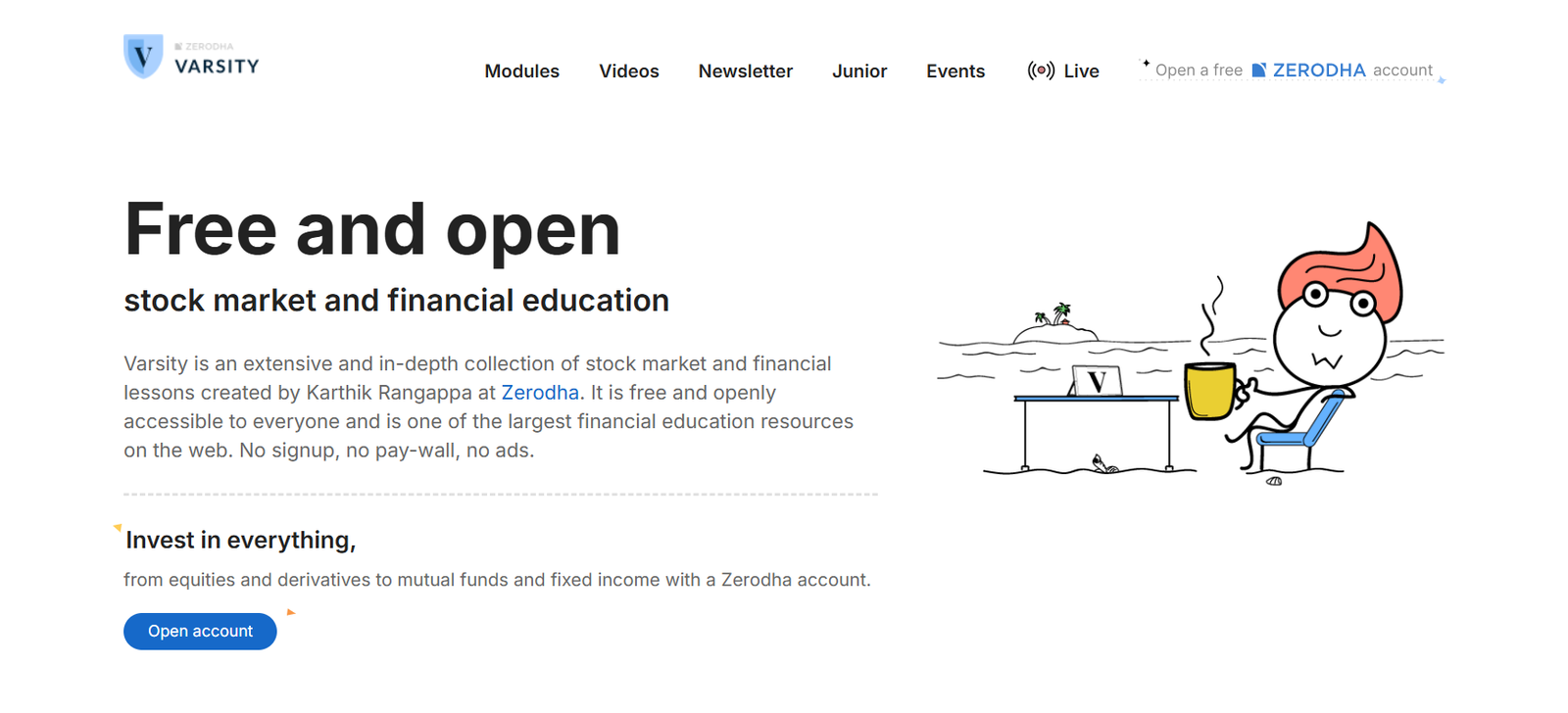
Importantly, Varsity wasn’t restricted to Zerodha customers. Anyone could access its educational material without opening a trading account.
Zerodha has also emphasised that the platform does not require mandatory sign-ups or use its educational content to push brokerage products.
The idea was to build an audience around financial knowledge rather than constantly trying to convert every visitor into a customer.
How Varsity became a brand-building asset
In November 2024, Zerodha reported that Varsity had crossed two million users.
The platform had also expanded beyond written modules into videos, audio learning and interactive sessions through Varsity Live.
| Initiative | What it offered | Brand-building opportunity |
| Varsity modules | Structured financial education | Authority and credibility |
| Varsity mobile app | Learning on smartphones | Accessibility |
| Varsity videos | Visual financial lessons | Wider content distribution |
| TradingQ&A | Community-driven discussions | Customer engagement |
| Varsity Live | Interactive learning | Deeper audience relationships |
| Zero1 | Accessible finance and market content | Wider audience reach |
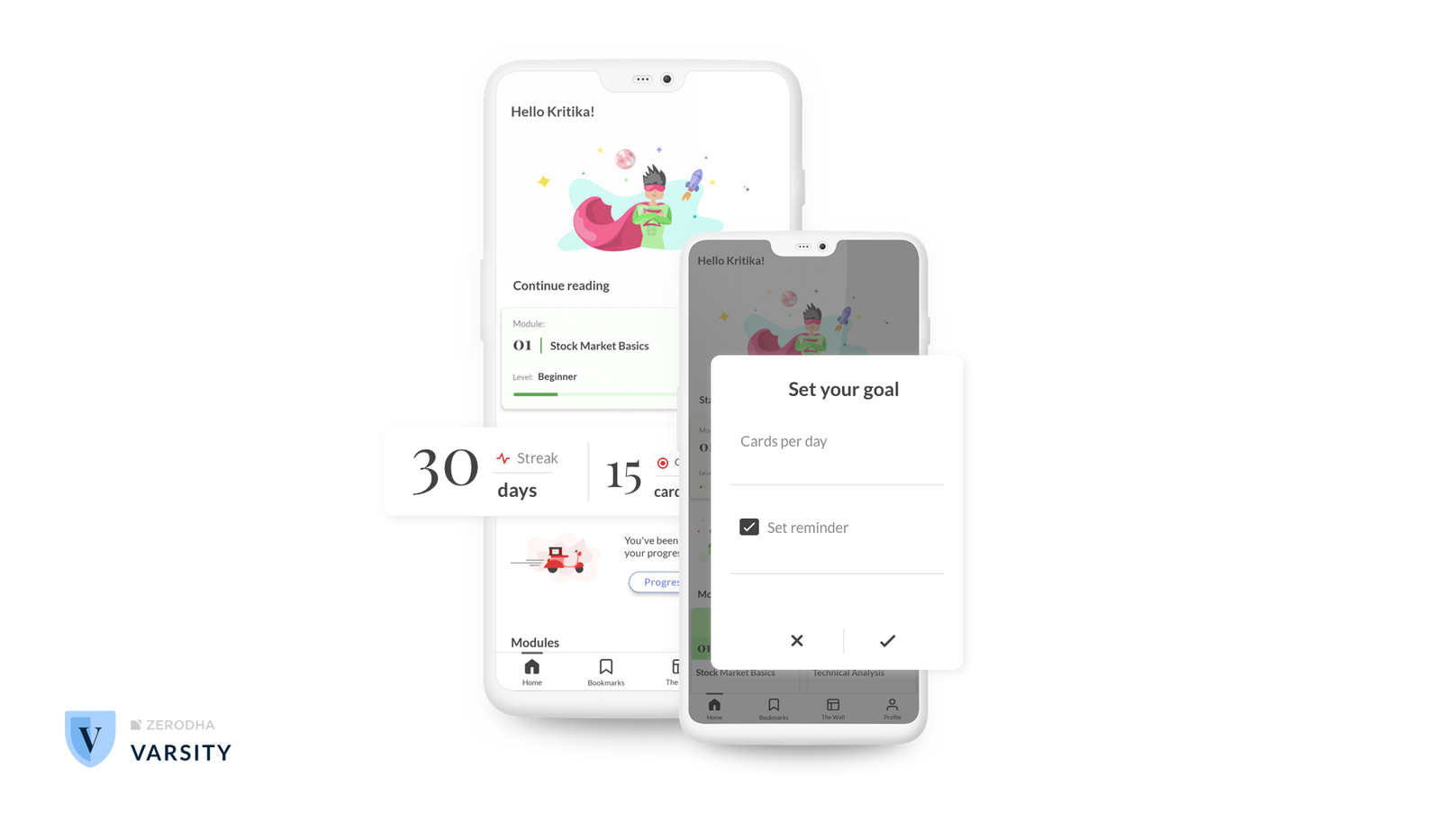


From a marketing perspective, Varsity offers an interesting example of content-led brand building.
When people repeatedly use a company’s educational resources, they become familiar with its brand, communication style and approach to the subject. Over time, that familiarity can contribute to trust.
Several marketing principles are at work here:
- Thought leadership: Establishing credibility through useful information.
- Reciprocity: Offering valuable resources without demanding an immediate purchase.
- Content-led growth: Attracting audiences through educational material.
- Trust-based marketing: Building relationships through information rather than aggressive sales pitches.
However, Varsity’s two million users should not automatically be treated as two million potential Zerodha customers. Its success as an independent educational platform is significant in itself.
Zerodha created something useful even for people who might never open a Zerodha account. And in doing so, it gave its brand a presence beyond the trading screen.
No Big Advertising Budgets: How Referrals, Bootstrapping And Customer Trust Fuelled Growth
So, if Zerodha wasn’t spending heavily on advertising, where did its customers come from? One important answer is word of mouth.
The company has repeatedly highlighted customer recommendations as a major contributor to its growth. According to Nithin Kamath’s June 2026 announcement, referrals contributed as much as 50% of new accounts at their peak.
Even after brokerage-sharing incentives were suspended, nearly 30% of new accounts continued to come through referrals, according to the company.
That’s significant. It suggests customers were recommending Zerodha for reasons beyond the financial rewards attached to its referral programme.
The referral strategy
Zerodha’s referral programme dates back to its early years and has evolved through different reward structures, including brokerage-sharing incentives and reward points.
In August 2024, regulatory changes led the company to pause brokerage sharing through the programme. It subsequently resumed brokerage sharing in June 2026.
This shows that referrals weren’t simply a recent marketing experiment. They had been part of Zerodha’s customer acquisition strategy for years.
Why bootstrapping mattered
Another important part of Zerodha’s growth story is its decision to remain bootstrapped.
Unlike many high-growth technology companies that raise venture capital to fund expansion and customer acquisition, Zerodha built its business without external venture funding.
The founders prioritised profitability and operational efficiency over growth at any cost. This gave the company greater freedom to invest in its products, educational resources and customer experience without depending on large advertising budgets or investor-funded acquisition campaigns.
Zerodha’s financial performance
The company’s financial performance shows just how large this business became.
| Financial year | Revenue | Net profit |
| FY23 | Rs 6,875 crore | Rs 2,907 crore |
| FY24 | ₹9,372 crore | Rs 5,493 crore |
| FY25 | ₹8,847 crore | ₹4,237 crore |
| FY26 | Broadly unchanged from FY25 | ₹4,283 crore |
Note: Figures are approximate consolidated figures; FY26 revenue was reported as broadly unchanged from FY25.
FY24 was particularly strong, with revenue approaching ₹10,000 crore and net profit exceeding ₹5,400 crore. However, revenue and profit declined in FY25, followed by a slight recovery in net profit during FY26.
This is an important reminder that a strong brand and a low-cost customer acquisition strategy do not make a company immune to market conditions.
BrandBeats’ Take
Zerodha’s story isn’t simply about refusing to spend on advertising. It’s about building a different kind of marketing ecosystem. Kite differentiated the product experience, Varsity built credibility through financial education, referrals drove organic growth, and the Kamath brothers brought the company’s philosophy to a wider audience.
Together, these elements created a growth model where the product, education, customers and founders all contributed to brand building. Zerodha demonstrates that marketing doesn’t always need to start with an advertising budget. Sometimes, it starts with building something customers genuinely want to talk about.
Frequently Asked Questions (FAQs)
- What is Zerodha and how does it work?
Zerodha is an Indian stockbroking company that offers online trading and investment services through digital platforms.
- Who are the founders of Zerodha?
Zerodha was founded in 2010 by brothers Nithin Kamath and Nikhil Kamath.
- How did Zerodha become successful without advertising?
Zerodha built its brand through product innovation, competitive pricing, financial education, customer referrals and founder-led visibility.
- Why does Zerodha not spend money on traditional advertising?
Zerodha has prioritised product quality, customer experience and word-of-mouth recommendations over conventional advertising campaigns.
- Is Zerodha a bootstrapped company?
Yes, Zerodha is bootstrapped and has grown without raising external venture capital.