

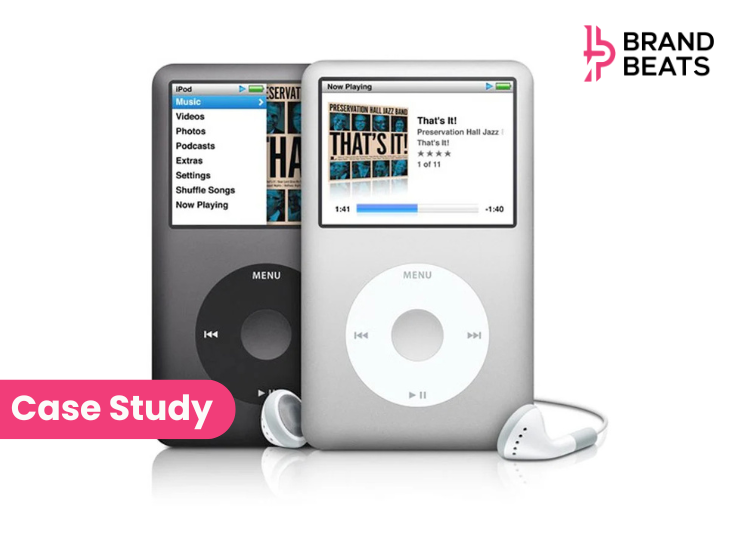
In October 2001, Steve Jobs walked on stage in his signature black mock turtleneck, reached into his jeans pocket, and pulled out a device slightly thicker than a deck of cards. Then came the line that defined the launch: ‘1000 songs in your pocket.’ It was presented as a music player, but it marked the beginning of Apple’s second act.
At the time, Apple was still recovering from years of decline and was largely seen as a niche computer maker. The iPod changed that. It transformed Apple into a consumer electronics powerhouse, eventually laying the foundation for the world’s most valuable company.
Over the next two decades, the iPod became one of the greatest product success stories in modern business. It sold more than 450 million units, contributed up to 42% of Apple’s quarterly revenue at its peak, and was ultimately replaced by the iPhone, a product Apple knowingly built to make its own bestseller obsolete.
The iPod was not the first MP3 player. It was not the smallest. It was not even the cheapest. What it was was the only one that made you actually want to own it.
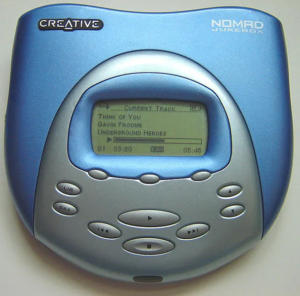
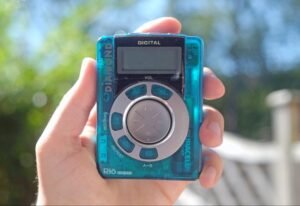
Before the iPod, the market had devices like the Diamond Rio and the Creative Nomad, technically functional but commercially unremarkable. Storage was measured in megabytes, interfaces were a maze of buttons, and syncing with a computer was the digital equivalent of manual labour. Apple did not invent the MP3 player. It invented the version that people actually wanted to use.
From Niche to Market Leader
The iPod’s US market share surged from 31% in early 2004 to 74% by mid 2005, and by 2011 Apple controlled around 70% of the global MP3 player market. It entered an existing category and quickly became its defining product.
The turning point came in October 2003, when Apple made the iPod and iTunes compatible with Windows, expanding its reach from Mac users to millions of PC owners and helping sales triple the following year. Apple’s dominance wasn’t universal. South Korea remained a stronghold for brands like iriver, Samsung, and Cowon, while Japan stayed competitive thanks to Sony’s enduring popularity.
The iPod’s biggest advantage, however, wasn’t the hardware. It was the iTunes ecosystem that seamlessly connected buying music with owning a device. Apple wasn’t just selling an MP3 player. It was selling the easiest way to discover, buy, and carry music.
Its advertising strengthened that advantage too. After Feist’s 1234 featured in an iPod commercial, the song climbed to No. 8 on the Billboard Hot 100, turning iPod campaigns into one of the music industry’s most coveted promotional platforms.
The iPod in India
When Apple formally expanded the iPod in India through authorised resellers in 2009, the iPod touch started at Rs 12,400 for the 8GB model. By 2019, the seventh-generation iPod touch began at Rs 18,900 for 32GB, placing it in direct competition with entry-level Android smartphones that offered far more functionality.
The iPod’s biggest challenge in India was never demand. It was the ecosystem. While the iTunes Store transformed music buying in the West, it lacked meaningful Hindi and regional language catalogues for much of its existence. As a result, many Indian users filled their iPods with ripped CDs and pirated MP3s, the very behaviour Apple had hoped to replace.
Piracy, combined with tightly controlled music rights from labels such as T Series, Saregama, and Sony Music India, meant legal digital music struggled to gain traction. Even Flipkart’s digital music platform, Flyte, shut down after failing to overcome licensing hurdles.
Despite that, the iPod found a loyal audience among urban students and young professionals. In India, the iconic white earbuds became more than an accessory. They became a status symbol. Owning an iPod signalled you were an early adopter and part of a global tech culture.
The iPod touch later found a niche among younger users whose parents wanted an iOS device without having to buy an iPhone. But as smartphones became cheaper and more capable, the iPod’s place in India’s market steadily disappeared.
The Mechanics Behind the Music: Marketing That Moved Product
Apple spent approximately $75 million on iPod advertising at its peak, an outlay that exceeded its nearest competitors by roughly 100-to-1. But the scale of the spend was not the differentiator. What separated iPod marketing from every other consumer electronics campaign of the era was the decision not to sell the product at all.
Instead, Apple sold the act of listening to music.
The product line was also segmented with deliberate precision. The iPod shuffle (starting at $99) served as a loss-leader that made the nano seem reasonably priced. The nano made the classic look premium by association. The classic justified the entire range by establishing the ceiling. This price-anchoring architecture meant that a consumer walking into an Apple Store entered a ladder, not a shelf, and was nudged upward through a natural comparison process rather than a hard sell.
Product Portfolio as Marketing Instrument
- iPod shuffle (Rs 3,700 in India, 2009): No screen, lanyard design, pure portability. Positioned for gym and transit use.
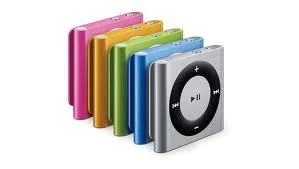
- iPod nano (Rs 9,400): Mid-range device with a video camera in later versions. Five to nine metallic colour options colour was itself a purchase variable.
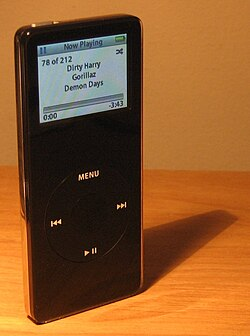
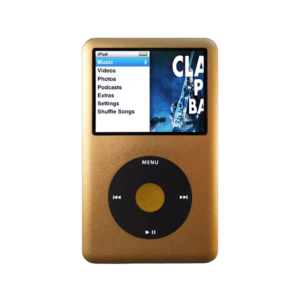
- iPod classic (Rs 15,200): The workhorse, up to 160GB and 40,000 songs. Six generations. Retired in 2014.
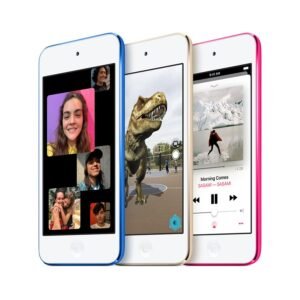
- iPod touch (₹12,400–₹38,900): iPhone-minus-cellular. Positioned progressively as a gaming device, an AR platform, and a communication tool, the music utility diminished.
Apple also used retail environment design as a marketing channel before ‘experiential retail’ became a concept in marketing textbooks. The iPod’s accessories ecosystem, cases, speaker docks, car adapters, and the ‘Made for iPod’ licensing programme created a secondary economy that kept the product top-of-mind in stores far beyond Apple’s own network.
By 2007, the ‘Made for iPod’ programme had been licensed to hundreds of third-party manufacturers, turning the device into a platform business without Apple having to operate a single additional manufacturing line.
Silhouettes, Songs, and the Art of Selling an Emotion
Apple’s first iPod advertisement in 2001 was, by its own creative director Ken Segall’s later admission, embarrassing. It featured a real person dancing in his room to music, looking in Segall’s words, like someone “trying to act cool, and doing so in a fairly pitiful way.” Steve Jobs himself was uneasy about using real people in ads, believing that it was nearly impossible to find an actor who appealed to everyone.
The ad was quietly referred to online as the “iClod” commercial.
What came next was not an incremental improvement. It was a category-defining creative solution developed by Susan Alinsangan, a Chiat/Day art director, in 2003, with direction from Lee Clow and copywriting by James Vincent, a former DJ.
The Silhouette Campaign
Apple’s iconic silhouette campaign stripped advertising down to its essentials: black dancing silhouettes against bold, vibrant backgrounds with bright white iPods and earbuds stealing the spotlight. The campaign later evolved with collaborations such as the U2 Special Edition iPod and an Eminem commercial, while the iPod Shuffle launch cleverly turned its lack of a screen into a selling point.
Backed by the song ‘Jerk It Out’, the ad used animated shuffle arrows and celebrated randomness as a feature rather than a limitation, proving Apple could market constraints as experiences.
“Cubicle” and the iPod nano
Apple kept reinventing its advertising playbook. One memorable spot transformed hundreds of album covers into a vibrant cityscape before they seamlessly folded into an iPod nano, bringing back the iconic promise of “1,000 songs in your pocket.”
Apple’s marketing continued to evolve beyond traditional advertising. In 2007, a fan-made iPod touch commercial by Nick Haley impressed Apple so much that the company partnered with him and TBWA\Chiat\Day to turn it into a national TV ad, years before user-generated marketing became mainstream.
Soon after, the Sonic campaign featuring Coldplay’s Viva la Vida barely showed the iPod itself, instead promoting the Apple + iTunes ecosystem, signalling that the brand had become bigger than the product.
“Previous ads for Apple’s computers usually featured a high-quality photograph of the product on a white background. With the Silhouette campaign, the focus shifted from convincing consumers to purchase the device to asking them to buy the emotion.” Ken Segall, Insanely Simple
Steve Jobs initially rejected the silhouette campaign when it was presented to him. He was not convinced that silhouettes communicated what the product did. Copywriter James Vincent proposed adding “1,000 songs in your pocket” as a tagline to resolve the problem. Jobs approved it and would later claim the idea as his own.
The tagline predated the product’s name: Jobs had settled on the phrase “1,000 songs in your pocket” several months before the name “iPod” was selected from a list of ten options.
The Psychology Behind the White Earbuds
Apple didn’t just market the iPod. It rewrote the rules of how gadgets were sold. Instead of calling it an MP3 player, Apple positioned it as a ‘digital music player,’ creating a broader category that extended beyond music long before features like podcasts and videos arrived.
Its marketing relied on a few powerful psychological cues. Rather than selling specifications, Apple sold outcomes. “1,000 songs in your pocket” was far more compelling than ‘5GB of storage.’ The iconic white earbuds turned every customer into a walking advertisement, while a carefully priced product lineup made each iPod model feel like the logical next upgrade.
The silhouette campaign was equally clever, using faceless dancers so anyone could imagine themselves in the ad, making the product feel universal. Apple also created high switching costs. Years of purchased music, accessories, and familiarity with iTunes made moving to another device far less appealing.
The brand extended that strategy through music itself. Campaigns featured everyone from U2 and Coldplay to Gorillaz, Daft Punk, and Black Eyed Peas, sending one clear message: no matter what you listened to, the iPod was built for you.
Why Apple Killed Its Own Best Product
In May 2022, Apple didn’t just discontinue the iPod. It replaced it with something better. The company quietly ended the iPod touch with a brief press release, closing a 21-year product journey that sold around 450 million units worldwide.
The iPod’s decline had begun much earlier. When the iPhone launched in 2007, Apple knew it would eventually replace its best-selling music player. Rather than protect the iPod, it chose to disrupt itself. As smartphones became the default device for music, communication, and the internet, iPod sales steadily declined.
By 2014, the product accounted for just about 1% of Apple’s revenue, prompting the company to stop reporting its sales separately. The iPod classic was retired the same year, followed by the nano and shuffle in 2017, with the final iPod touch update arriving in 2019.
Streaming accelerated the shift. The iPod was built around owning music, while Apple Music, launched in 2015, was built around subscribing to it. The two ideas could not coexist forever, making the iPod as strategically outdated as it was technologically obsolete.
Ironically, the iPod has found a second life in the resale market, driven by collectors and users who still prefer owning their music. But Apple has little incentive to revive it. A dedicated music player would compete with the subscription ecosystem that now powers its services business.
BrandBeats’ Take
The iPod was never just about selling a music player. Its real value was in how it built habits, trust, and an ecosystem that made Apple feel bigger than one product. That is what made the iPhone feel like the next natural step, not a random leap. The lesson is simple. Strong products create attention, but strong ecosystems create long-term power.
FAQs
- Why was the Apple iPod so popular?
The iPod combined a simple design, an easy-to-use interface, and the iTunes ecosystem, making it far easier to buy and listen to music than rival MP3 players.
- Did Apple invent the MP3 player?
No. MP3 players already existed before the iPod. Apple redesigned the experience and made the category mainstream.
- Why did Apple discontinue the iPod?
The iPhone replaced the need for a dedicated music player, while streaming services like Apple Music changed how people listened to music.
- What was the ‘1,000 Songs in Your Pocket’ campaign?
It was the iPod’s iconic launch slogan that highlighted its ability to carry an entire music library in a pocket, making it one of Apple’s most memorable marketing campaigns.
- Can you still buy an Apple iPod?
Apple discontinued the iPod in 2022. New devices are no longer sold by Apple, but used and refurbished iPods are still available through resale platforms.