
Billboards are no longer just giant posters on busy roads. Today, they have become conversation starters, meme material, and social media magnets that often generate millions of views online. The best outdoor campaigns are designed to be photographed, shared, and talked about long after people pass them.
From clever visual illusions to contextual messaging and playful brand banter, Indian marketers have transformed traditional Out-of-Home (OOH) advertising into a powerful storytelling medium. Some campaigns have even gone viral without spending a rupee on digital media, thanks to organic social sharing.
Here are five Indian OOH campaigns that proved creativity can make even a static billboard feel alive.
1. Lotus Biscoff
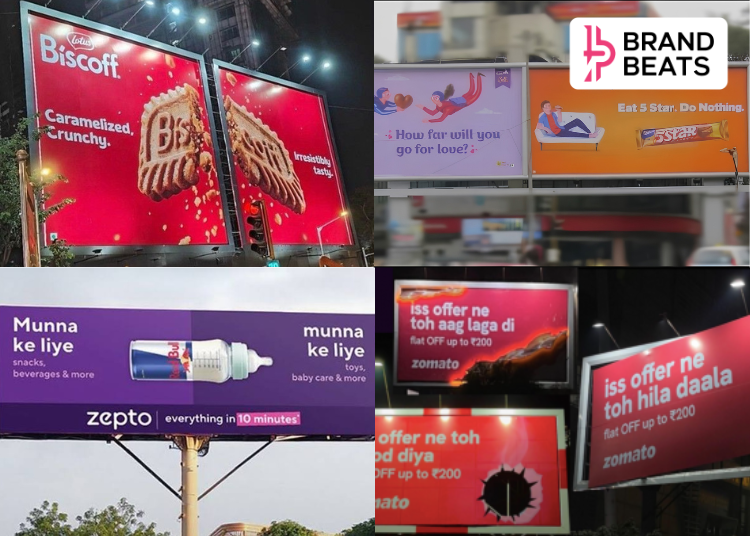
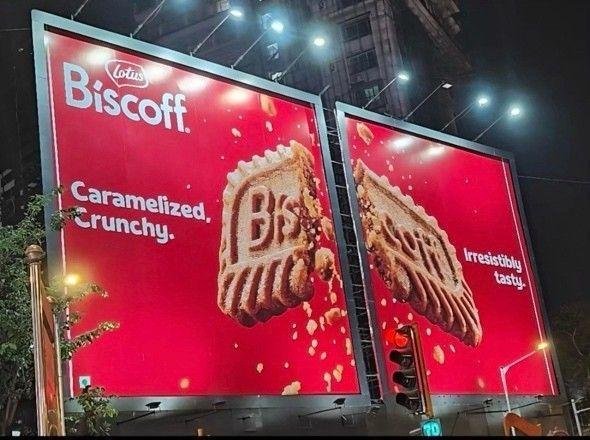
Lotus Biscoff turned a simple billboard into an eye-catching illusion by splitting a giant biscuit across two adjacent hoardings. The creative made it appear as if the biscuit was popping out of the billboards, making commuters stop, stare, and pull out their phones.
Instead of relying on lengthy copy, the campaign let the product do the talking. The oversized biscuit, paired with a clean red backdrop, became instantly shareable across Instagram and LinkedIn, proving that sometimes less really is more.
2. Cadbury Dairy Milk Silk and 5-Star
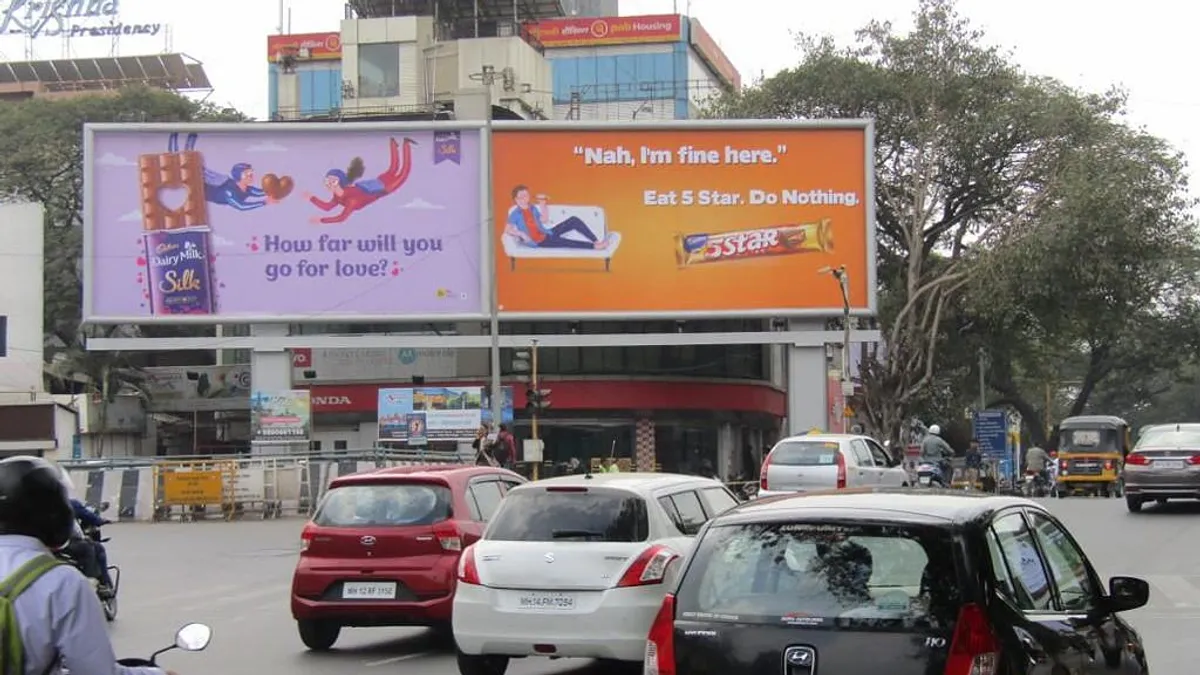
Cadbury’s Dairy Milk Silk asked, ‘How far will you go for love?’ Right beside it, 5 Star cheekily interrupted with, ‘Nah, I’m fine here. Eat 5 Star. Do Nothing.’ This iconic, playful billboard rivalry was part of a Valentine’s Day marketing campaign launched in 2020.
The side-by-side placement turned two independent billboards into one hilarious conversation. It showcased how brands from the same company could play off each other to entertain audiences while reinforcing their own personalities.
3. Zepto
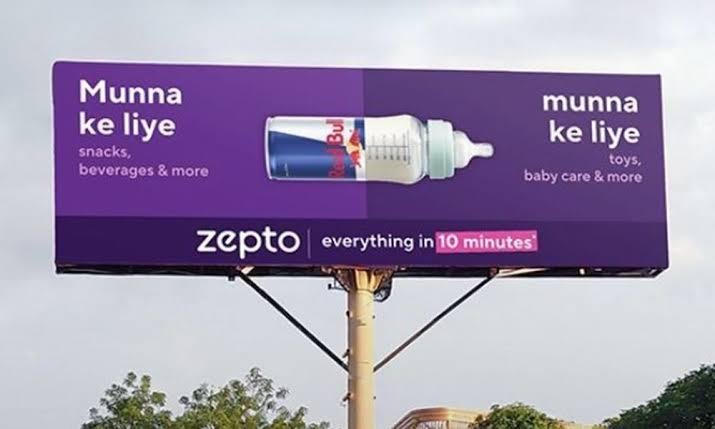
At first glance, in 2025, Zepto’s billboard showed a baby bottle with the line ‘Munna ke liye.’ But the real surprise came when viewers noticed that one half promoted snacks and beverages, while the other promoted baby care and toys.
The visual cleverly suggested that shopping habits change depending on who’s in the family. It was a simple execution that rewarded people for taking a second look, making it widely shared online.
4. Zomato
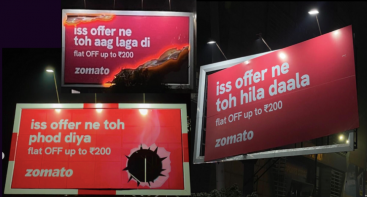
Zomato started with a billboard that read ‘Iss offer ne toh phod diya’. Soon after, the billboard appeared to be smashed, followed by another one saying ‘Iss offer ne toh hila daala.’
Instead of treating damaged-looking hoardings as a problem, Zomato made them the story. The sequential execution sparked curiosity, encouraged social media conversations, and reinforced the brand’s playful marketing style.
5. Shaadi.com
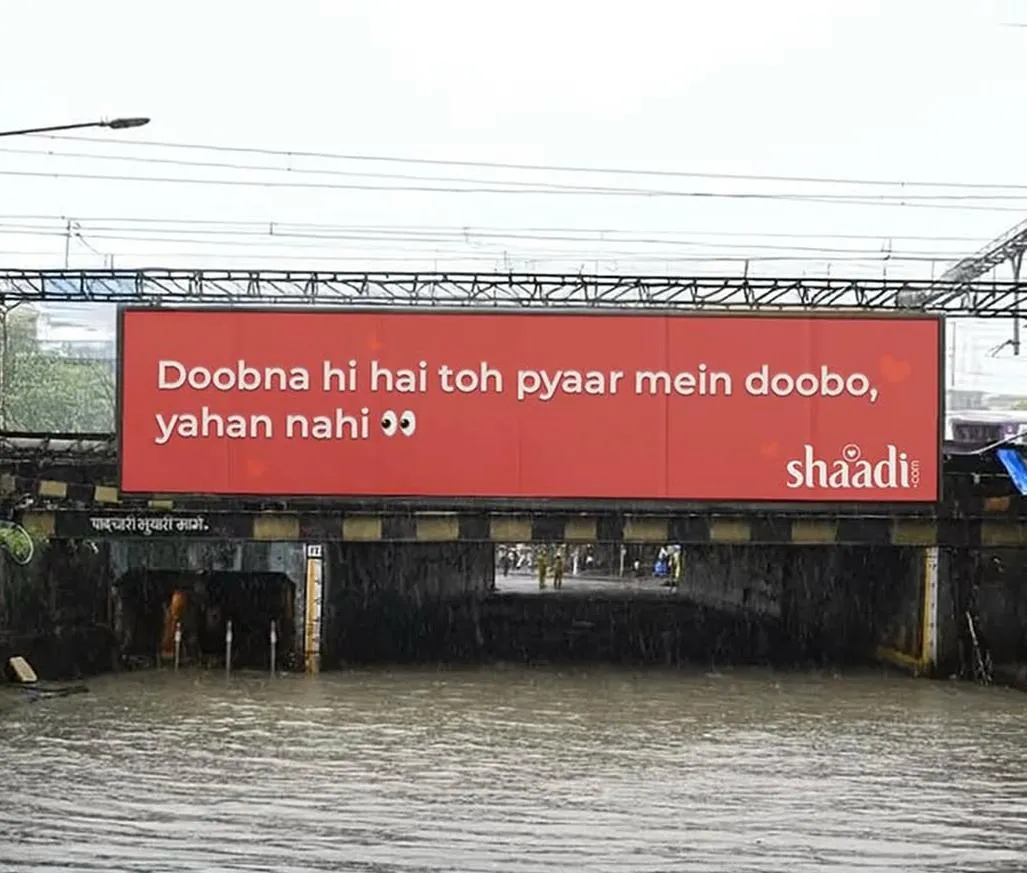
During the July 2025 monsoon, when heavy rains caused severe waterlogging and flooding at Mumbai’s Andheri subway, Shaadi.com placed a billboard above it that read, Doobna hi hai toh pyaar mein doobo, yahan nahi.
The brand used a real-life situation to deliver a witty message without being overly promotional. The contextual placement made the campaign feel timely and relatable, quickly earning praise across social media for its smart use of location.
BrandBeats’ Take
Great OOH advertising isn’t just about occupying a large space. It is about creating a moment people want to capture and share. These campaigns show that a strong idea, the right location, and a bit of humour can turn an ordinary billboard into internet gold.
FAQs
- What is an OOH campaign?
OOH or Out of Home advertising refers to ads placed in public spaces such as billboards, bus shelters, metro stations, airports, and digital screens to reach people on the move.
- Why do some billboard campaigns go viral?
Billboards go viral when they use creative visuals, witty copy, or smart placement that encourages people to take photos and share them on social media.
- What makes a successful OOH advertising campaign?
A successful OOH campaign combines a clear message, eye catching design, the right location, and an idea that is easy to understand within a few seconds.
- Can outdoor advertising help brands build awareness?
Yes. Outdoor advertising helps brands stay visible in high traffic locations and creates strong recall, especially when paired with digital and social media.