

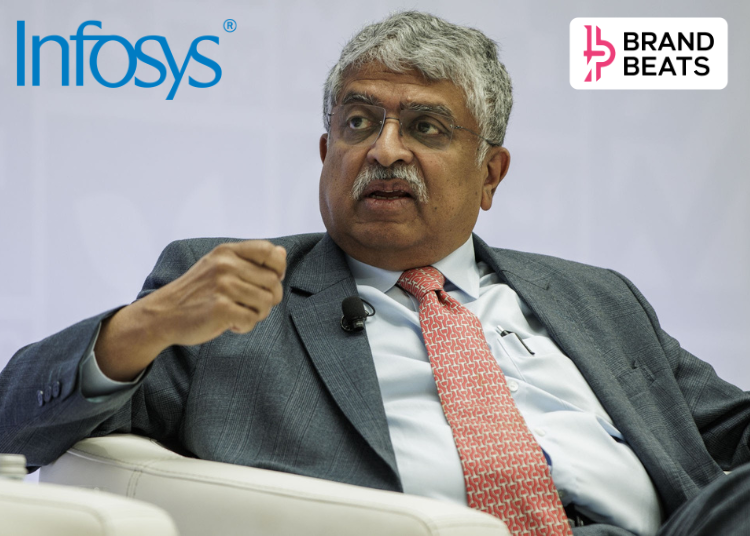
Infosys expects the global market for AI-first services to grow to between $300 billion and $400 billion by 2030, according to Chairman Nandan Nilekani. Speaking at the company’s 45th Annual General Meeting (AGM), Nilekani said artificial intelligence is creating a significant opportunity for technology services companies rather than replacing them.
Addressing shareholders, Nilekani said, “More than three years after GenAI was launched, Infosys is more relevant than ever before and well positioned for the decade ahead. While we embrace the best coding tools and improve our productivity, there is much more to do in the software development life cycle.”
Infosys Bets On AI Deployment To Drive Future Growth
Nilekani identified enterprise AI deployment as the biggest opportunity for the IT industry, saying, “The AI deployment gap in large enterprise clients is real, and closing that gap is where the work is. AI will not replace companies like ours. It will amplify those who move with purpose and adapt with speed.”
He added that enterprises require rigorous testing, resilient technology architecture, cybersecurity safeguards, and strong data governance before AI can be deployed at scale. Infosys is already working with around 90 percent of its top 200 clients on AI initiatives as businesses accelerate their adoption of enterprise AI.
What The AI Opportunity Means For The IT Services Industry
Highlighting where the next phase of growth lies, Nilekani said, “The defining opportunity lies in integrating intelligent AI systems with mission-critical enterprise platforms. The greatest value will come from combining the world of models and agents with traditional transaction systems that continue to underpin enterprise operations. That convergence is where the next wave of opportunities will emerge.”
The comments reflect a broader shift across the IT services industry as enterprises move from experimenting with AI to deploying it across core business operations. For Infosys, the focus is on helping clients modernise legacy systems, bridge the AI deployment gap, and implement AI at enterprise scale rather than simply adopting new models.