

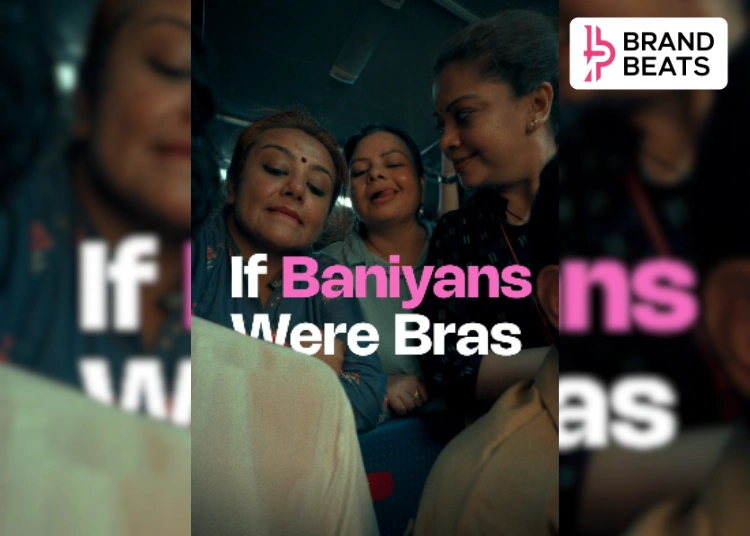
Most advertising campaigns try to solve a problem. Some try to start a conversation. XYXX‘s latest campaign, ‘If Baniyans Were Bras’, does something far more difficult, it makes people question a reality they have long accepted without thinking about it.
At first glance, the film appears humorous. Men are subjected to intrusive comments, unsolicited opinions, and awkward social scrutiny because of the baniyans they are wearing. But as the narrative unfolds, the joke reveals itself to be a mirror.
The situations men find themselves in are not fictional exaggerations; they are everyday experiences that many women routinely navigate because of bras.
That’s what makes the campaign stand out.
Rather than delivering a lecture on gender inequality, XYXX uses role reversal as a storytelling device. By placing men in situations traditionally associated with women, the brand creates an immediate sense of discomfort and absurdity. The audience laughs, but the laughter quickly gives way to recognition.
The campaign’s strength lies in its simplicity. It doesn’t rely on statistics, emotional monologues, or heavy-handed messaging. Instead, it asks a straightforward question: What if baniyans were treated the way bras are?
The answer exposes a long list of social expectations that often go unnoticed. From comments about visibility and fit to assumptions about appropriateness, the film highlights how a seemingly ordinary garment can become the subject of public scrutiny when worn by women.
In an advertising landscape where purpose-driven campaigns often struggle to strike the right balance between message and entertainment, XYXX manages to do both. The film is engaging enough to hold attention, yet thought-provoking enough to stay with viewers long after it ends.
The creative choice is particularly interesting coming from a men’s innerwear brand. Instead of focusing on product features, comfort claims, or category clichés, XYXX uses the conversation around innerwear to address a broader cultural issue.
Innerwear advertising has traditionally focused on comfort, fit, confidence, or aspiration. XYXX instead uses the category to comment on social behaviour, giving people something bigger than a product claim to engage with.
Another reason the campaign resonates is its timing. Conversations around gender norms, bodily autonomy, and everyday biases are increasingly finding space in mainstream culture. Rather than inserting itself into these discussions through a token statement, XYXX builds its message into the very structure of the narrative.
The result is a campaign that feels less like advertising and more like social observation.
Brand Beats Take
What makes XYXX’s campaign stand out is how effortlessly it turns a familiar reality into something viewers suddenly see differently. By placing men in situations where their baniyans are scrutinised, judged, and commented on, the film exposes a double standard that often goes unnoticed. It’s humorous, relatable, and thought-provoking without feeling preachy, a combination that explains why people are sharing it and talking about it beyond the advertising world.