

Bringing a global restaurant giant to India isn’t simply about importing a menu. It’s about understanding whether the brand’s core promise can find a place within Indian culture.
For Gourmet Investments Hospitality Group, the company behind PizzaExpress, Chili’s, Pf Chang’s and now Olive Garden in India, that confidence came from a surprisingly simple insight: Olive Garden’s strongest asset isn’t its pasta or Italian-American cuisine. It’s the idea of family.
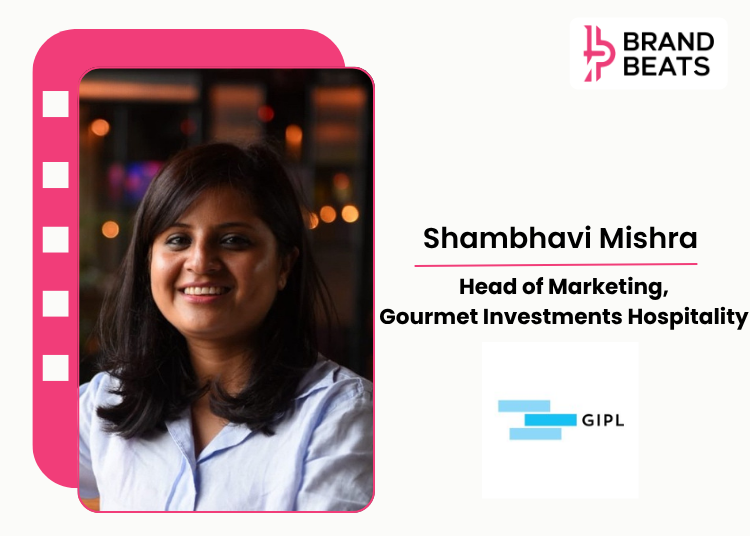
In a conversation with Brand Beats, Shambhavi Mishra, Head of Marketing at Gourmet Investments Hospitality Group, shares the thinking behind Olive Garden’s India launch, the evolution of consumer dining behaviour, and why restaurant brands must move beyond food to build meaningful experiences and lasting loyalty.
According to Mishra, restaurant brands can no longer rely solely on cuisine, pricing, or convenience to stand out. Today’s consumers are looking for something deeper.
“We are moving towards a very experience-led proposition. Diners are craving something more than what they have experienced so far. It’s all about communities, shared moments and shared experiences. Consumers are definitely becoming more experience-driven and it’s no longer just about an individual. It has become about communities coming together,” she says.
That thinking is shaping Gourmet Investments Hospitality Group’s approach to bringing Olive Garden to India. For Mishra, localisation and authenticity are not opposing forces but complementary ones. The challenge isn’t changing a global brand to fit a market; it’s finding the cultural intersections where a brand’s core promise naturally resonates with local consumers.
Dining Is No Longer About Food Alone
For years, restaurant brands largely competed on cuisine, pricing, location, and service. Today, Mishra believes the rules have changed. India’s rising disposable incomes, increasing urbanisation, growing global exposure, and digital-first consumer behaviour are collectively reshaping how people discover and engage with restaurant brands.
“The first discovery of a brand now happens on Instagram,” she says. “Even if you’re not aware of a restaurant, the discovery is happening through social media. It has become the first source of discovery.”
The shift goes beyond marketing channels.
According to Mishra, consumers are increasingly seeking experiences rather than simply meals. Dining out is becoming less about finding an occasion and more about creating one.
“We are moving towards a very experience-led proposition. Diners are craving something more than what they have experienced so far. It’s all about communities, shared moments and shared experiences. Consumers are definitely becoming more experience-driven and it’s no longer just about an individual. It has become about communities coming together.”
This evolution is particularly visible among younger consumers, who increasingly participate in community-led activities, whether it’s fitness, events, travel, or dining.
Growth Requires More Than Expansion
As international restaurant brands continue expanding across India, Mishra sees significant opportunity emerging beyond the country’s largest metros. With increasing internet penetration, higher disposable incomes, and greater exposure to global brands, consumers in Tier-2 and Tier-3 cities are becoming increasingly aspirational and informed.
“People sitting in these cities know what’s happening across the world at their fingertips,” she says. “There is definitely potential in Tier-2 and Tier-3 markets. The opportunity is important, but so is understanding whether the market is ready. Brands need to understand the opportunity before focusing on the speed of scaling.”
However, she cautions brands against chasing expansion simply for the sake of growth.
For Mishra, successful expansion requires evaluating consumer behaviour, retail ecosystems, dining destinations, cultural nuances, and overall market maturity. The same philosophy applies to brand building itself. While many restaurant brands chase trends and short-term attention, she believes sustainable growth comes from a very different playbook.
In today’s internet-driven culture, moments come and go quickly. What matters more is building trust and creating experiences that give consumers reasons to return.
” I think brands should completely avoid focusing on short-term spikes. You may be a hero today, but anything that is a hero today dies down eventually.That’s why my larger focus is on experiences and community over anything else.”
How PizzaExpress Stands Out in a Crowded Pizza Market
India’s pizza category has never been more competitive. International chains, local players, artisanal concepts, and delivery-first brands are all fighting for consumer attention. But Mishra believes PizzaExpress occupies a unique position.
“People have been taught to eat pizza out of a cardboard box because delivery has become so convenient.”
That convenience creates a challenge for every dine-in pizza brand. Consumers need a compelling reason to leave home. For PizzaExpress, that differentiation comes through quality, craftsmanship, service, and atmosphere.
Interestingly, she believes consumers are gradually moving back towards physical dining experiences after years of digital-first interactions.
“People still like a waiter coming to the table. They still like recommendations. Those human connections matter.”
“When people hear gourmet, they think of small portions, high prices, long waits and exclusivity. We are saying gourmet food isn’t about gatekeeping. It’s about making quality experiences accessible. Whoever you are, you should feel a sense of belonging..”
The brand’s strategy, according to Mishra, is to democratise gourmet dining.
Localising Without Losing Authenticity
One of the biggest challenges facing global restaurant brands entering India is balancing localisation with authenticity. For Mishra, the two are not opposing forces.
She points to Olive Garden’s India menu as an example. While the brand retains its global identity, the menu incorporates insights from Indian consumer preferences, including vegetarian offerings and flavour profiles that align with local tastes.
At the same time, the core brand experience remains intact.
“You’re a global brand, but you’re a global brand for India.” The same philosophy extends to marketing. While brand guidelines remain consistent worldwide, communication must be rooted in local realities.
“I can’t sit in India and talk about America,” she says. Instead, marketing must reflect Indian culture, festivals, consumer behaviours, and pop-culture moments. “What drives communication are the human insights and cultural nuances of the market.”
Why Technology Can Drive Discovery But Not Loyalty
As restaurant discovery increasingly moves online, Mishra believes technology, creators, and social platforms are becoming more influential than ever but none of them can replace genuine consumer understanding.
While she sees immense value in AI, she views it primarily as a productivity tool rather than a substitute for human creativity and instinct.
“AI solves the need for repetitive tasks,” she said. “But AI doesn’t understand culture more than a human being. It doesn’t understand human behaviour better than somebody working on the brand.”
The same emphasis on human connection shapes her view of marketing effectiveness. While large-scale campaigns can generate awareness, she believes creator-led content often drives stronger business outcomes because it is built on trust rather than reach alone.
“An impression cannot influence behaviour. Trust can.” That shift is particularly relevant at a time when social media has become the primary discovery channel for restaurants. According to Mishra, platforms like Instagram now play the role that traditional word-of-mouth once did, helping consumers discover new dining experiences before they’ve even looked at a menu.
“Instagram has become a discovery tool. Virality and loyalty are two completely different things.” However, generating attention is only the first step. Mishra draws a clear distinction between attracting consumers and retaining them.
While a viral moment can spark curiosity and get customers through the door, loyalty is built only when the experience lives up to expectations and gives people a reason to return.
“If consumers don’t think they can return after that first experience, then you’ve not created loyalty.”
For restaurant brands, the real challenge isn’t winning impressions, it’s converting discovery into trust, and trust into repeat visits.
As restaurant discovery increasingly shifts to social media and consumers become more selective about where they spend their time and money, Mishra believes the brands that endure will be the ones that stand for something beyond their products.
If she were building a restaurant brand from scratch today, she says the starting point would be purpose, followed by a clear and differentiated value proposition. What she wouldn’t do is chase short-term spikes or fleeting moments of attention.
“If everyone is doing the same thing and I start doing the same thing, then I’m simply another brand in the crowd,” she says.
For Mishra, the future of restaurant marketing isn’t about having the most viral campaign, the trendiest menu item, or the loudest presence on social media. It’s about creating experiences that people want to return to and communities they want to be part of.
“Everyone is offering food. Everyone is offering drinks. Everyone is chasing trends. The brands that will win are the ones that create distinctive experiences.”
In an industry where products can be copied and trends can disappear overnight, that may be the most valuable lesson of all. The next generation of restaurant brands won’t be built on what they serve, but on how they make people feel long after the meal is over.