

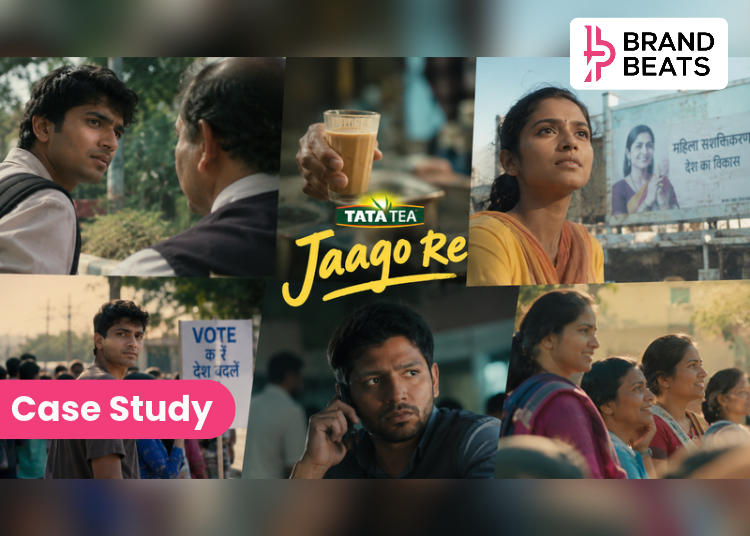
Every morning, millions of Indians reach for a cup of tea before getting on with their day. For most, it is a familiar ritual, a few quiet minutes before the rush of work, family and everything else that demands their attention.
In 2007, Tata Tea decided to give that ritual a different meaning.
What if waking up was not just about shaking off sleep? What if it also meant waking up to the problems around you? A cup of tea could be more than a beverage; it could become a reminder to question, participate and act.
That thought became the foundation of Jaago Re, one of India’s most recognisable purpose-led marketing platforms. Instead of relying solely on taste, quality or the comfort associated with tea, Tata Tea began building a conversation around citizenship, corruption, voting and women’s empowerment.
The campaign’s significance lay not simply in the social issues it addressed, but in the way it connected those issues to the brand’s everyday relevance. Over the years, Jaago Re evolved from a television advertising idea into a platform that encouraged people to participate in public life.
The larger marketing question was compelling, could a brand selling an everyday product build a distinctive identity by asking consumers to think about something much bigger than the product itself?
The Challenge: Standing out in India’s crowded tea market
Tea is a habitual purchase. Consumers develop preferences around flavour, price, strength, availability and regional tastes, often returning to the same brand for years. That makes brand loyalty valuable, but it also creates a difficult challenge: how does a company distinguish itself when competitors are selling products that fulfil much the same need?
Tata Tea was operating in an established, competitive market, with players such as Hindustan Unilever’s Brooke Bond and other regional brands competing for consumers. Product quality and distribution remained essential, but functional advertising alone offered limited room to establish a more distinctive emotional identity.
The company also had to communicate across different markets and consumer preferences. Its portfolio included brands and blends designed for different price points and regions, making it important to create a broader identity without losing the relevance of individual products.
The answer began with a familiar consumer behaviour. Tea is associated with waking up. Tata Tea took that literal association and extended it into a metaphor for social awareness.
The shift was significant: Tata Tea was moving from communicating what its product offered to exploring what its brand could stand for.
The strategy: Turning ‘wake up’ into a call for social awareness
Launched in 2007, Jaago Re was designed to transform the idea of awakening from a physical experience into a social one. According to Tata Tea’s own account, the initial television commercial featured a young man questioning the credentials and credibility of a politician seeking votes before offering him a cup of tea.
The execution gave the brand a different role. Instead of showing tea as a source of energy, refreshment or domestic comfort, it used tea as a cultural entry point into a conversation about public responsibility.
The idea also allowed Tata Tea to address younger consumers without relying entirely on the usual youth-marketing playbook. It gave them a subject to engage with and a role to play: questioning the status quo rather than passively accepting it.
This was not just a change in advertising language. It established a repeatable brand platform. As social issues changed, the underlying idea of awakening could remain consistent while the campaign’s message and call to action evolved.
That distinction would become central to Jaago Re’s longevity.
From awareness to action: The One Billion Votes campaign
The first major evolution came when Tata Tea extended the idea of social awakening into electoral participation.
Ahead of the 2009 general election cycle, Jaago Re! One Billion Votes sought to encourage young Indians to exercise their voting rights and make informed choices. The campaign was developed in partnership with Janaagraha, a Bengaluru-based organisation working on citizenship and urban governance.
The key strategic decision was to move beyond telling people that voting mattered. The campaign also attempted to make participation easier.
Through Jaagore.com, people could access voter-registration information and forms, alongside guidance on the registration process. The website therefore served a practical purpose: it connected the advertising message with a route to action.
6 lakh Voter registrations attributed to the drive in 2009, according to a later Mint report.
The distinction between awareness and enablement matters here. A television commercial can attract attention, but a website that simplifies a process gives the audience a way to respond.
For Tata Tea, this created a stronger connection between its communication and the behaviour it wanted to encourage. The brand was not merely asking people to care about an issue; it was helping them take a step towards participating in it.
Taking on corruption: ‘Aaj Se Khilana Bandh, Pilana Shuru’
In August 2009, Tata Tea introduced another phase of Jaago Re, this time addressing corruption through the campaign Aaj Se Khilana Bandh, Pilana Shuru.
The message challenged a familiar way of thinking about bribery. Instead of focusing only on the person demanding or accepting a bribe, it also questioned the responsibility of the person offering one.
Tata Tea’s announcement described the campaign as an appeal to citizens to stop aiding and abetting corruption. Its central premise was that people should become the change they wanted to see.
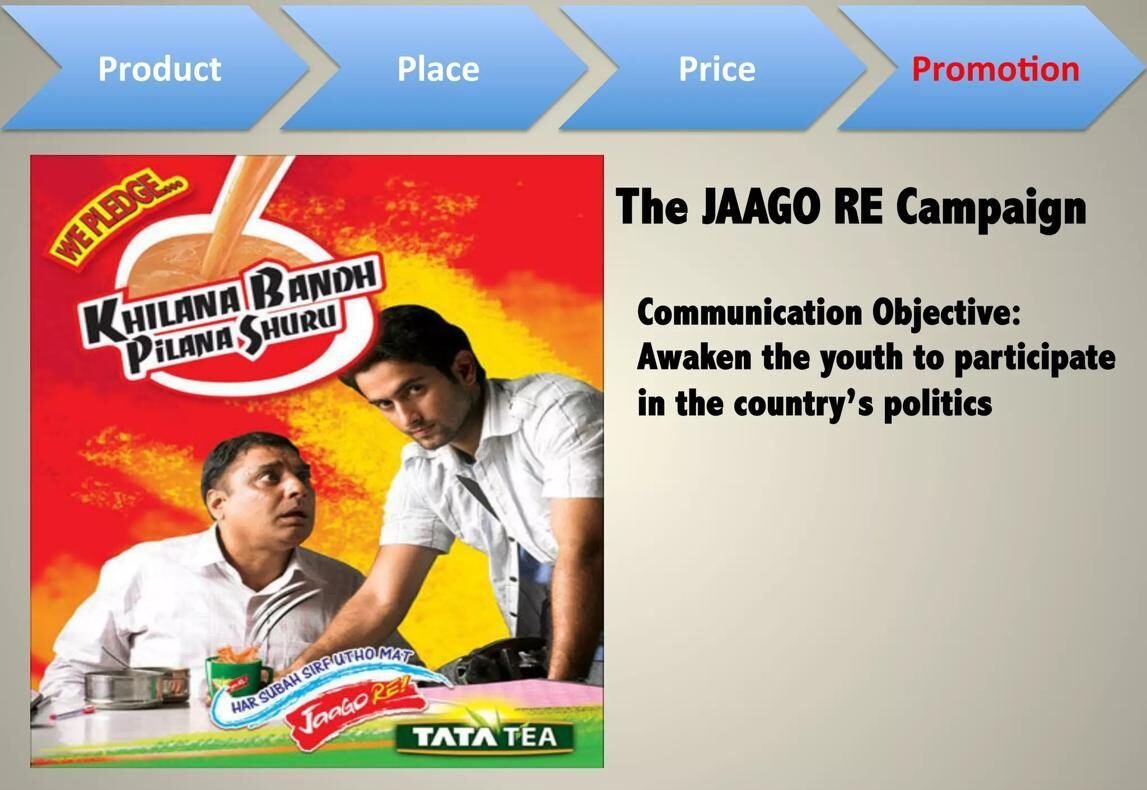
Tata Tea announced an integrated campaign spanning retail, online, mobile and on-ground touchpoints. It also proposed a Jaago Re Corruption Index to gauge public perceptions of corruption.
The broader lesson was that purpose-led communication can become more meaningful when the audience is not positioned solely as an observer. It must be given a reason to examine its own role in the issue.
Beyond television: Building a platform people could use
As Jaago Re developed, Tata Tea began extending its presence into digital resources designed to help people understand social and civic issues.
In November 2012, the company announced a renewed Jaagore.com website that aimed to simplify information on issues relevant to citizens. Its planned resources included guidance on understanding police procedures, filing a Right to Information application, registering to vote and women’s empowerment.
This marked an important shift in the platform’s function.
The original advertising could prompt a question. The digital platform could help answer it.
The move also reflected a broader change in how brands could use digital channels. Instead of treating a website or social platform merely as another place to distribute campaign films, Tata Tea used it to provide information and facilitate participation.
For a campaign built around awakening, this was a logical extension: awareness had to be accompanied by access to information if it was to translate into meaningful action.
It also gave Jaago Re a structure that could accommodate different causes over time. The campaign did not need to reinvent its entire identity whenever it addressed a new issue; it could retain the same underlying promise while developing new resources and forms of participation.
The Power of 49: Putting women’s voices into the election conversation
One of the most significant later extensions of Jaago Re was Power of 49, launched ahead of India’s 2014 general elections.
The campaign focused on women’s electoral participation and the influence women could exercise through their votes. Its name drew attention to women’s roughly 49% share of India’s population, framing their collective electoral influence as a force that could not be ignored.
The underlying insight was that recognising the importance of voting was not enough. Women also needed opportunities to express the issues that mattered to them and bring those concerns into public discussion.
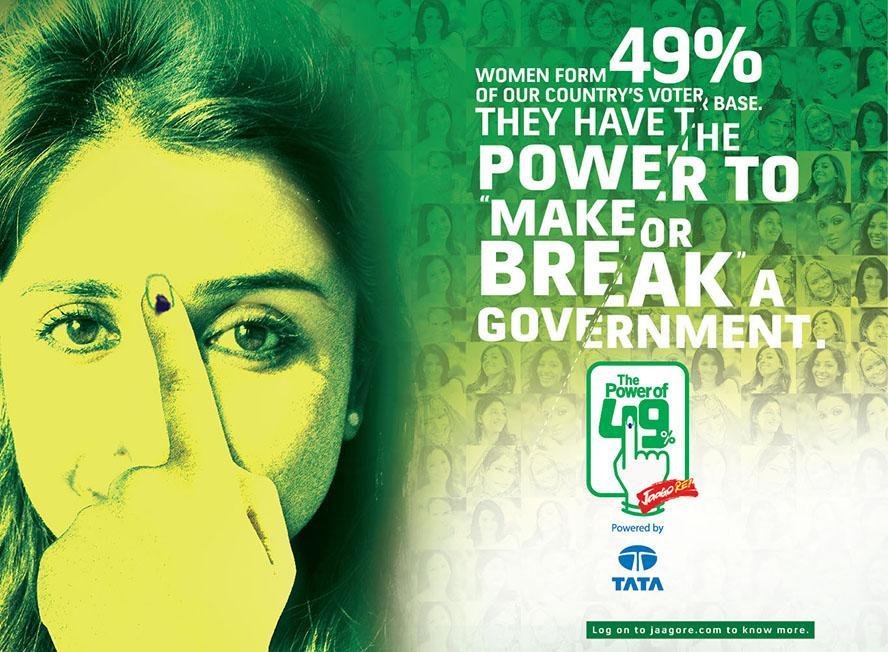


One of the campaign’s central initiatives was a crowdsourced women’s manifesto. Rather than limiting the campaign to a message created by the brand, Tata Tea invited women to contribute their concerns and priorities. The campaign also used a mobile Push the Pin mechanism to help women flag issues and stimulate discussion.
It brought these conversations into popular culture as well, integrating empowerment stories into prime-time television programming and involving prominent women from different fields, alongside Bollywood personalities, in spreading the message.
What did Power of 49 achieve?
According to WARC’s published case study, the campaign aimed to influence more than 100 million women and reported five million women actively engaging with the cause. WARC also reported that the campaign attracted political attention, generated earned media and contributed to an increase in Tata Tea’s market share.
These results illustrate two different dimensions of campaign effectiveness.
- Social engagement: The campaign created opportunities for women to participate, communicate their concerns and contribute to a collective manifesto.
- Brand impact: The initiative generated public attention and was associated with an improvement in market share, according to the published case study.
The two outcomes are related, but they are not interchangeable. Participation figures show the reach of the cause initiative; they do not, by themselves, establish how much incremental tea sales it generated.
That distinction is important when assessing purpose-led marketing. A campaign can demonstrate substantial engagement while still requiring separate evidence to quantify its commercial return.
What made Jaago Re different from a conventional advertising campaign?
The strength of Jaago Re was not simply that it addressed social issues. Plenty of brands use causes, cultural moments and public-interest themes in their advertising.
Its more distinctive feature was the connection between the idea, its execution and the brand’s role.
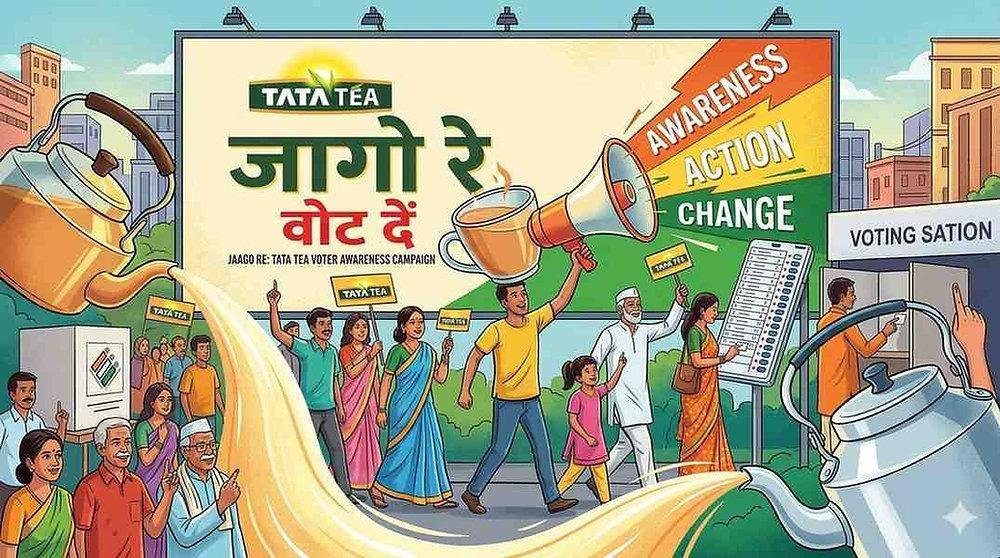
- It turned a product association into a bigger idea
Tea was already linked with waking up. The campaign expanded that association into social awakening, giving the brand a recognisable organising idea rather than a series of unrelated messages.
- It connected communication with action
Voter-registration resources and later digital initiatives gave audiences something to do beyond watching an advertisement. That helped bridge the gap between a message and a practical response.
- It evolved without losing its central identity
Voting, corruption and women’s empowerment were different subjects, but each could be connected to the same idea of waking up and taking responsibility.
- It gave the brand a role beyond the product
Tata Tea’s communication could participate in a wider public conversation. That created a potential source of emotional differentiation in a category where functional product claims alone may not be enough.
The campaign’s development, from the original television commercial to voter registration, anti-corruption messaging, digital information and Power of 49, supports this interpretation.
Why purpose mattered to Tata Tea
Purpose-led marketing is sometimes discussed as though social relevance and commercial performance are separate objectives. The Jaago Re case shows why brands might seek to connect the two.
For Tata Tea, the strategic opportunity was to create an identity that consumers could recognise beyond the product’s immediate attributes. In a competitive category, a consistent association with civic awareness offered another reason for people to remember the brand.
The campaign also created a long-term platform for communication. Instead of developing an entirely new brand proposition for every advertising cycle, Tata Tea could use Jaago Re to address different issues while retaining a familiar central idea.
WARC’s Power of 49 case study explicitly links the initiative to Tata Tea’s effort to defend its position in the tea category and reports market-share growth following the campaign.
However, the available sources do not establish a single, independently verified figure for the total sales uplift or return on investment generated by the entire Jaago Re platform since 2007. It would therefore be inaccurate to attribute all subsequent business performance to the campaign alone.
The more defensible conclusion is that Jaago Re created a distinctive and sustained brand platform, while individual campaign results provide evidence of its ability to attract participation and public attention.
The takeaway: Purpose works when it gives a brand something to do
Tata Tea’s Jaago Re is a useful case study because its central idea was both simple and adaptable.
The brand took an everyday association — waking up with tea — and extended it into a larger conversation about civic responsibility. It then developed that conversation through campaigns that encouraged voting, challenged corruption and invited women to articulate their concerns ahead of an election.
The progression matters. Jaago Re did not remain confined to a slogan or a set of television commercials. Its digital initiatives and participatory campaigns attempted to turn the message into something audiences could engage with.
For marketers, the lesson is not that every brand needs to attach itself to a social cause. A cause that feels disconnected from a brand’s identity can appear opportunistic, while a campaign built entirely around messaging can struggle to translate awareness into action.
The more useful question is whether a brand can establish a credible connection between what it represents, what its audience cares about and what it can help that audience do.
Tata Tea found that connection in the idea of awakening. By returning to it across different issues and campaign formats, the brand built a platform that extended beyond individual advertisements. The enduring lesson of Jaago Re is that a brand’s purpose becomes more meaningful when it is not just something the brand says, but something it invites people to participate in.